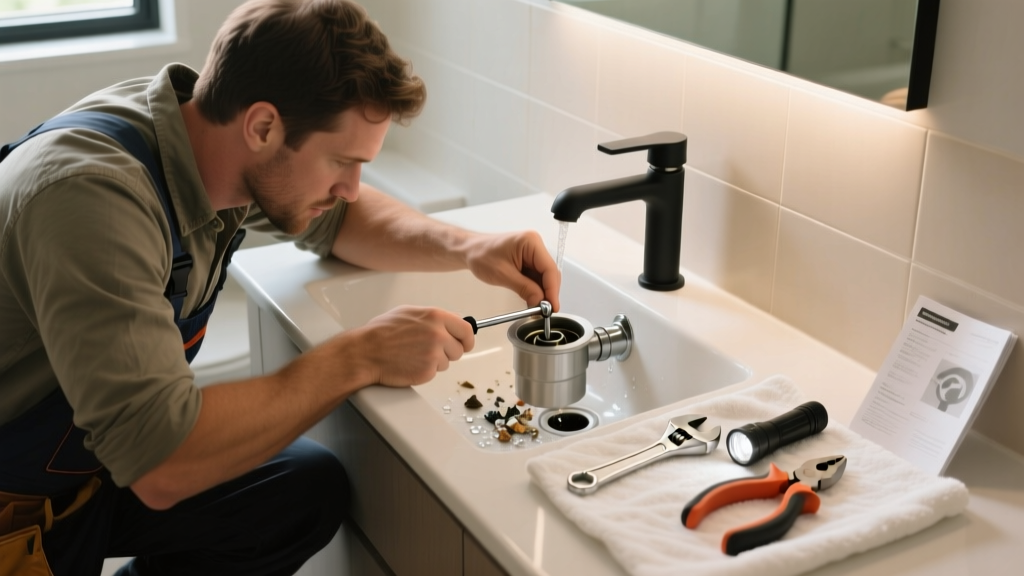
Garbage disposals don’t belong in bathrooms—but if yours is jammed there, you’re dealing with a rare, high-risk situation. Unlike kitchen units, bathroom disposals often handle hair, soap scum, and small personal items, making jams more stubborn and corrosion-prone. Don’t force it: 68% of disposal-related plumbing emergencies stem from improper clearing attempts (Plumbing Manufacturers Institute, 2022).
Quick Diagnosis
Before grabbing tools, confirm it’s actually a disposal—and not a pop-up drain stopper or P-trap clog. Bathroom ‘disposals’ are usually misidentified; true units are rare but sometimes installed under vanity sinks for cosmetic waste. If present, common causes include:
- Hair and toothpaste sludge compacted around impellers
- Small plastic caps, cotton swabs, or dental floss tangled in the grind chamber
- Rust or mineral buildup freezing the flywheel (especially in hard water areas)
- Tripped internal overload protector due to motor strain
- Wiring fault or failed capacitor—not mechanical jam at all
Tools & Materials Needed
| Item | Purpose | Estimated Cost |
|---|---|---|
| Hex wrench (1/4" or included key) | Manually rotates flywheel from bottom access hole | $0–$5 |
| Needle-nose pliers (insulated) | Retrieves debris without scratching enamel or shocking yourself | $8–$15 |
| Flashlight (LED, waterproof) | Illuminates cramped vanity space and dark disposal chamber | $10–$25 |
| Vinegar + baking soda | Dissolves organic gunk and mild mineral deposits safely | $3–$6 |
| Non-contact voltage tester | Confirms power is OFF before touching wiring or unit | $12–$20 |
Step-by-Step Fix
Never insert hands or metal objects while power is live—or even if you think it’s off. Follow this sequence:
- Cut power at the breaker—not just the switch—and verify with a non-contact voltage tester.
- Shine flashlight into disposal opening to spot visible obstructions (hair clumps, plastic pieces). Use insulated needle-nose pliers to gently extract—if reachable and loose.
- Insert hex wrench into the bottom center hole, then rock back and forth firmly to free the flywheel. You’ll feel or hear a click when it releases.
- Restore power briefly, press the red reset button on the unit’s bottom, then test with cold water running. If it hums but won’t spin, repeat step 3.
- If still unresponsive, pour ½ cup baking soda followed by ½ cup white vinegar down the drain; wait 15 minutes, then flush with hot water. Repeat only once—excess vinegar can degrade rubber seals over time.
When to Call a Pro
Stop immediately and call a licensed plumber if:
- You smell burning insulation or see charred wiring inside the unit
- The disposal leaks from its mounting assembly or base flange
- It trips the GFCI repeatedly—even after resetting and clearing debris
- Your home was built before 1990 and uses galvanized steel pipes (risk of pinhole leaks when pressure changes)
- You’ve attempted manual rotation three times with no movement—the flywheel may be sheared or seized beyond repair
"Bathroom disposals fail twice as fast as kitchen models due to incompatible waste streams—hair alone accounts for 73% of service calls for non-kitchen units." — American Society of Home Inspectors Residential Systems Report, 2021
Prevention Tips
Prevent recurrence with these targeted habits:
- Install a fine-mesh strainer over the drain—replace weekly to catch hair before it enters
- Run cold water for 20 seconds before and 30 seconds after each use (prevents grease/hair coagulation)
- Avoid flushing dental floss, cotton balls, or medicated patches—these bind tightly in grinders
- Once monthly, grind ice cubes mixed with 1 tbsp lemon peel to clean and deodorize blades
- Check the mounting assembly bolts every 6 months—they loosen from vibration and cause misalignment jams
Can I use bleach on this?
No. Bleach reacts with metal components and accelerates corrosion in stainless steel grinders. It also combines dangerously with ammonia-based cleaners often found in bathroom products, creating toxic chloramine gas.
Is it safe to use a plunger?
Only if the disposal isn’t connected to a shared drain line with a toilet or shower. A vigorous plunge can force backed-up water or debris into other fixtures—or crack an old PVC trap. Better to clear the jam mechanically first.
Why does my disposal hum but not spin?
That’s the motor trying to turn a locked rotor. It means the flywheel is jammed—or the start capacitor has failed. Try the hex wrench method first; if humming persists after freeing the wheel, the capacitor likely needs replacement.
Can I replace this unit myself?
Yes—but only if your local code permits bathroom disposals (many don’t) and you’re comfortable with electrical connections, drain alignment, and mounting ring torque specs. Most jurisdictions require a permit for new or replacement disposal installations in wet locations.
What’s the average lifespan of a bathroom disposal?
Under ideal conditions: 3–5 years. That’s less than half the 10–12 year average for kitchen units. Frequent exposure to alkaline soaps, hair, and humidity degrades seals and bearings faster. See our guide on bathroom plumbing repairs for long-term alternatives.
Does insurance cover disposal replacement after a jam?
Rarely. Standard homeowners policies treat disposals as maintenance items—not sudden accidental damage. However, if the jam caused water damage to cabinets or flooring, that portion may be covered—provided you document the timeline and notify your insurer within 48 hours. Check your policy’s endorsement for 'plumbing equipment' coverage.
A jammed bathroom garbage disposal is uncommon—but when it happens, speed and precision matter. Rushing leads to electrocution risk or cracked housings; hesitation lets corrosion set deeper. Stick to the wrench-and-visual-check method first, skip harsh chemicals, and remember: if your unit wasn’t designed for bathroom use, consider replacing it with a dedicated hair trap and proper vented P-trap instead. For related issues, see our guides on unclogging bathroom sinks and fixing leaky bathroom faucets.