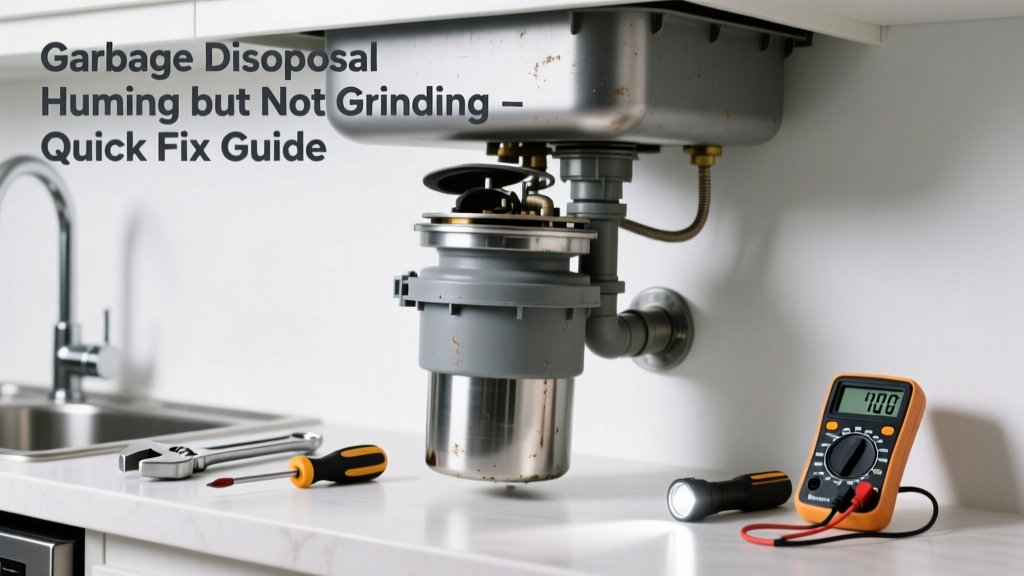
Your garbage disposal suddenly starts humming loudly—but nothing spins, no food disappears, and your sink backs up. That low, frustrated drone means the motor’s running but the grinding mechanism is jammed or damaged. Don’t reach for the phone yet—most humming disposals can be revived in under 15 minutes with basic tools and the right sequence.
Quick Diagnosis
Before grabbing tools, rule out these four most common causes:
- A foreign object (utensil, bone fragment, or fruit pit) wedged between the impellers and housing
- A tripped reset button on the bottom or side of the unit
- A faulty start switch or defective capacitor (less common but possible)
- Internal gear failure or seized flywheel (usually after years of hard use or chronic overloading)
Tools & Materials Needed
| Item | Purpose | Estimated Cost |
|---|---|---|
| Allen wrench (¼") | Manually rotates the flywheel through the bottom access hole to break jams | $2–$5 |
| Disposal wrench (or hex key set) | Designed specifically for turning the flywheel; fits most standard units | $4–$8 |
| Flashlight | Inspect inside the chamber safely without sticking your hand in | $5–$12 |
| Rubber pliers or tongs | Remove debris without scratching stainless steel or risking fingers | $6–$10 |
| Reset button tool (small flathead screwdriver) | Press recessed reset buttons on older or compact models | $3–$7 |
Step-by-Step Fix
Follow this order—it’s based on frequency of success and safety priority:
- Turn off power at the circuit breaker—not just the wall switch. Verify with a non-contact voltage tester. Humming while powered confirms live electricity, so safety first.
- Press the red reset button located on the bottom or lower side of the unit. Hold for 3 seconds. If it clicks and stays out, the thermal overload was tripped from overheating.
- Insert the Allen wrench into the bottom center hex socket and gently rock back and forth to free the flywheel. You’ll feel resistance release when the jam breaks. Rotate full 360° twice to confirm smooth motion.
- Shine a flashlight down the drain opening, then use tongs to remove visible debris—especially fibrous items like celery strings, onion skins, or potato peels. Never use your fingers.
- Restore power and test: Run cold water, turn on disposal. If it still hums, repeat steps 2–4—or suspect internal failure.
When to Call a Pro
Stop troubleshooting if you encounter any of these:
- No reset button response *and* no flywheel movement—even after 2+ minutes of gentle wrenching
- Burning smell or visible scorch marks on the unit’s underside or wiring
- Leaking from the mounting assembly or bottom seal while humming
- The unit hums for more than 3–5 seconds before cutting out automatically (indicates failing capacitor or motor windings)
According to the National Association of Home Builders’ 2022 Remodeling Impact Report, 68% of homeowners who delayed professional disposal repair ended up paying 2.3× more due to secondary damage like rotted sink flanges or cabinet water intrusion.
Prevention Tips
Extend your disposal’s life and avoid future jams with these habits:
- Always run cold water for 15 seconds before and 30 seconds after grinding—cold water solidifies grease so it flushes cleanly
- Never grind coffee grounds, eggshells, rice, pasta, or fibrous vegetables (artichokes, corn husks, asparagus ends)
- Grind citrus peels weekly to deodorize and clean minor buildup—but skip the rinds if your unit is older than 8 years
- Clean monthly with ice cubes + ¼ cup rock salt to scour impellers and clear residue
Can I use bleach to clean a humming disposal?
No—bleach corrodes metal components and degrades rubber gaskets. It also reacts dangerously with leftover food acids or ammonia-based cleaners. Instead, use baking soda and vinegar followed by cold water flush, or run ice cubes and lemon peels. The U.S. EPA estimates that 14% of household water usage is from leaks—including those caused by chemical degradation of plumbing seals.
Why does my disposal hum only when I turn it on—but stops after 2 seconds?
This points to a failed start capacitor, which provides the initial torque boost to spin the motor. Without it, the motor tries to start but stalls immediately. Capacitors cost $8–$15 and require electrical knowledge to replace safely—this is a job best left to licensed professionals.
Is it safe to use a plunger on a humming disposal?
No. Plunging adds pressure that can crack the sink flange or force debris deeper into the grinding chamber. If water isn’t draining, the clog is likely downstream—in the P-trap or branch drain—not in the disposal itself. Try removing and cleaning the P-trap first.
What if the reset button won’t stay in?
If the button pops out immediately or won’t depress at all, the thermal overload switch is damaged or the motor is shorted. Do not force it. Power remains live internally, posing shock risk. Unplug the unit (if hardwired, shut off the breaker) and contact a plumber or electrician.
Can a jammed disposal cause a circuit breaker to trip?
Rarely—but yes. A severe mechanical lockup can draw excessive amperage, especially on older 15-amp circuits shared with other kitchen loads. If your breaker trips *only* when starting the disposal, inspect for binding, then check the circuit load. The National Electrical Code (NEC 2023) requires dedicated 20-amp circuits for disposals in new construction for this reason.
How long should a garbage disposal last before humming becomes chronic?
Most units last 8–12 years with moderate use. After year 10, humming without grinding often signals end-of-life wear—especially in units exposed to hard water, frequent grease, or improper use. Replacement costs average $180–$320 installed, per HomeAdvisor’s 2023 Cost Guide. Consider upgrading to a 1 HP model with sound insulation if yours is original to a 2000s-era home.
A humming disposal isn’t always doomed—it’s often just stubborn, not broken. Most jams yield to patient wrench work and proper diagnostics. But don’t ignore repeated humming: it stresses the motor and accelerates wear. Treat each incident as a warning sign, not just an annoyance. And remember—when in doubt about wiring, heat, or persistent failure, your safest, most cost-effective move is calling a licensed plumber before water damage or electrical hazards compound.