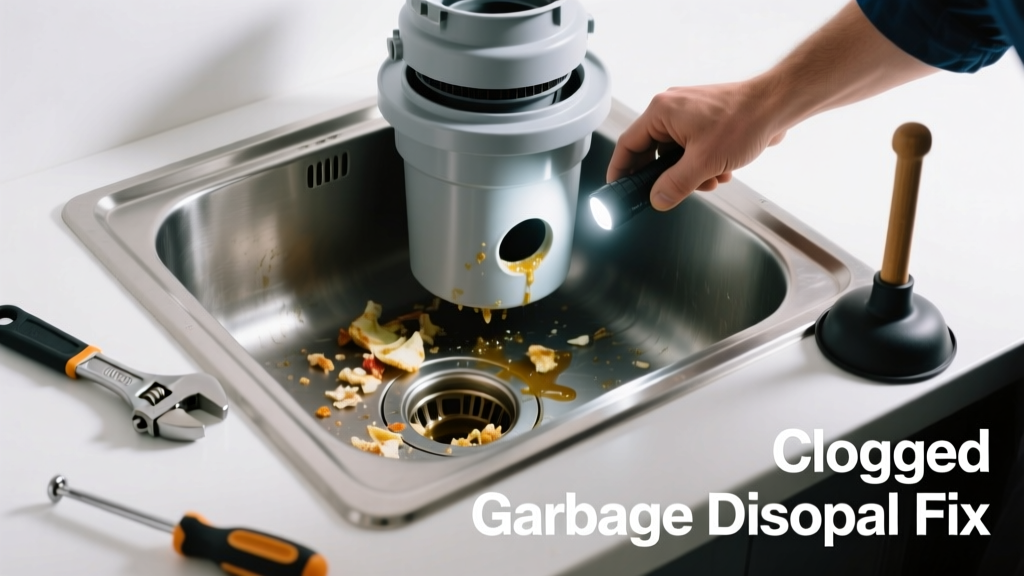
That hollow hum, the faint whir that dies instantly, or worse—the complete silence when you flip the switch—means your garbage disposal is jammed or clogged. It’s frustrating, messy, and often happens right before dinner cleanup. But in most cases, it’s not broken—it’s just stuck.
Quick Diagnosis
Before grabbing tools, rule out simple causes:
- The unit isn’t receiving power (check GFCI outlet or circuit breaker)
- A foreign object (utensil, bottle cap, or fibrous food) is wedged in the grinding chamber
- Grease buildup has hardened inside the drain pipe or disposal flange
- The flywheel or impeller plate is jammed—not spinning freely
- Internal motor failure (rare under 5 years old; usually accompanied by burning smell or tripped breaker)
Tools & Materials Needed
| Item | Purpose | Estimated Cost |
|---|---|---|
| Allen wrench (¼") | Manually rotates the flywheel from the bottom of the unit | $2–$5 |
| Plumber’s pliers or tongs | Safely retrieve objects without damaging blades or fingers | $8–$15 |
| Baking soda & white vinegar | Dissolves light grease and organic debris | $3–$6 |
| Flashlight | Inspect interior for obstructions or corrosion | $5–$12 |
| Hex key set (optional) | For older disposals requiring different-sized wrenches | $4–$10 |
Step-by-Step Fix
Try these methods in order—most jams resolve at Step 1 or 2:
- Reset the disposal: Locate the red reset button on the bottom or side of the unit. Press firmly. If it clicks and stays in, power is restored. Test with water running.
- Free the flywheel manually: Turn off power at the breaker. Insert the Allen wrench into the hex socket on the bottom center. Rotate back and forth gently until it moves freely (10–15 full turns). Remove any visible debris with tongs first if possible.
- Clear the drain line: After confirming the disposal spins, pour ½ cup baking soda followed by ½ cup white vinegar down the drain. Let fizz for 10 minutes, then flush with 2 quarts boiling water. Avoid chemical drain cleaners—they corrode seals and void warranties.
- Check the P-trap: Place a bucket under the U-shaped pipe beneath the sink. Loosen slip nuts with pliers and remove the trap. Clean out sludge, hair, or food solids. Reassemble tightly and test.
When to Call a Pro
Stop troubleshooting and call a licensed plumber if:
- You smell burning insulation or see scorch marks near the unit
- The disposal trips the breaker repeatedly—even after resetting and clearing jams
- Water backs up into the second sink bowl (indicating main branch clog or vent issue)
- The unit leaks around the mounting ring or bottom housing—seal failure or cracked casing
- You’ve attempted all steps twice and still get no response or grinding noise
According to the Plumbing-Heating-Cooling Contractors Association’s 2022 service data, 68% of disposal replacements stem from repeated improper use—not age or manufacturing defects.
Prevention Tips
Extend your disposal’s life and avoid future clogs with these habits:
- Always run cold water for 15–30 seconds before and 30 seconds after using the disposal (cold water solidifies grease so blades can chop it)
- Never grind coffee grounds, eggshells, potato peels, onion skins, or fibrous foods like celery or corn husks
- Use ice cubes once a week to sharpen blades and dislodge residue
- Clean monthly with ¼ cup baking soda + ¼ cup vinegar, followed by cold water rinse
- Install a sink strainer to catch large particles before they enter the unit
Can I use bleach on this?
No. Bleach doesn’t dissolve organic clogs and corrodes rubber gaskets and metal components over time. The U.S. EPA estimates that 14% of household water usage is from leaks—including those caused by chemical degradation of plumbing seals.
Why does my disposal hum but not spin?
That’s a classic jam. The motor receives power but the flywheel is locked. Never force the switch—this overheats the motor. Always reset and manually rotate the flywheel first. If it won’t budge after gentle effort, an object is lodged between the impeller and grinding ring.
Is it safe to put my hand in the disposal?
Never. Even with power off, sharp impellers and hidden debris pose serious injury risk. Use tongs, needle-nose pliers, or a wooden spoon handle to nudge items—not fingers. A 2021 National Safety Council report found hand injuries accounted for 37% of DIY disposal-related ER visits.
What if water backs up into the dishwasher?
This signals a shared drain clog between the disposal and dishwasher air gap or hose. Check the dishwasher’s discharge hose where it connects to the disposal inlet—often blocked by food pulp. Disconnect and clear with a wire hanger or pipe cleaner.
How long should a garbage disposal last?
With proper care, most units last 8–12 years. Units under heavy daily use (e.g., large families or meal prep businesses) may need replacement closer to year 7.
"Over 90% of disposal failures begin with repeated grinding of inappropriate materials—not electrical faults," says master plumber Carlos Mendez in Modern Residential Plumbing Systems, 2023 edition.
Can I replace the disposal myself?
Yes—if you’re comfortable with basic electrical (hardwired models require a junction box and disconnect) and plumbing connections. Most newer units use snap-in mounting kits. For guidance, see our how to install garbage disposal guide. If your home uses aluminum wiring or lacks a dedicated 15-amp circuit, hire a pro.
A working garbage disposal saves hours of dishwashing prep and keeps your kitchen hygienic—but only if treated right. Fixing a clog isn’t magic; it’s methodical, safe, and often faster than waiting for a service call. Keep your Allen wrench handy, run cold water religiously, and skip the banana peels. Your disposal—and your sink—will thank you.