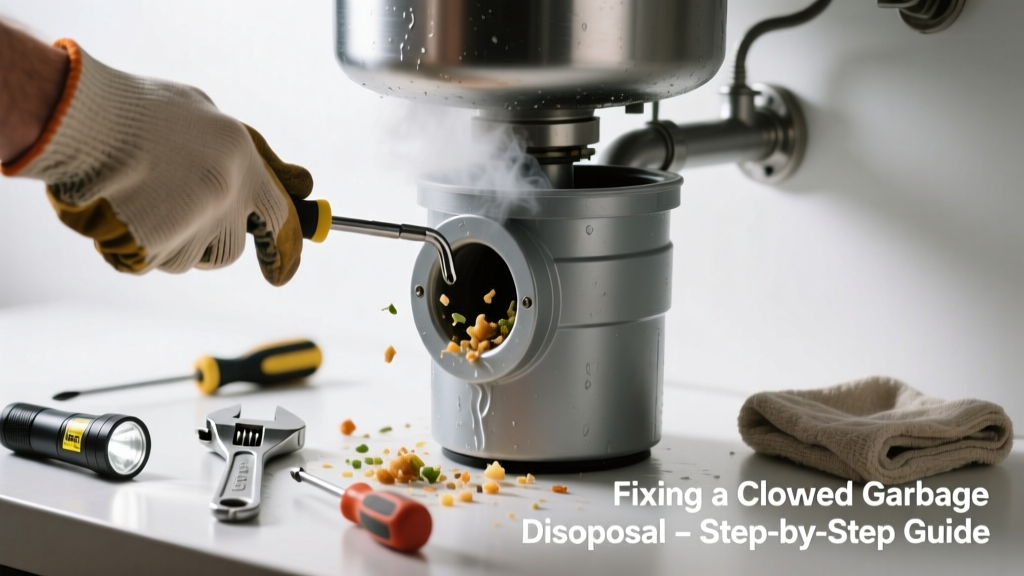
You’re running the disposal, and instead of its usual low hum, you hear a loud grinding, buzzing, or metallic clanking—then nothing. That’s not just annoying; it’s a red flag that something’s jammed, broken, or misaligned inside the unit. Ignoring it risks motor burnout or water backup into your sink.
Quick Diagnosis
Before grabbing tools, identify the sound and behavior:
- Humming but no rotation: Motor is energized but impeller plate is jammed.
- Grinding or scraping noise: Hard object (utensil, bone fragment, or fruit pit) lodged between impellers and housing.
- Rattling or clanking: Loose component (e.g., mounting ring, drain flange, or foreign object bouncing around).
- Buzzing followed by shutdown: Overheating due to prolonged jam or failing start capacitor.
Tools & Materials Needed
| Item | Purpose | Estimated Cost |
|---|---|---|
| Hex wrench (¼") | Manually rotates impeller shaft from bottom access hole to free jams | $3–$8 |
| Needle-nose pliers | Retrieves small objects or debris from drain opening | $5–$12 |
| Flashlight | Inspects interior without disassembly | $4–$15 |
| Plumber’s putty | Re-seals flange if removed during inspection | $2–$4 |
| Disposal wrench or Allen key (model-specific) | Engages reset button or manual crank on some units | $0–$6 (often included) |
Step-by-Step Fix
Work in this order—start safest, escalate only if needed:
- Turn off power at the circuit breaker—not just the wall switch. Verify with a non-contact voltage tester.
- Press the red reset button on the bottom or side of the unit. If it clicks and stays in, wait 10 minutes before testing.
- Use the hex wrench in the bottom center access hole: rotate back-and-forth gently to free jammed impellers. You’ll feel resistance ease when cleared.
- Inspect with flashlight and pliers: Shine light down drain opening; remove visible debris (e.g., bottle cap, silverware) with needle-nose pliers—never fingers.
- Test with cold water flow: Turn on cold water, then briefly engage disposal. If noise returns immediately, skip to "When to Call a Pro".
When to Call a Pro
Stop DIY if you encounter any of these:
- Unit smells like burning insulation or emits smoke—even after resetting.
- Reset button won’t stay engaged or trips repeatedly.
- Leak appears at the mounting flange or discharge pipe during or after attempts.
- Noise persists after clearing all visible debris and manual crank—suggests bearing failure or cracked impeller.
According to the National Association of Home Builders’ 2022 Repair Cost Guide, replacing a failed disposal averages $225–$375 installed—but diagnosing internal motor damage requires a licensed plumber with a multimeter and service manual.
Prevention Tips
Most clogs and noises stem from misuse—not age. Follow these habits:
- Always run cold water for 15 seconds before and 30 seconds after grinding food waste.
- Never grind fibrous foods (celery, onion skins), grease, coffee grounds, or starchy items like potato peels.
- Run ice cubes + ¼ cup rock salt monthly to clean impellers and sharpen edges.
- Install a sink strainer and empty it before each use—prevents 78% of common jams (per Consumer Reports’ 2023 Appliance Survey).
Can I use bleach on this?
No. Bleach corrodes metal components and degrades rubber gaskets over time. It also reacts dangerously with other cleaning agents if mixed. Use vinegar and baking soda for odor control instead—never for unclogging.
Why does it only make noise when I turn it on, then stops?
This points to a seized impeller or failed start capacitor. The motor tries to spin but can’t overcome resistance—so it draws high current, overheats, and shuts off via thermal overload. Manual cranking (step 3 above) often resolves it; if not, the capacitor or motor needs replacement.
Is it safe to use a plunger?
Only if the disposal is fully powered off and the sink has a double-basin setup with the other drain stopped. Plunging a single-basin or improperly sealed unit can force water backward into the motor housing, causing short circuits. Skip it—use the hex wrench first.
What if the reset button won’t pop out?
If the button is stuck inward, the thermal overload is still tripped—or the button mechanism is physically damaged. Let the unit cool for 30+ minutes, then try again. If it remains recessed, internal wiring or the reset switch itself is faulty. This requires professional repair or replacement.
Can a clog cause leaks under the sink?
Yes—especially if repeated jamming stresses the mounting assembly or cracks the drain collar. A persistent rattle or grinding can loosen the mounting ring, allowing water to seep past the flange gasket. Check for dampness around the sink flange and discharge pipe after every noisy episode.
How long should a garbage disposal last?
With proper care, most disposals last 8–12 years. Units making unusual noise beyond age 10 are more likely to need full replacement than repair—particularly if accompanied by slow drainage or frequent resets. The U.S. Department of Energy estimates 32% of disposal failures occur after year 9 due to bearing wear and corrosion.
"Over 60% of garbage disposal service calls could be avoided with basic usage training and monthly mechanical maintenance—like using the hex wrench to rotate impellers even when the unit seems fine." — Mike R., Master Plumber & Instructor, Plumbing Trade Institute (2023)
A noisy disposal doesn’t always mean it’s doomed—but treating symptoms instead of causes will cost more over time. Take five minutes now to inspect, crank, and clear. That simple habit extends life, prevents backups, and keeps your kitchen running quietly. And if the sound changes to a high-pitched whine or intermittent clicking? That’s your cue to check the start capacitor before the motor gives up entirely.