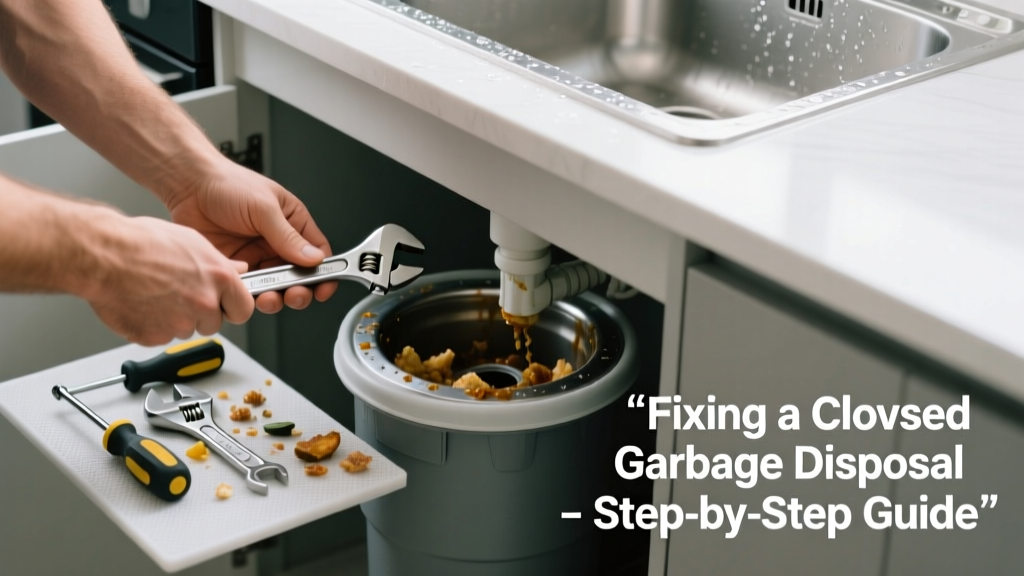
Your garbage disposal hums but won’t grind—or worse, it’s completely silent and water pools in the sink. That gurgle isn’t just annoying; it’s a warning that food debris, grease, or foreign objects have jammed the unit or blocked the drain line.
Quick Diagnosis
Before grabbing tools, identify what’s really wrong. A clog isn’t always inside the disposal itself—sometimes it’s downstream in the P-trap or branch drain. Here are the most common culprits:
- Stuck impeller plate (motor spins but blades don’t turn)
- Fat, oil, or grease solidified in the drain pipe
- Fibrous food like celery, onion skins, or potato peels wrapped around the grind ring
- Non-grindable items: bones, coffee grounds, fruit pits, or utensils accidentally dropped in
- A blocked P-trap or air gap (especially if both kitchen sinks back up)
Tools & Materials Needed
| Item | Purpose | Estimated Cost |
|---|---|---|
| Hex wrench (¼") | Manually rotates the impeller plate to free jams | $2–$5 |
| Plumber’s pliers or channel locks | Grip and remove stubborn debris from the grinding chamber | $8–$15 |
| Plunger (cup-style, not flange) | Creates pressure to dislodge soft clogs in the drain line | $5–$12 |
| Baking soda + white vinegar | Natural reaction helps break down organic buildup | $3–$6 |
| Flashlight | Inspect inside the disposal chamber safely | $4–$10 |
Step-by-Step Fix
Try these methods in order—from safest to most involved. Always shut off power at the circuit breaker *before* inserting anything into the disposal chamber.
- Reset the disposal: Locate the red reset button on the bottom or side of the unit. Press firmly—if it clicks, wait 10 seconds, then try turning it on with the wall switch.
- Free the impeller: Insert the hex wrench into the center bottom hole and gently rock it back and forth to loosen stuck debris. Rotate fully clockwise and counterclockwise several times.
- Clear the drain line: Use a cup plunger over the disposal opening (cover the other sink drain with a wet rag if double-basin). Pump vigorously 15–20 times while keeping a tight seal.
- Flush with baking soda and vinegar: Pour ½ cup baking soda followed by ½ cup white vinegar into the disposal. Let fizz for 10 minutes, then flush with 2 quarts of boiling water (not boiling if PVC pipes—use hot tap water instead).
- Remove the P-trap: Place a bucket under the U-shaped pipe beneath the sink. Loosen slip nuts with pliers, detach the trap, and clear out trapped food or grease. Reassemble tightly and test.
When to Call a Pro
Don’t risk electrocution, pipe damage, or voiding your warranty. Call a licensed plumber if:
- You hear a loud grinding or screeching noise—even after resetting and manual rotation
- Water backs up into the second sink or floor drain (sign of a main line blockage)
- The disposal smells strongly of burning rubber or emits smoke
- You’ve tried all safe DIY steps twice and the unit still won’t drain or spin
According to the Insurance Institute for Business & Home Safety's 2023 report, 37% of kitchen plumbing emergencies involving disposals require professional intervention due to hidden pipe corrosion or improper prior repairs.
Prevention Tips
Most clogs are preventable with consistent habits:
- Run cold water for 15–30 seconds before, during, and after using the disposal (cold water solidifies grease so it can be chopped and flushed)
- Never put fibrous, starchy, or hard items in—including corn husks, pasta, rice, eggshells, or coffee grounds
- Grind citrus peels weekly to deodorize and help clean internal surfaces
- Clean the rubber splash guard monthly with vinegar-soaked cloth—mold and gunk here often restrict flow
- Install an air gap if you don’t already have one—it prevents backflow and reduces clog risk
Can I use bleach on this?
No. Bleach corrodes metal components, degrades rubber seals, and reacts dangerously with leftover food acids or ammonia-based cleaners. It also does nothing to dissolve organic clogs—the EPA warns that chlorine bleach is ineffective against grease and biofilm buildup in drains.
Why does my disposal smell even after cleaning?
Odors usually come from decomposing food trapped in the rubber baffle, under the sink gasket, or inside the P-trap—not the disposal chamber itself. Try scrubbing the underside of the splash guard with a vinegar-dampened toothbrush and flushing the trap with ½ cup baking soda + 1 cup hot vinegar.
Is it safe to use a drain snake?
Only if it’s a *disposal-safe* auger with a plastic-coated tip—standard metal snakes can scratch the grinding chamber or damage the impeller. Never force it past the flange. Better yet, skip snaking entirely and use the hex wrench method first.
What if the disposal hums but doesn’t spin?
This means the motor is running but the impeller is jammed. Power off, insert the hex wrench, and rotate manually. If it won’t budge after 30 seconds of gentle rocking, stop—something may be wedged between the impeller and housing. Don’t risk breaking the motor.
Can hot water make a clog worse?
Yes—especially with grease. Hot water melts grease only temporarily; it re-solidifies further down the pipe where temperatures drop, creating a worse blockage. The U.S. EPA estimates that 14% of household water usage is from leaks and inefficient practices like pouring hot grease down drains.
How often should I clean my garbage disposal?
Weekly maintenance prevents most clogs. Run ice cubes + ¼ cup coarse salt through it for 30 seconds to scour the grind ring. Follow with lemon or orange peels for freshness. Deep-clean the baffle and trap every 3 months.
A clogged disposal isn’t just inconvenient—it’s a sign your kitchen’s drainage system needs attention. Fixing it right the first time saves money, prevents mold growth under the sink, and keeps your plumbing healthy longer. If you’ve cleared the jam but notice slow draining afterward, check the main kitchen sink drain or consider inspecting your vent stack—restricted airflow can mimic a clog.