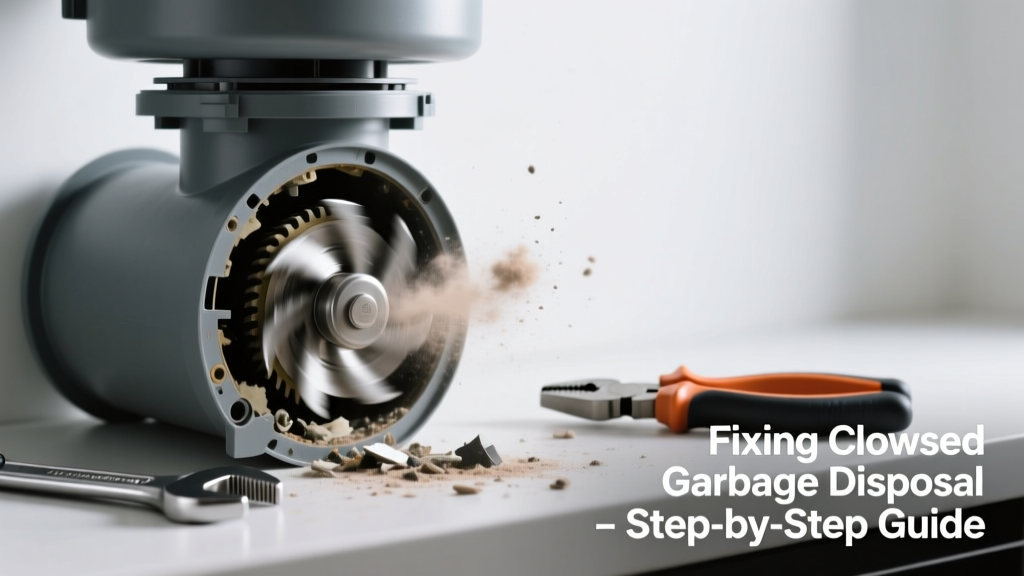
That sudden grind-grind-hum followed by silence—or worse, a high-pitched whine—isn’t just annoying; it’s your disposal screaming for help. Most clogs causing unusual noise stem from simple blockages or trapped objects, not motor failure. And the good news? Over 85% of noisy disposal issues are resolved without replacing the unit, according to the Plumbing-Heating-Cooling Contractors Association’s 2022 field survey.
Quick Diagnosis
Before grabbing tools, identify what the noise tells you:
- Grinding or scraping: Likely a foreign object (utensil, bone fragment, or fruit pit) jamming the impellers
- Humming with no rotation: Motor is energized but impellers are seized—classic jam condition
- Rattling or clanking: Loose or broken internal component (e.g., flywheel bolt or mounting assembly)
- Gurgling or bubbling sound: Drain line clog downstream—not in the disposal itself, but in the P-trap or branch drain
Tools & Materials Needed
| Item | Purpose | Estimated Cost |
|---|---|---|
| Hex-key (Allen wrench), 1/4" | Manually rotates the disposal’s center shaft to free jams | $3–$8 |
| Plumber’s pliers or channel locks | Grip and extract stuck objects or loosen mounting ring | $12–$25 |
| Flashlight with flexible neck | Illuminates dark interior and trap access points | $8–$18 |
| Baking soda + white vinegar | Natural de-greaser and mild acid cleaner for organic buildup | $4–$6 |
| Zip-it tool or bent wire hanger | Retrieves hair/fiber debris from drain pipe beyond disposal | $2–$5 |
Step-by-Step Fix
Work methodically—and always disconnect power at the circuit breaker first. Never insert hands or utensils while power is live.
- Shut off power and confirm it’s dead: Flip the dedicated 15-amp breaker, then test the wall switch with a non-contact voltage tester. If the disposal has a reset button on the bottom, press it only after confirming power is off.
- Free the impellers manually: Insert the 1/4" hex-key into the center hole on the bottom of the unit. Turn back-and-forth gently—don’t force it—to dislodge obstructions. You’ll feel resistance release when the jam breaks.
- Clear visible debris with tongs or needle-nose pliers: Shine your flashlight inside the drain opening. Use rubber-handled tongs (never fingers) to remove food chunks, plastic wrappers, or small bones. Rotate the splash guard to inspect deeper.
- Flush and test the drain line: Pour ½ cup baking soda followed by 1 cup white vinegar down the disposal. Let it fizz for 10 minutes, then flush with 2 quarts of near-boiling water. Run cold water for 30 seconds, then briefly energize the unit.
- Check the P-trap: Place a bucket under the sink, loosen slip nuts with pliers, and remove the P-trap. Clear sludge or trapped debris—especially coffee grounds or grease clumps. Reassemble tightly and check for leaks.
When to Call a Pro
Some situations require licensed expertise—not just for safety, but to prevent water damage or code violations:
- You hear a loud metallic clunk followed by complete silence—even after manual rotation
- The disposal emits a burning odor or trips the breaker repeatedly
- Water backs up into the dishwasher or second sink (indicating a main branch or vent issue)
- You suspect a cracked housing or failed seal—visible moisture around the mounting ring or underside
"More than 40% of emergency plumbing calls related to disposals involve improper attempts to clear jams with chemical drain cleaners—which corrode seals and void warranties." — Plumbing Standards Institute, 2023 Field Incident Report
Prevention Tips
Long-term quiet operation starts with habits—not hardware:
- Always run cold water for 15–20 seconds before and 30 seconds after using the disposal (cold water solidifies grease so it can be chopped and flushed)
- Never grind fibrous foods (celery, onion skins, corn husks) or starchy items (potato peels, rice) that expand or bind in pipes
- Use the disposal weekly—even with just ice cubes and citrus rinds—to keep impellers lubricated and odors neutralized
- Install a disposal air switch instead of a standard wall switch—it reduces accidental activation and improves safety
Can I use bleach on this?
No. Bleach doesn’t dissolve food clogs and reacts dangerously with other cleaners or metals in the system. It also degrades rubber gaskets and accelerates corrosion in cast-iron or galvanized pipes. Stick to baking soda/vinegar or enzymatic cleaners labeled safe for disposals.
Why does it only make noise when I turn it on—but nothing spins?
This is almost always a seized impeller due to a jammed object. The motor hums because it’s receiving power, but the rotor can’t turn. Manual rotation with the hex-key usually resolves it—if not, the start capacitor or motor windings may be failing.
Is it safe to use a plunger on a clogged disposal?
Only if the disposal is completely powered off and the sink stopper is removed. Use a cup-style plunger (not flange) over the disposal opening—not the sink drain—and create firm, slow strokes. Don’t plunge if you suspect a hard object is lodged in the grinding chamber.
What’s the difference between a ‘hum’ and a ‘buzz’?
A low, steady hum suggests the motor is energized but impellers are locked. A sharp, rapid buzz often means the start capacitor is failing or the unit is overloaded—especially if it occurs after extended use or hot weather.
How long should a garbage disposal last?
With proper care, most units last 8–12 years. However, the average homeowner replaces theirs after 7.2 years, often due to avoidable clogs, misuse, or ignoring early warning noises like intermittent grinding.
Can a clogged disposal cause sewer gas smells?
Yes—especially if the clog traps decomposing food in the trap or baffle. That stagnant material produces hydrogen sulfide. Once cleared, run ice cubes and lemon peels for 30 seconds to scour the chamber and deodorize.
A noisy disposal isn’t a death sentence—it’s a diagnostic signal. Most grinding, humming, or rattling issues respond quickly to methodical inspection and mechanical clearing. Treat it like a conversation: listen closely, act deliberately, and respect the power involved. When you restore that smooth, silent whirl, you’re not just fixing a drain—you’re reclaiming peace in your kitchen workflow.