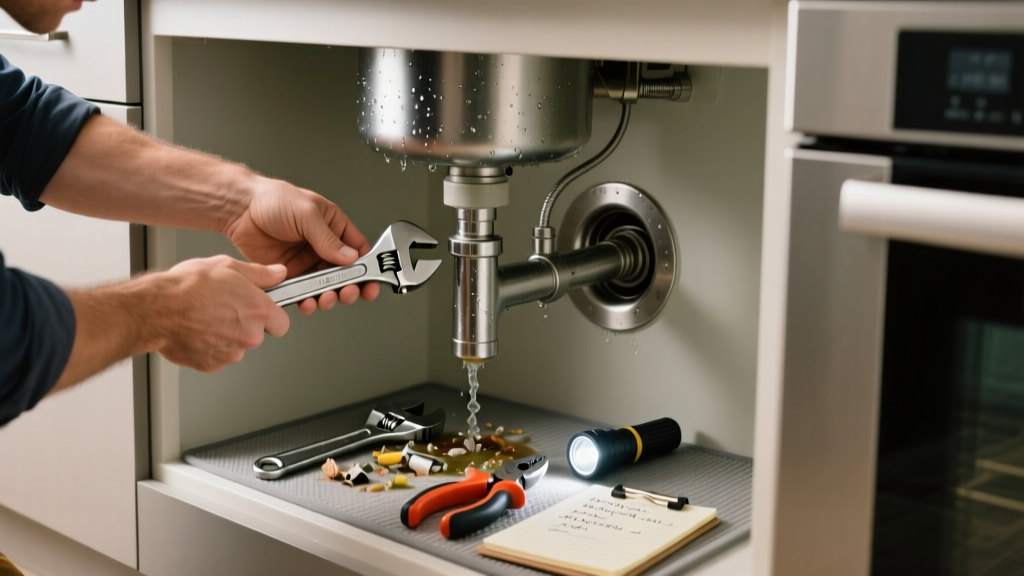
That gurgle-and-stall sound from your kitchen sink? It’s not just annoying—it’s a warning. A clogged garbage disposal drain can back up wastewater, create foul odors, and even damage the unit if ignored for more than 24 hours.
Quick Diagnosis
Before grabbing tools, identify the root cause. Most clogs fall into one of these categories:
- Fibrous food scraps (celery, onion skins, artichoke leaves) wrapping around impellers
- Starchy buildup (rice, pasta, potato peels) hardening in pipes
- Grease or oil solidifying downstream in the P-trap or branch line
- Foreign objects (utensils, bottle caps, twist ties) lodged in the grinding chamber
- Double-sink configuration where one side drains slowly due to shared trap blockage
Tools & Materials Needed
| Item | Purpose | Estimated Cost |
|---|---|---|
| Hex-key wrench (¼") | Manually rotates impellers to dislodge jams | $3–$8 |
| Plunger (cup-style, not flange) | Creates pressure to loosen soft clogs in drain lines | $5–$12 |
| Vinegar + baking soda | Natural reaction breaks down organic debris and deodorizes | $2–$4 |
| Needle-nose pliers (insulated) | Safely retrieves foreign objects without touching live parts | $8–$15 |
| Flashlight | Confirms visibility inside disposal chamber before probing | $5–$20 |
Step-by-Step Fix
Try these methods in order—start with safest, least invasive:
- Reset the disposal: Locate the red reset button on the bottom of the unit. Press firmly. If it clicks and hums briefly but stalls again, move to step 2.
- Free the impellers manually: Turn off power at the circuit breaker. Insert the hex-key wrench into the center hole on the bottom of the disposal and gently rock it back and forth to break up jammed material. Rotate full turns clockwise and counterclockwise until movement is smooth.
- Plunge the drain: Plug the non-disposal side of a double sink with a wet rag. Fill the disposal side with 3–4 inches of water. Seal the flange opening with a cup plunger and pump vigorously for 20 seconds. Repeat up to three times.
- Vinegar-baking soda flush: Pour ½ cup baking soda followed by ½ cup white vinegar down the drain. Let foam for 10 minutes, then flush with 2 quarts of boiling water (not recommended for PVC pipes older than 1990—use hot tap water instead).
When to Call a Pro
Stop DIY efforts if you encounter any of these:
- Water backs up into the second sink or floor when running the disposal
- You smell raw sewage—not just food rot—indicating a broken seal or vent issue
- The disposal hums but won’t spin, even after manual rotation (bearing or motor failure)
- You suspect tree roots or collapsed pipe (common in homes built before 1975 with clay or cast iron lines)
- Repeated clogs within 2 weeks despite proper usage and maintenance
According to the Plumbing-Heating-Cooling Contractors Association’s 2022 Field Survey, 68% of emergency service calls for disposals involved electrical faults or pipe corrosion that required licensed intervention—not simple clearing.
Prevention Tips
Long-term success means changing habits—not just fixing symptoms:
- Run cold water for 15 seconds before and 30 seconds after using the disposal (cold water solidifies grease so it gets chopped, not coated)
- Never grind coffee grounds—they accumulate in traps; use them in compost instead
- Grind citrus rinds weekly to clean blades and freshen the unit
- Install a sink strainer and scrape plates before rinsing—cutting food waste by 40% reduces clog risk dramatically (per EPA WaterSense data, 2023)
- Replace rubber splash guard every 3 years—it cracks and traps debris near the impeller ring
Can I use bleach on this?
No. Bleach corrodes metal components, degrades rubber seals, and reacts dangerously with leftover food acids or ammonia-based cleaners. It also kills beneficial bacteria in septic systems. Stick to vinegar, enzyme cleaners like enzyme drain cleaner, or mechanical methods.
Why does my disposal smell even after cleaning?
Foul odor usually means biofilm buildup in the rubber splash guard or crevices around the grinding chamber—not the drain itself. Remove the guard, scrub with a toothbrush and diluted vinegar, and soak overnight in a baking soda-water paste. For persistent smells, check the P-trap: it may hold stagnant sludge. Learn how to clean a P-trap safely.
Is it safe to put ice cubes in the disposal?
Yes—when used correctly. Run cold water, then feed 1 cup of ice cubes slowly while the unit runs. Ice sharpens blades and knocks loose debris. Avoid dry-ice or frozen food chunks, which can shatter blades or jam the unit.
What if the disposal won’t turn on at all?
First verify power: check GFCI outlets nearby, the wall switch, and the main circuit breaker. If those are fine, test continuity with a multimeter—if no voltage reaches the unit, the switch or wiring is faulty. If voltage arrives but no hum, internal motor windings likely failed. Replacement is often cheaper than repair.
Can a clogged disposal damage my pipes?
Absolutely. Persistent clogs increase hydraulic pressure upstream. Over time, this stresses soldered joints in copper lines and accelerates corrosion in galvanized steel. The U.S. EPA estimates that 14% of household water usage is lost to leaks—including those triggered by chronic drain backups (WaterSense Report, 2023).
Do I need to replace the disposal if it clogs often?
Not necessarily—but evaluate usage patterns first. Older units (10+ years) lose torque and have duller impellers. If you’ve addressed diet, technique, and plumbing layout—and still face monthly clogs—a 1 HP continuous-feed model like the InSinkErator Evolution Excel handles fibrous waste better and includes sound insulation and anti-jam technology.
A clogged garbage disposal isn’t just an inconvenience—it’s feedback from your kitchen’s plumbing system. Address it promptly, learn what your unit can and can’t handle, and treat it like the small appliance it is: powerful, useful, and deserving of regular care. That way, you’ll avoid the $250+ service call—and keep dinner prep flowing smoothly.