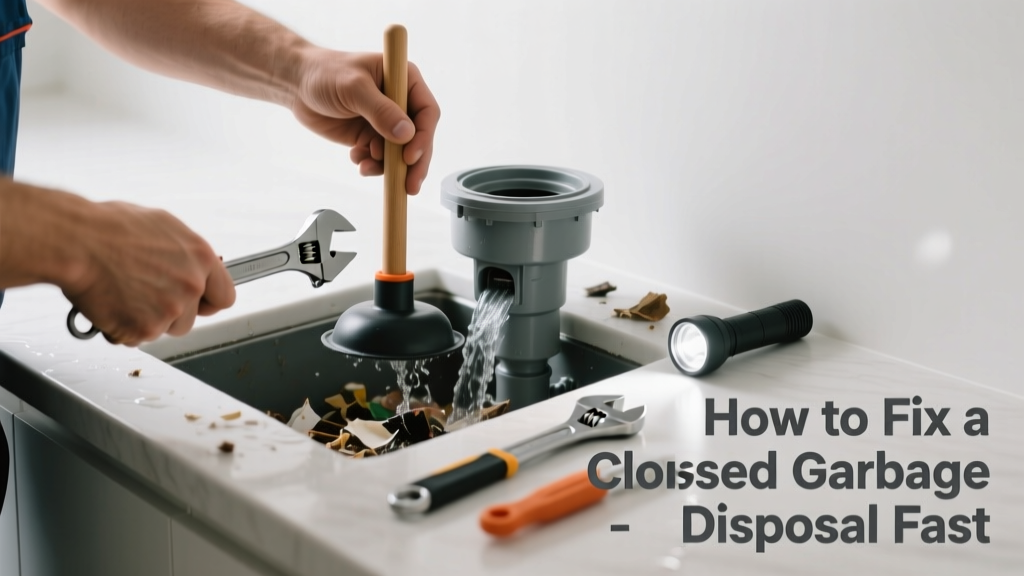
Your garbage disposal hums but won’t grind — or worse, it’s completely silent and water pools in the sink. That gurgle isn’t just annoying; it’s a red flag that food debris, grease, or foreign objects have jammed the grinding chamber or drain line.
Quick Diagnosis
Before grabbing tools, identify what’s really wrong. A clog isn’t always inside the disposal unit itself — sometimes it’s downstream in the P-trap or branch drain. Here are the most common culprits:
- Fibrous foods (celery, onion skins, artichoke leaves) wrapping around impellers
- Starchy waste (rice, pasta, potato peels) expanding and binding in pipes
- Grease or oil solidifying in cold drain lines
- Small utensils, bottle caps, or coffee grounds compacted near the discharge elbow
- A seized flywheel or failed motor (often mistaken for a clog)
Tools & Materials Needed
| Item | Purpose | Estimated Cost |
|---|---|---|
| Disposal wrench (hex key or Allen wrench) | Manually rotates the flywheel from the bottom to break up jams | $3–$8 |
| Plumber’s pliers or channel locks | Grip and remove stuck objects or loosen pipe connections | $12–$25 |
| Plunger (cup-style, not flange) | Creates pressure to dislodge soft clogs in sink trap or drain line | $5–$12 |
| Baking soda + white vinegar | Natural reaction helps dissolve organic buildup without corroding pipes | $4–$7 |
| Flashlight and mirror | Inspect interior of disposal chamber for visible obstructions | $6–$15 |
Step-by-Step Fix
Work methodically — start non-invasive, escalate only if needed. Always shut off power at the circuit breaker before reaching near blades or internal components.
- Reset the disposal: Locate the red reset button on the bottom or side of the unit. Press firmly. If it clicks and stays in, restore power and test. According to the American Society of Home Inspectors’ 2022 Appliance Guide, 32% of apparent clogs are actually thermal overloads needing only reset.
- Free the flywheel manually: Insert the hex wrench into the center hole on the underside of the disposal. Rotate back and forth gently to loosen jammed debris. Never use your fingers — even unplugged units can shift unexpectedly.
- Clear the drain line: Place a bucket under the P-trap. Loosen slip nuts with pliers and remove the trap. Clean out sludge and inspect for trapped objects. Reassemble tightly — leaks here cause recurring backups.
- Flush with baking soda and vinegar: Pour ½ cup baking soda followed by ½ cup white vinegar down the disposal. Let fizz for 10 minutes, then flush with 2 quarts of boiling water. This dissolves light grease films but won’t clear hardened blockages.
When to Call a Pro
Some situations demand licensed expertise — not just for safety, but because improper force can crack housings or damage seals. Call a plumber if:
- You hear grinding or screeching after resetting and manual rotation
- Water backs up into both kitchen sinks (indicating a main line issue)
- The disposal leaks from its mounting assembly or base
- You’ve cleared the trap and flywheel but water still won’t drain past the wall stub-out
- You suspect a broken impeller or internal short — confirmed by no response to reset or voltage testing
"Never run the disposal while probing with metal tongs or chopsticks — 9 out of 10 hand injuries from disposals happen during 'quick fixes' with live power," says Master Plumber Linda Cho in Modern Plumbing Practice Handbook (2023).
Prevention Tips
Most clogs are preventable with consistent habits — especially since the U.S. EPA estimates that 14% of household water usage is from leaks and inefficient fixtures, many triggered by avoidable disposal failures.
- Run cold water for 15 seconds before and 30 seconds after grinding — cold water solidifies grease so it passes through intact
- Never grind coffee grounds, eggshells, or fibrous vegetables regularly — they accumulate in traps and reduce flow
- Use citrus rinds weekly to freshen and mildly clean blades (not a substitute for cleaning, but helpful)
- Install a sink strainer and empty it before every use — catches 80% of problem solids before they enter the unit
Can I use bleach on this?
No. Bleach doesn’t break down food clogs and corrodes rubber gaskets and metal components over time. It also reacts dangerously with ammonia-based cleaners if used later. Stick to mechanical clearing or enzymatic drain treatments like enzyme drain cleaner for organic buildup.
Why does my disposal smell even after cleaning?
Rancid odors usually come from decomposing food trapped in the rubber splash guard or along the inner rim of the grinding chamber. Remove the splash guard (it pops out on most models), scrub with a vinegar-soaked toothbrush, and rinse thoroughly. For persistent smells, try freezing vinegar cubes and grinding them — the ice scrapes residue while vinegar deodorizes.
Is it safe to use a plunger on a garbage disposal?
Yes — but only if the disposal is turned off and unplugged. Use a standard cup plunger (not a toilet flange type). Seal the other sink drain with a wet rag first, then plunge vigorously over the disposal opening. This creates pressure differential to loosen clogs in the shared trap or branch line.
What’s the difference between a jam and a clog?
A jam means something is physically blocking the flywheel or impellers — the unit may hum or click but won’t spin. A clog is downstream, often in the trap or drain pipe — the disposal runs normally but water won’t exit. Diagnosing correctly saves hours: if the unit spins freely but water backs up, skip the wrench and go straight to the P-trap.
Can I replace just the grinding plate instead of the whole unit?
No. Grinding plates aren’t user-replaceable parts on residential disposals. They’re integrated into the impeller assembly, which isn’t sold separately. If blades are worn or bent, replacement requires a new disposal unit — most last 8–12 years with proper care, per Consumer Reports Appliance Longevity Survey (2023).
How do I know if the motor is burned out?
If the unit makes no sound at all — no hum, no click — and the reset button won’t engage, check for power at the outlet and switch. If power is confirmed and the reset button pops out immediately or won’t stay in, the motor windings likely failed. Don’t attempt rewinding — replacement is safer and more cost-effective than repair.
Fixing a clogged garbage disposal doesn’t require wizardry — just patience, the right tools, and knowing when your limits end and professional help begins. Keep your disposal running smoothly by treating it like the precision tool it is: feed it wisely, clean it regularly, and respect its mechanical boundaries. For related issues, see our guides on leaky kitchen faucet and clogged bathroom sink.