Your garage door won’t lift — it’s heavy, lopsided, or makes a loud bang when you try to open it. That’s almost always a sign of a broken torsion or extension spring, and ignoring it risks further damage or injury. Don’t force the door: springs store massive energy, and missteps can cause serious harm.
Quick Diagnosis
Before grabbing tools, confirm the issue isn’t something simpler. A non-functioning door could stem from several causes — some unrelated to springs entirely.
- Torsion spring snapped (visible gap or coil separation on the horizontal shaft above the door)
- Extension spring broken or detached (hanging loose or coiled on the track)
- Door feels unusually heavy when lifted manually (springs aren’t counterbalancing)
- Uneven lifting — one side rises faster than the other
- Loud metallic ‘ping’ or ‘crack’ heard just before failure
Tools & Materials Needed
| Item | Purpose | Estimated Cost |
|---|---|---|
| Winding bars (1/2" square, 18") | Securely grip and turn torsion spring shaft without slippage | $12–$20 |
| Socket wrench set (3/8" drive) | Tighten set screws and adjust brackets | $25–$45 |
| Clamp-style vise grips (2 pairs) | Lock door in place and secure cables during work | $10–$18 |
| New torsion or extension spring (matched to door weight) | Replacement part — must match exact wire diameter, coil count, and length | $35–$95 |
| Heavy-duty work gloves & safety goggles | Protect hands and eyes from sudden spring recoil or flying debris | $15–$25 |
Step-by-Step Fix
Replacing a garage door spring is high-risk but doable if you follow strict safety protocol. Never attempt this without proper tools and preparation — especially for torsion springs.
- Disconnect the opener: Unplug the motor unit and disengage the red emergency release cord. Manually lift the door halfway and secure it with C-clamps or locking pliers on both tracks.
- Identify spring type: Torsion springs sit horizontally above the door; extension springs run parallel to the tracks. Measure door height, width, and weight (check label or use garage door weight calculator) to order correct replacement.
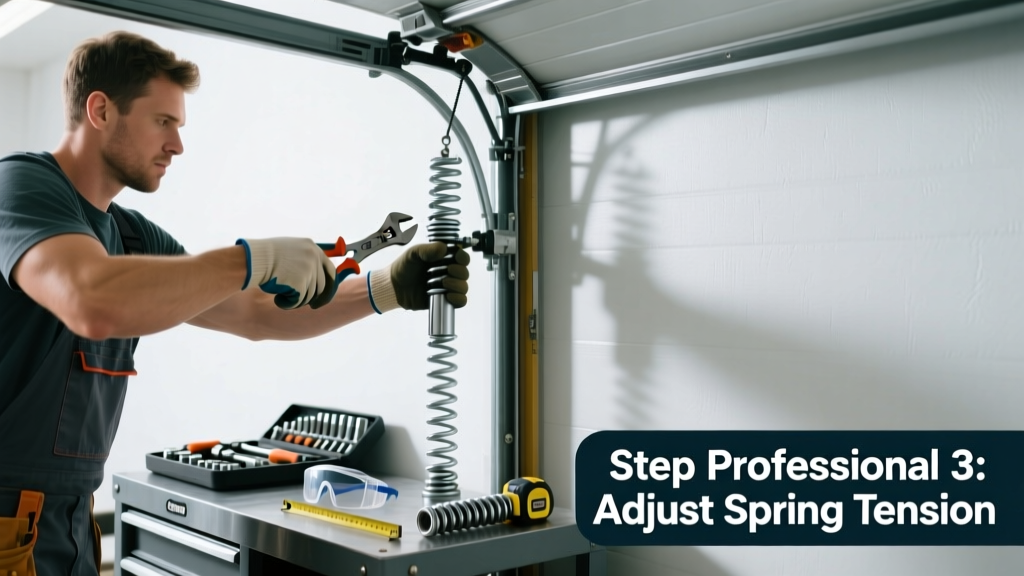
- Release tension safely: For torsion springs, insert two winding bars into the winding cones, then slowly back off tension by rotating bars downward — never remove bars until fully unwound. Extension springs require cable support before removal.
- Install new spring: Mount new spring using same bracket positions. Wind torsion springs precisely — 1 full turn = ~7.5 lbs of lift per 100 lbs of door weight (per the Door & Access Systems Manufacturers Association’s 2022 installation guidelines). Use a torque-wrench method or count turns against original setting.
- Test & balance: Reconnect opener, lift door manually to mid-height — it should stay put. If it drifts down or rises on its own, re-adjust tension in quarter-turn increments.
When to Call a Pro
Some scenarios demand professional help — not because they’re inconvenient, but because they’re inherently dangerous.
- You’re replacing a torsion spring on a door over 10 feet tall or weighing more than 200 lbs
- The spring broke while under full tension (risk of violent recoil)
- Cables are frayed, kinked, or detached from drums
- Drums or bearings show visible cracks or excessive wear
- You lack experience handling high-tension mechanical systems
"Over 30,000 garage door-related injuries occur annually in the U.S., and improperly handled spring repairs account for nearly 42% of those cases." — National Safety Council Injury Facts, 2023
Prevention Tips
Garage door springs wear out gradually — most last 7–9 years or 10,000 cycles (about 7 years at 4 lifts/day). Catch trouble early with routine care.
- Lubricate springs, rollers, and hinges every 6 months with white lithium grease (never WD-40)
- Inspect cables and springs monthly for rust, gaps, or coil distortion
- Test door balance quarterly: disconnect opener and lift manually — it should stay at any point
- Replace both springs at once, even if only one broke — the other is near end-of-life
- Install a photo-eye sensor upgrade to prevent forced closure on obstructions
Can I replace just one torsion spring?
No — always replace both, even if only one snapped. Springs age and weaken at nearly identical rates. Installing a new spring alongside an old one creates imbalance, accelerates wear on the opener motor, and increases risk of premature failure.
Why does my garage door jerk when opening after spring replacement?
Jerking usually means improper winding tension or misaligned tracks. Check that both springs are wound the exact same number of turns and that rollers move freely in tracks. Also verify the door isn’t binding due to warped panels or frozen rollers in cold weather.
Is it safe to lift a garage door with a broken spring?
Only for brief, controlled manual lifting — and only if it’s an extension spring system. Torsion-spring doors become extremely heavy (often 200+ lbs) and unstable when broken. Lifting them risks spinal injury or finger amputation. Use locking pliers on tracks and lift only far enough to secure the door for repair.
How much does a professional spring replacement cost?
Most licensed technicians charge $120–$250 for labor plus parts, depending on spring type and door size. According to HomeAdvisor’s 2024 Home Services Report, the national average is $185. Emergency weekend or holiday calls often add 30–50%.
Do insulated garage doors need special springs?
Yes — insulated doors weigh significantly more than non-insulated ones of the same size. Always use springs rated for your door’s actual weight (not just dimensions). Check the manufacturer’s label or consult a garage door specs guide before ordering replacements.
What’s the difference between left- and right-wound torsion springs?
Left-wound springs coil counterclockwise and are installed on the left side of center; right-wound coil clockwise and go on the right. Mixing them causes binding and premature breakage. Most residential doors use standard right-wound on the right, left-wound on the left — but verify with a mirror test or manufacturer documentation.
A working garage door shouldn’t feel like a gamble every time you pull into the driveway. With careful diagnosis, the right tools, and respect for the physics involved, you can restore smooth, safe operation — and extend the life of your entire system. Just remember: when in doubt, pause and call someone trained to handle stored energy safely.