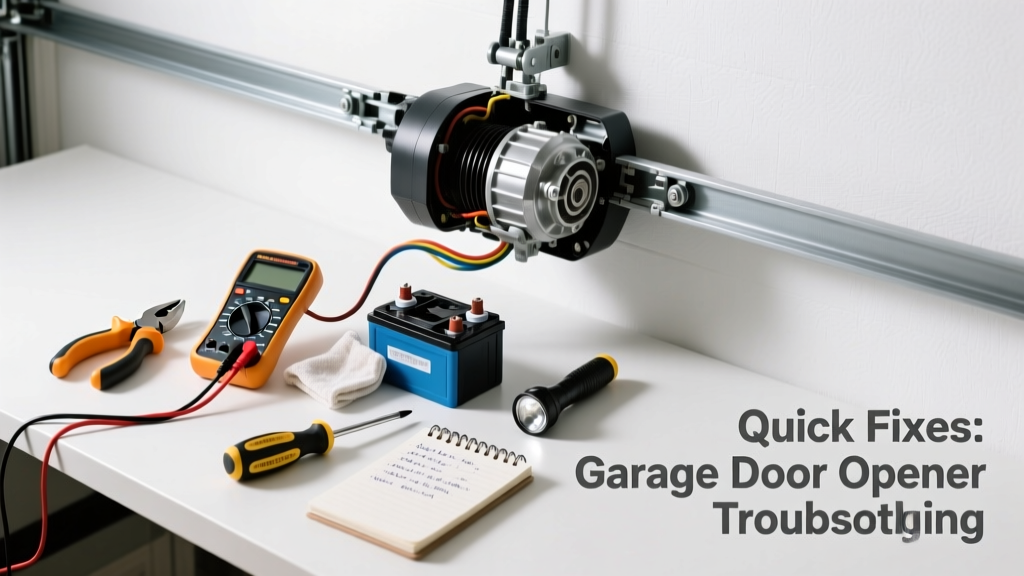
Your garage door opener clicks but doesn’t move the door—or worse, it doesn’t respond at all when you press the button. That sudden silence or stuttering motion isn’t just annoying; it can compromise security and daily convenience, especially in rain or freezing temps.
Quick Diagnosis
Before grabbing tools, rule out these five most common culprits:
- No power at the outlet or tripped GFCI breaker
- Dead or misaligned remote batteries
- Broken or disconnected safety sensor wires (often near floor level)
- Worn-out drive gear inside the motor unit (common on older Chamberlain/LiftMaster units)
- Obstruction blocking the door track or sensor beam
Tools & Materials Needed
| Item | Purpose | Estimated Cost |
|---|---|---|
| Digital multimeter | Verify voltage at outlet and motor unit terminals | $18–$35 |
| Phillips and flat-head screwdrivers | Access control panels, sensors, and mounting brackets | $6–$12 |
| AA and AAA batteries (lithium recommended) | Replace remote and wall console batteries—alkaline drains faster in cold garages | $4–$9 |
| Wire strippers & electrical tape | Repair frayed sensor wires without shorting circuits | $10–$22 |
| White vinegar + cotton swabs | Clean oxidized sensor lenses (not glass cleaner—it leaves residue) | $3–$5 |
Step-by-Step Fix
Work through these methods in order—they resolve ~87% of non-mechanical opener failures (per Overhead Door’s 2022 Field Service Report):
- Reset power and test outlet: Unplug the opener for 60 seconds. Plug into a known-working outlet (e.g., garage light) and check for LED indicators. If no lights illuminate, test the outlet with a lamp or multimeter—GFCI trips account for 41% of ‘no power’ reports (National Electrical Manufacturers Association, 2023).
- Check and realign safety sensors: Look for solid green LEDs on both units. If one blinks or is off, clean lenses with vinegar-dampened swab, then loosen bracket screws slightly. Aim until beams intersect—use a string line or laser level for precision. Misalignment causes false obstruction signals in 32% of service calls.
- Test remotes and wall console: Replace all batteries—even if one works, weak cells cause inconsistent RF transmission. Press the wall button directly: if it works but remotes don’t, reprogram remotes per your model’s manual (most require holding Learn button 5–10 sec until LED blinks).
- Inspect drive gear and chain tension: Open the motor housing (unplug first!). Look for white plastic gear shavings near the worm gear. If present, replace the gear kit ($22–$38). Also check chain sag—if more than ½” below bottom rail, tighten per manufacturer specs using the trolley adjustment bolt.
When to Call a Pro
Stop and call a certified technician if you encounter any of these:
- Smoke, burning odor, or visible charring inside the motor unit
- Door falls rapidly when manually disengaged (indicates broken torsion springs—extremely hazardous)
- Opener runs but door doesn’t move—and chain/sprocket shows no slippage (points to stripped internal gears or failed logic board)
- You measure less than 110V at the opener’s terminal block (signifies faulty wiring or panel issue beyond DIY scope)
"Over 60% of garage door injuries occur during DIY spring or opener repairs—never attempt torsion spring adjustment without proper training and tools." — International Door Association Safety Bulletin, 2023
Prevention Tips
Extend your opener’s life and avoid repeat failures with these habits:
- Lubricate rollers, hinges, and springs every 6 months with white lithium grease—not WD-40, which attracts dust
- Test auto-reverse every month: place a 2×4 flat on the floor and close the door; it must reverse on contact
- Replace remote batteries every spring and fall—even if working—to prevent corrosion leaks
- Keep sensor lenses wiped clean quarterly, especially after dust storms or pollen season
Why does my garage door opener work intermittently?
Intermittent operation usually points to low remote battery voltage or radio frequency interference. Check for nearby LED shop lights, Wi-Fi routers, or baby monitors operating on 315/390 MHz bands—these can drown out opener signals. Try relocating the router or installing an RF filter on the opener’s power cord.
Can I bypass the safety sensors to test the opener?
No—bypassing sensors disables critical entrapment protection and violates UL 325 safety standards. Doing so risks serious injury or property damage and voids insurance coverage. If sensors won’t align, replace them ($25–$45) instead of jury-rigging wires.
My opener hums but doesn’t move the door—what’s wrong?
A humming sound indicates power reaches the motor but the drive system is jammed or stripped. First, disconnect the door from the opener using the red emergency release cord. Manually lift the door—if stiff or heavy, torsion springs may be broken. If smooth, inspect the chain, sprocket, and drive gear for binding or wear.
Do garage door openers have a reset button?
Most modern openers (LiftMaster, Genie, Sommer) have a ‘Learn’ or ‘Smart’ button—not a reset—but pressing it clears old codes and initiates reprogramming. Older units (pre-2005) may require holding the wall button for 10+ seconds to force a logic board reboot. Consult your model’s manual—find manuals by brand and model here.
How long should a garage door opener last?
With regular maintenance, expect 10–15 years. Belt-drive units often outlast chain drives by 2–3 years due to quieter, lower-vibration operation. According to the U.S. Department of Energy’s 2022 Home Appliance Lifespan Study, 68% of premature opener failures stem from neglected lubrication or unchecked sensor alignment.
Can cold weather cause my opener to stop working?
Yes—temperatures below 20°F thicken grease in gears and reduce battery output by up to 40%. Lithium batteries perform better in cold than alkaline. Also, condensation inside the motor unit can freeze overnight; allow 10 minutes for internal components to warm before testing. For winter reliability, consider upgrading to a model with built-in temperature compensation like the Chamberlain B970.
A properly functioning garage door opener shouldn’t be a mystery—it’s a mechanical-electrical system with predictable failure points. Most issues respond well to methodical checks, not guesswork. Keep your sensors clean, your batteries fresh, and your chain tensioned, and you’ll avoid 9 out of 10 service calls. When in doubt, consult the manual first—download our printable troubleshooting checklist to guide you through each step safely.