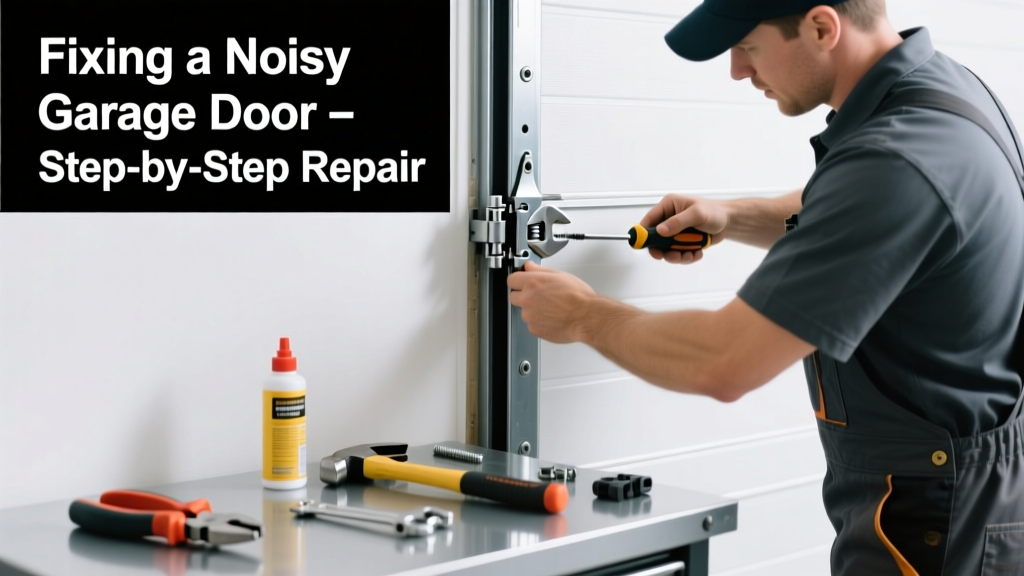
That sudden clanking, grinding, or high-pitched screech when your garage door moves isn’t just annoying—it’s a warning sign. Most noisy garage doors stem from simple wear, misalignment, or lack of lubrication, not imminent failure. With the right tools and 30 minutes, you can often restore quiet operation yourself.
Quick Diagnosis
Before grabbing tools, listen carefully and note when the noise occurs:
- Squeaking or screeching during upward travel → Dry hinges, rollers, or spring coils
- Clanging or banging at the top or bottom → Loose track brackets or worn limit switches
- Grinding or rumbling mid-cycle → Worn nylon bushings in rollers or damaged torsion spring bearings
- Rattling panels → Loose hinge screws or deteriorated weather seal mounting
- Thumping on close → Misadjusted auto-reverse sensitivity or worn safety sensor alignment
Tools & Materials Needed
| Item | Purpose | Estimated Cost |
|---|---|---|
| White lithium grease spray | Lubricates metal-on-metal contact points without attracting dust | $8–$12 |
| Socket set (¼" and ⅜" drive) | Tightens hinge, bracket, and roller hardware safely | $15–$25 |
| Adjustable wrench | Secures tension on track bolts and spring anchor plates | $10–$18 |
| Level (24") | Verifies vertical and horizontal track alignment | $12–$20 |
| Flashlight with magnet base | Illuminates overhead components while freeing both hands | $6–$14 |
Step-by-Step Fix
- Power down and secure the door: Unplug the opener and disengage the release cord. Manually lift the door halfway and prop it open with a 2×4 to prevent accidental closure.
- Clean and lubricate moving parts: Wipe grime from rollers, hinges, and springs with a lint-free rag. Apply white lithium grease—not WD-40—to each roller axle, hinge pin, and torsion spring coil (avoid the cable drum or motor gear).
- Tighten all hardware: Check every hinge screw (especially top three), track bracket bolt, and roller bracket fastener. Tighten only until snug—over-torquing bends thin-gauge steel tracks.
- Check track alignment: Use your level against both vertical and horizontal track sections. If the level bubble drifts more than ⅛" over 24", loosen bracket bolts slightly, tap track into position with a rubber mallet, then re-tighten.
- Test and recalibrate: Reconnect the opener and run a full cycle. If noise persists near the header, inspect the opener’s chain or belt tension—consult your garage door opener chain tension adjustment guide.
When to Call a Pro
Some noises signal serious mechanical risk. Stop immediately and call a certified technician if you hear:
- A loud twang or snapping sound—possible torsion spring fracture (under 200+ lbs of tension)
- Visible bowing or separation in the torsion tube or end bearing plates
- Rollers wobbling sideways or spinning freely on axles (indicating broken nylon bushings)
- Opener motor straining, humming without movement, or tripping circuit breakers
According to the Door & Access Systems Manufacturers Association (DASMA) 2022 safety bulletin, 62% of garage door injuries involve attempted DIY repairs on spring systems.
"Never attempt to adjust or replace torsion springs yourself—even experienced handymen lack the specialized winding tools and torque calibration needed for safe service." — DASMA Certified Technician Handbook, 2022
Prevention Tips
Proactive care cuts long-term repair costs and extends door life by 5–8 years. Do these quarterly:
- Lubricate all rollers, hinges, and spring coils with white lithium grease (not oil-based products)
- Inspect roller wheels for cracks, flat spots, or uneven wear; replace in sets of four
- Verify track alignment using a level—tighten loose brackets before noise begins
- Check weather seal compression: if gaps exceed ⅛" at any point, replace the bottom seal
- Test auto-reverse by placing a 2×4 under the door—it should reverse within 2 seconds of contact
Why does my garage door squeak only when opening?
Squeaking exclusively on the upstroke usually points to dry hinge pins or roller axles on the upper sections—where gravity pulls components tighter during lift. It’s rarely the opener motor itself unless accompanied by whining or overheating smells.
Can I use WD-40 on garage door rollers?
No. WD-40 is a solvent and light lubricant that evaporates quickly and attracts dust and metal shavings. Over time, it dries out rubber bushings and leaves abrasive residue. Use white lithium grease or silicone-based lubricants rated for metal-to-metal contact instead.
What does a grinding noise mean?
Grinding typically signals metal-on-metal contact where plastic or nylon components have failed—most often worn roller bushings or seized hinge pivots. Less commonly, it indicates a bent track forcing rollers off-center. Inspect rollers closely: if you see exposed metal shafts or cracked housings, replacement is required.
How often should I lubricate my garage door?
Every 3–6 months in moderate climates; every 2 months in coastal, dusty, or high-humidity areas. Homes with salt air or heavy pollen see accelerated corrosion—lubrication intervals should shrink accordingly. Always wipe old grease away first to avoid buildup.
Is a rattling garage door dangerous?
Rattling alone isn’t inherently dangerous but often reveals underlying issues: loose hinge screws, degraded panel insulation, or failing weather seal adhesion. Left unchecked, vibration accelerates fatigue in thin-gauge steel and may compromise wind-load integrity—especially in hurricane-prone zones per ICC-ES AC172 standards.
Why does my garage door make noise after rain?
Moisture causes temporary rust micro-corrosion on hinge pins and roller axles, especially if lubrication has worn thin. It also swells wood-framed jambs, subtly shifting track alignment. A post-rain wipe-down and targeted re-lubrication resolves most cases within one cycle.
Garage doors aren’t meant to be silent, but they shouldn’t sound like a junkyard symphony either. Most unusual noises respond well to methodical cleaning, tightening, and proper lubrication—no special certifications required. Stay consistent with maintenance, and you’ll likely avoid costly replacements or emergency calls for years. For deeper issues like spring fatigue or opener gear wear, refer to our garage door spring replacement cost breakdown before scheduling service.