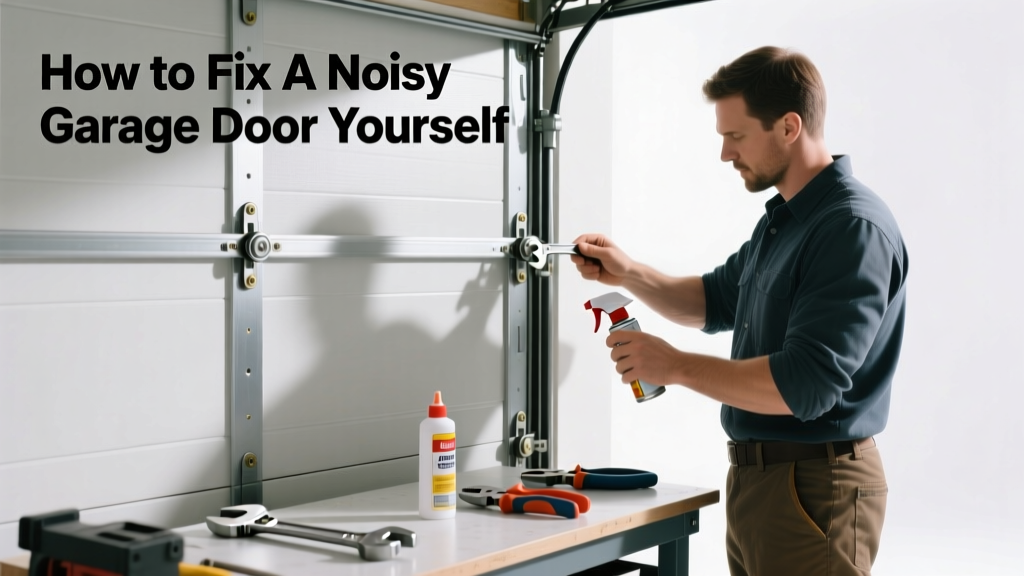
That grinding, squeaking, or rattling noise every time your garage door opens isn’t just annoying—it’s often an early warning sign of wear, misalignment, or failing components. Ignoring it can lead to broken springs, damaged tracks, or even unsafe operation. The good news? Over 70% of common garage door noises stem from simple issues you can fix in under an hour.
Quick Diagnosis
Before grabbing tools, identify the source:
- Squealing or screeching during movement → worn rollers or dry hinges
- Grinding or scraping sound → bent track, misaligned roller, or debris buildup
- Clanging or banging at top/bottom → loose hardware or worn limit switch bumper
- Rattling panels → loose hinge bolts or deteriorated weather seal
- Thumping or jerking motion → unbalanced door or failing torsion spring
Tools & Materials Needed
| Item | Purpose | Estimated Cost |
|---|---|---|
| White lithium grease (not WD-40) | Lubricates rollers, hinges, and springs without attracting dust | $4–$8 |
| 1/4" hex key set | Tightens hinge bolts and bracket screws on most residential doors | $6–$12 |
| Adjustable wrench | Secures track brackets and tension rods | $9–$18 |
| Soft-bristle brush + shop vacuum | Removes grit and old lubricant from tracks and rollers | $5–$15 |
| Level (24") | Verifies vertical alignment of track sections | $7–$20 |
Step-by-Step Fix
- Clean and lubricate moving parts: Disconnect power, manually open door halfway, then use a soft brush and vacuum to remove grime from tracks, rollers, and hinges. Apply white lithium grease—not oil or silicone—to each roller axle, hinge pin, and spring coils (avoid the cable drum).
- Tighten all hardware: Check every hinge bolt, track bracket screw, and panel fastener. Use a 1/4" hex key and adjustable wrench to snug them down—don’t overtighten, as aluminum hinges can strip.
- Inspect and straighten tracks: Run your hand along both vertical and horizontal tracks. Feel for dents or bends. If you find one, loosen adjacent bracket screws, gently tap the track back into alignment with a rubber mallet, then retighten while checking level.
- Test balance and adjust if needed: Disengage opener, lift door manually to waist height, and let go. It should stay put. If it drops or rises on its own, torsion spring tension is off—do not adjust yourself; skip to "When to Call a Pro".
When to Call a Pro
Some noises signal serious risk. Call a certified technician immediately if:
- You hear loud metal-on-metal crunching during operation—often a cracked roller or broken cable
- The door feels unusually heavy or won’t stay open at mid-height—indicating torsion spring failure
- You spot fraying, kinking, or rusted cables, especially near drums or anchors
- Noise coincides with visible sagging, twisting, or jerking—signs of structural misalignment or worn bearings
According to the Door & Access Systems Manufacturers Association's 2022 Safety Report, 32% of garage door-related injuries involved attempted DIY spring or cable repairs—nearly all preventable with professional service.
Prevention Tips
Maintain quiet operation year-round with these habits:
- Lubricate rollers, hinges, and springs every 3 months (more often in dusty or coastal areas)
- Wipe down tracks with a damp rag monthly to prevent grit buildup
- Check hinge bolts and track brackets for tightness every 6 months
- Replace nylon rollers every 5–7 years—even if they’re quiet, they lose load capacity
- Install rubber door bottom seals with integrated weatherstripping to reduce panel vibration
Can I use WD-40 on my garage door rollers?
No. WD-40 is a solvent and light lubricant—not a long-term lubricant. It dries quickly and attracts dust and metal shavings, accelerating wear. Use white lithium grease instead, which stays tacky and resists washout. For more on proper lubricants, see our garage door lubricant guide.
Why does my garage door only squeak when opening but not closing?
This usually points to uneven wear on upper hinge pins or the top roller assembly, where tension and friction differ between upward and downward travel. Inspect the top three hinges for corrosion or play; replace any that wobble side-to-side. Also check if the header bracket is slightly bent—causing binding only in one direction.
Is a grinding noise dangerous?
Yes—especially if it’s consistent and grows louder. Grinding often means a roller bearing has failed, a track is severely dented, or the opener’s gear assembly is stripped. Continued use risks sudden component failure. Stop using the door and schedule a diagnostic visit. See our spring replacement cost breakdown for context on related repairs.
How often should I replace garage door rollers?
Nylon rollers last 5–7 years with average use (2–4 cycles/day); steel rollers last longer but are noisier. Replace all rollers as a set—even if only one looks bad—since mismatched wear causes imbalance. Look for cracks, flat spots, or excessive wobble when spinning by hand.
Will tightening the chain on my opener reduce noise?
Only if the chain is visibly slack and slapping against the rail. Over-tightening strains the motor and wears sprockets faster. Proper chain tension allows about 1/4" of vertical movement midway along its length. Refer to your opener’s manual for model-specific specs—or consult our opener maintenance checklist.
Can weather affect garage door noise?
Absolutely. Cold temperatures stiffen grease and cause metal contraction—increasing friction in rollers and hinges. Humidity promotes rust on steel components, and wind-driven dust clogs tracks. In climates with wide seasonal swings, lubricate with a temperature-rated grease (e.g., -40°F to 300°F range) and inspect tracks after storms.
A quiet garage door doesn’t happen by accident—it’s the result of consistent, informed care. Most noise issues aren’t emergencies, but they’re rarely random either. Tackle the easy fixes first, keep a log of what you’ve done and when, and don’t hesitate to bring in a pro when safety or precision is at stake. Your door—and your neighbors—will thank you.