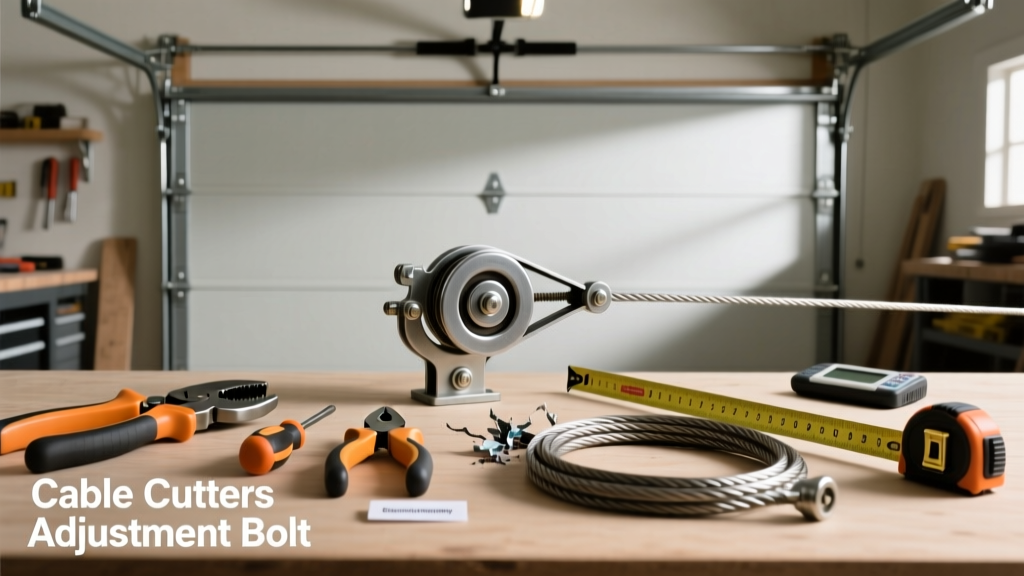
A snapped garage door cable is more than an inconvenience—it’s a safety hazard that can disable your door and risk injury if mishandled. These cables bear the full weight of your door (often 150–300 lbs), and when one fails, the other is usually fatigued and nearing failure too. Don’t ignore the loud 'ping' or visible fraying—address it before the door drops unexpectedly.
Quick Diagnosis
Before grabbing tools, confirm the issue isn’t misdiagnosed. A broken cable often mimics other problems—but here’s what’s actually happening:
- Visible kinks, unraveling strands, or complete separation near the drum or bottom bracket
- Door lifts unevenly or binds on one side during opening
- Excessive sag in the cable when the door is closed (more than 1/4 inch)
- Clanking noise from the spring assembly when operating—often due to cable slippage or breakage
- No tension on one side of the torsion or extension spring system
Tools & Materials Needed
| Item | Purpose | Estimated Cost |
|---|---|---|
| 1/4-inch socket wrench set | Tightens drum bolts and secures cable clamps | $12–$28 |
| Heavy-duty locking pliers (Vise-Grips) | Holds tensioned cable ends safely during reattachment | $9–$16 |
| New galvanized steel cable (7×19, 1/8" or 3/32") | Replaces worn or broken cable; must match original length and diameter | $14–$22 |
| Drum anchor clamp kit (includes thimble & ferrule) | Secures cable end to drum; prevents slippage under load | $6–$11 |
| Safety glasses + work gloves (leather-palmed) | Protects eyes from snapping wire and hands from sharp cable ends | $8–$15 |
Step-by-Step Fix
Replacing a broken cable requires precision—not brute force. Follow these steps in order, and never skip safety prep:
- Disconnect power and secure the door: Unplug the opener and manually lower the door fully. Use C-clamps or locking pliers on the track below each roller to prevent accidental movement.
- Relieve spring tension (torsion systems only): If you have a torsion spring above the door, do not proceed without proper winding bars and training. For extension springs, unhook the spring first using a helper and a ladder—never release tension alone.
- Remove the broken cable: Loosen the drum bolt, slide off the old cable, and inspect the drum groove for burrs or wear. File smooth if needed.
- Install new cable: Thread the new cable through the bottom bracket, loop it around the drum (matching original wraps), and secure with the anchor clamp. Pull taut—then double-check alignment before tightening.
- Test operation slowly: Remove clamps, raise the door 6 inches manually, check for binding or noise, then run the opener at low speed for first three cycles.
When to Call a Pro
Some situations demand professional help—no shame in it. According to the International Door Association’s 2022 Safety Bulletin, 68% of garage door-related injuries occur during DIY cable repairs involving torsion springs.
- Your door uses a torsion spring system (mounted horizontally above the door)
- You don’t have two working winding bars rated for your spring’s torque
- The cable broke while the door was partially open—and the spring remains under tension
- You’re unsure whether your drum is left-wind or right-wind (marked L/R on flange)
- Both cables show rust or deep grooves in the drum—even if only one snapped
Prevention Tips
Garage door cables last 5–7 years under normal use—but premature failure is almost always preventable. Lubricate cables annually with white lithium grease (not WD-40—it attracts dust). Inspect them every 3 months for fraying, especially near attachment points.
"Cables rarely fail in isolation—when one breaks, the other has endured identical stress and should be replaced at the same time." — Precision Door Service Technical Manual, 2023
Can I reuse the old drum anchor clamp?
No. Anchor clamps deform under load and lose grip integrity after one use. Reusing them risks cable slippage mid-cycle—a leading cause of sudden door drop. Always install a new clamp kit matched to your cable diameter.
What size cable do I need for my 16-foot-wide door?
Most residential doors use 1/8-inch-diameter, 7×19 galvanized aircraft cable. Measure your old cable’s length from drum anchor to bottom bracket (including loops)—add 6 inches for adjustment. Standard lengths are 92", 102", and 112"; verify against your manufacturer’s spec sheet or garage door cable size chart.
Why does my new cable keep jumping off the drum?
This usually means the drum wasn’t seated flush on the shaft, or the set screw securing it is loose. It can also happen if the cable wasn’t wound in the correct direction (L-wind vs. R-wind) or if the bottom bracket shifted during installation. Check alignment with a straightedge and tighten all mounting hardware.
Is it safe to replace just one cable?
Technically yes—but strongly discouraged. The remaining cable has identical age, wear, and stress history. The U.S. Department of Housing and Urban Development recommends replacing both cables simultaneously to avoid imbalance and future emergency failure.
Do I need to rebalance the door after cable replacement?
Yes—if the door feels heavier or drifts down when raised halfway, rebalancing is required. This involves adjusting spring tension. For extension springs, turn the hook position; for torsion, adjust winding cones. See our how to rebalance garage door guide for torque specs and safe procedures.
Can I buy replacement cables at Home Depot or Lowe’s?
You can—but stock is limited to generic 1/8" cable without pre-installed thimbles or correct length. Most big-box stores don’t carry drum-specific anchor kits. For guaranteed fit, order from a dedicated supplier like garage door parts online using your door brand and model number.
A properly replaced cable restores safe, quiet operation—but remember: this repair hinges on respect for stored spring energy. When in doubt, pause and call a certified technician. Your garage door is one of the largest moving objects in your home, and its components deserve the same care you’d give your car’s brakes or HVAC system.