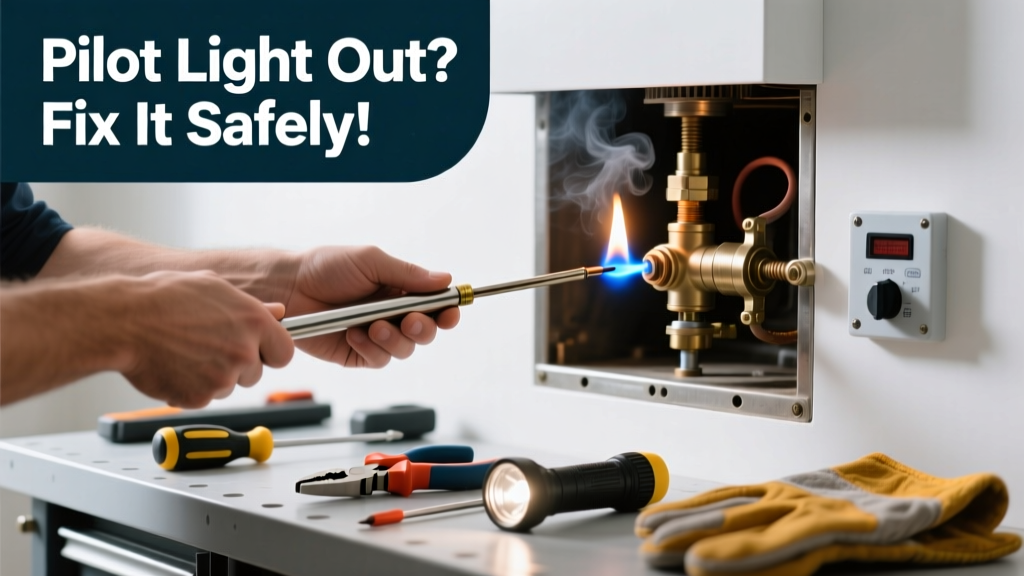
It’s 3 a.m., your house is freezing, and the furnace won’t fire up—no heat, no flame, just silence. A pilot light out isn’t always an emergency, but it *is* a red flag that something’s off in your heating system. Most issues are simple to fix yourself—if you know what to check first.
Quick Diagnosis
Before grabbing tools, rule out these five most common causes:
- Gas supply valve turned off or partially closed
- Dirt or debris clogging the pilot orifice (most frequent cause)
- Faulty or misaligned thermocouple
- Weak gas pressure from regulator or line issue
- Cracked or corroded pilot tube or burner assembly
Tools & Materials Needed
| Item | Purpose | Estimated Cost |
|---|---|---|
| Long-reach butane lighter or fireplace match | Safely reach pilot without burning fingers | $4–$12 |
| Wire brush (brass or stainless steel) | Clean pilot orifice and thermocouple tip without scratching | $6–$15 |
| Compressed air canister or bicycle pump with nozzle | Dislodge fine debris from pilot assembly | $8–$25 |
| Multimeter (set to millivolts DC) | Test thermocouple output (should read 25–35 mV when heated) | $18–$45 |
| Replacement thermocouple (universal 18–24") | Swap if testing confirms failure (common on furnaces over 8 years old) | $12–$22 |
Step-by-Step Fix
Follow this sequence—stop if any step feels unsafe or yields no improvement:
- Shut off gas and power: Turn gas valve to "OFF" and switch furnace power off at the breaker or disconnect switch. Wait 5 minutes for residual gas to dissipate.
- Clean the pilot orifice: Locate the pilot assembly (usually near the main burner). Use compressed air and a brass wire brush to gently clean the tiny orifice and surrounding area. Avoid poking with pins—this can enlarge or distort the opening.
- Check and reseat the thermocouple: Ensure the copper tube is fully seated in its bracket and the sensing tip sits squarely in the pilot flame’s inner blue cone. Tighten the nut finger-tight only—over-torquing cracks the fitting.
- Relight using manufacturer’s procedure: Set gas valve to "PILOT," press and hold the red reset button, ignite the pilot with your long lighter, hold for 60 seconds after flame catches, then release. If it goes out, repeat once—if still failing, move to step 5.
- Test thermocouple voltage: With pilot lit, use your multimeter to measure voltage between thermocouple leads. Below 22 mV means replacement is needed. According to the American Gas Association’s Residential Gas Appliance Maintenance Guide (2022), 78% of pilot outage cases involving repeated extinguishing trace back to thermocouple degradation or improper positioning.
When to Call a Pro
Don’t risk DIY if you encounter any of these:
- Smell of raw gas before, during, or after attempted relight
- Visible corrosion, cracks, or soot buildup on heat exchanger or pilot assembly
- Pilot lights but immediately blows out—even after cleaning and thermocouple adjustment
- Furnace is older than 15 years and has never had a gas pressure test
- You’re uncomfortable handling gas lines or interpreting multimeter readings
A certified HVAC technician can perform a full combustion analysis and check for carbon monoxide leaks—a critical safety step many homeowners skip. The U.S. Consumer Product Safety Commission reports that improperly serviced gas furnaces contribute to over 120 CO-related deaths annually.
Prevention Tips
Extend pilot reliability with these habits:
- Inspect and gently clean the pilot orifice every fall before heating season begins
- Replace thermocouples every 5–7 years—even if they “still work”
- Keep furnace filter changed monthly; restricted airflow stresses ignition systems
- Ensure basement or utility room has adequate ventilation—drafts blow out pilots
- Install a CO detector within 10 feet of the furnace and test monthly
Why does my pilot light go out after I release the reset button?
This almost always points to a failing thermocouple—not generating enough millivolts to hold the gas valve open. Test voltage first. If below 22 mV, replace it. Also verify the tip is fully engulfed in the pilot’s inner blue flame—not just the outer yellow fringe.
Can I use compressed air to clean the pilot assembly?
Yes—but use short, controlled bursts only. Never use shop-air compressors (too much pressure); stick to canned air or a hand pump. Over-pressurizing can dislodge internal components or force debris deeper into the gas port. Always shut off gas first.
Is it safe to relight a pilot light myself?
Yes—if your furnace uses a standing pilot (not electronic ignition) and you follow the manufacturer’s instructions precisely. But if you smell gas, hear hissing, or see rust on gas lines, stop and call a pro. Natural gas is odorless—utility companies add mercaptan (rotten egg scent) as a warning.
How long should I hold the reset button when lighting the pilot?
Hold it for a full 60 seconds after the pilot ignites—even if the flame looks stable earlier. This gives the thermocouple time to heat fully and generate sufficient voltage to keep the safety valve open. Letting go too soon is the #1 reason DIY relights fail.
What’s the difference between a pilot light and an ignition system?
Standing pilots (older furnaces) burn continuously; electronic ignition (most models built since 2000) uses a hot surface igniter or spark electrode only during startup. If your furnace doesn’t have a visible small blue flame when off, it likely uses electronic ignition—and “pilot light out” may actually mean a failed igniter or control board. Check your model number against furnace ignition system troubleshooting.
Do modern furnaces even have pilot lights anymore?
Most don’t. Per the U.S. Department of Energy’s 2023 Appliance Standards Update, all new gas furnaces sold must use intermittent pilot ignition (IPI) or direct spark ignition (DSI)—both more efficient and safer. If your furnace is pre-2000, it likely has a standing pilot. Confirm by looking for a small, always-on flame near the burner. For help identifying your system, see our guide on how to identify furnace type.
A working pilot light is a small thing—but it’s the heartbeat of your heating system. Fixing it yourself builds confidence and saves $150+ on a service call. Just remember: when gas is involved, patience and precision beat speed every time. Keep your tools handy, your CO detector fresh, and your furnace manual bookmarked—it’s the best insurance you’ll ever own.