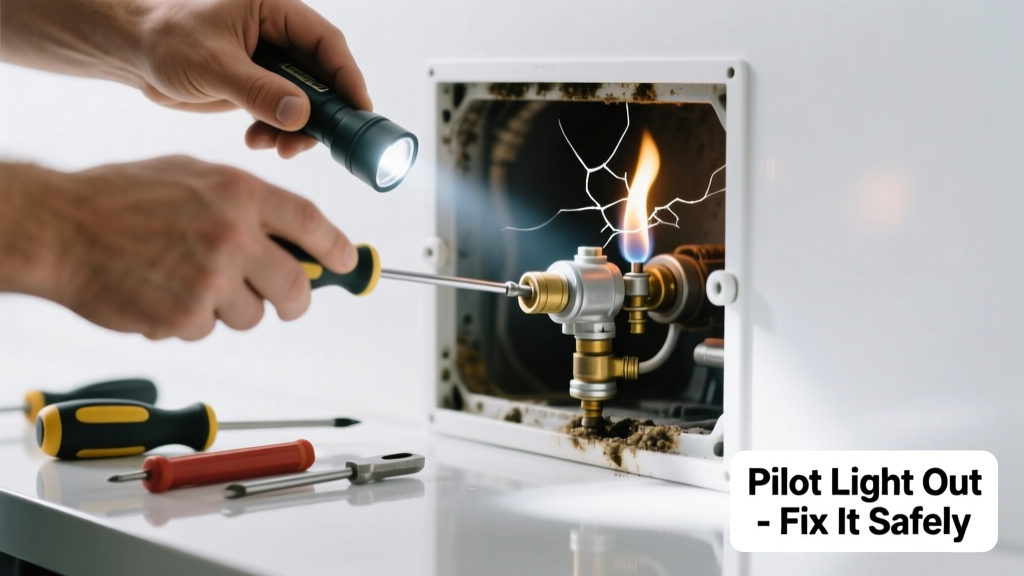
If your furnace pilot light is out and you hear hissing, popping, or high-pitched whining, don’t just hit the reset button. That noise often signals gas buildup, thermocouple failure, or debris in the pilot assembly — all of which can escalate into serious safety hazards if ignored.
Quick Diagnosis
Before touching anything, identify which symptom matches your situation:
- Hissing or rushing air sound → Gas valve leak or improper gas pressure
- Clicking without ignition → Faulty spark igniter or dirty electrode
- Popping or banging when attempting relight → Delayed ignition from gas accumulation
- Low humming or buzzing → Failing gas valve solenoid or transformer issue
- Sharp metallic rattling → Loose heat exchanger or cracked burner tube
Tools & Materials Needed
| Item | Purpose | Estimated Cost |
|---|---|---|
| Multi-meter (with continuity setting) | Test thermocouple voltage output and gas valve coil resistance | $45–$85 |
| Emery cloth or fine steel wool | Clean thermocouple tip and pilot orifice without scratching | $3–$6 |
| Gas leak detector solution (soapy water) | Identify leaks at gas line connections and valve fittings | $8–$12 |
| Small wire brush (brass or nylon) | Clear carbon buildup from pilot tube and burner ports | $5–$9 |
| Flashlight with flexible neck | Inspect tight spaces around heat exchanger and pilot assembly | $12–$25 |
Step-by-Step Fix
Follow these methods in order — stop if any step triggers gas odor, sustained hissing, or flame instability:
- Shut off gas and power: Turn furnace’s gas valve to OFF and breaker to OFF at the panel. Wait 5 minutes for residual gas to dissipate.
- Clean pilot orifice and thermocouple: Use emery cloth on thermocouple tip until shiny copper appears. Gently brush pilot tube opening with brass brush — never use a pin or needle, which can enlarge the orifice.
- Test thermocouple output: With multimeter set to millivolts DC, connect leads to thermocouple and copper lead. A healthy reading is 25–35 mV when heated by pilot flame; below 18 mV means replacement is needed.
- Check for delayed ignition signs: If you smell gas before ignition or hear a loud whoosh, do not attempt relight. Ventilate the area and call a pro — this indicates dangerous gas accumulation.
When to Call a Pro
DIY ends here if you encounter any of these:
- Gas odor persists after 10 minutes of ventilation
- Pilot lights but won’t stay lit after 60 seconds, even with clean/functional thermocouple
- Visible rust, cracks, or soot staining on heat exchanger (use flashlight to inspect)
- Multimeter shows open circuit in gas valve coil (less than 1 ohm or infinite resistance)
- Furnace model is older than 2003 and lacks electronic ignition — many pre-2000 units require certified techs per NFPA 54 standards
According to the U.S. Consumer Product Safety Commission’s 2022 annual report, improperly serviced gas furnaces account for 17% of residential carbon monoxide incidents — most involving DIY attempts on units over 15 years old.
Prevention Tips
Extend your furnace’s safe operation with these habits:
- Inspect and gently clean pilot assembly every fall before heating season begins
- Replace thermocouples every 3–5 years, even if working — they degrade gradually
- Install a UL-listed carbon monoxide detector within 10 feet of furnace room door
- Change furnace filter every 60 days during active heating months — restricted airflow increases stress on ignition system
Why does my furnace make a loud pop when the pilot lights?
That pop is usually delayed ignition: gas builds up in the combustion chamber before the pilot catches it. It’s common after long shutdowns or with weak pilot flames. But if it happens repeatedly, inspect for clogged burners or low gas pressure — both increase unburned gas volume.
Can I use compressed air to clear the pilot tube?
No. Compressed air can damage delicate orifice sizing or force debris deeper into the gas line. Instead, use a soft brass brush and gentle vacuum suction — or better yet, replace the pilot orifice kit ($12–$18) if corrosion is visible.
Is it safe to relight the pilot if I hear clicking but no flame?
Only if there’s no gas odor and clicking stops within 90 seconds. Continuous clicking means the igniter isn’t sparking properly — possibly due to cracked ceramic, moisture, or misalignment. Don’t force repeated attempts; that increases risk of gas pooling. See our guide on furnace igniter replacement for safe diagnostics.
How do I know if the gas valve itself is failing?
A failing valve may produce a faint buzz without opening, cause inconsistent pilot size, or fail to shut off fully (evidenced by hissing after shutdown). Multimeter testing reveals coil resistance outside 35–85 ohms — but replacement requires licensed gas work. Refer to our gas valve troubleshooting checklist for verification steps.
What’s the difference between a pilot light and electronic ignition?
Pilot lights are standing flames (common in furnaces built before 2004) that ignite burners on demand. Electronic ignition uses a hot surface igniter or spark electrode — more efficient but prone to dust-related failures. If your unit has neither, it likely uses an intermittent pilot (IP), which only lights the pilot when heat is called. Learn more in our furnace ignition systems explained article.
Should I replace the entire furnace if the pilot keeps going out?
Not necessarily — but if your furnace is over 15 years old and you’re replacing thermocouples, gas valves, and igniters yearly, replacement may be more cost-effective. The Department of Energy estimates that furnaces older than 15 years operate at 65–70% AFUE, while new models exceed 90%. Factor in repair frequency and efficiency loss before deciding.
A noisy, dead pilot light isn’t just inconvenient — it’s your furnace’s distress signal. Addressing it promptly with the right tools and awareness keeps your home warm and safe. When in doubt about gas, heat, or electrical components, pause and reach out to a certified HVAC technician — your peace of mind is worth more than the service call fee.