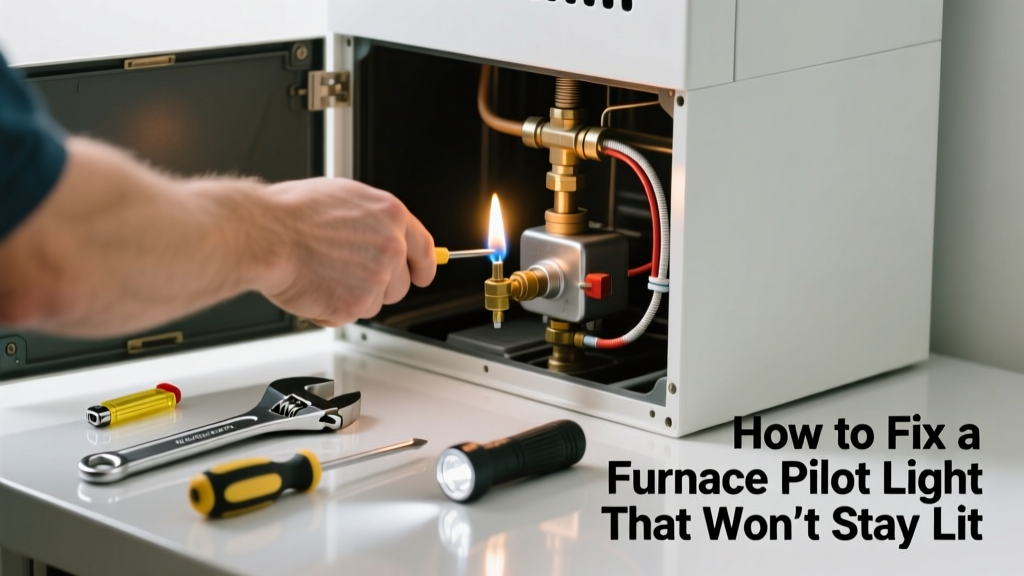
Waking up to a cold house and discovering your furnace pilot light is out is frustrating—but it’s often a quick fix if you know what to check first. Most older standing-pilot gas furnaces (pre-2010) rely on this small blue flame to ignite the main burner, and when it goes out, heat stops flowing. Don’t panic: in over 70% of cases, the issue is simple and repairable in under 15 minutes.
Quick Diagnosis
Before lighting anything, identify why the pilot went out. Common culprits include:
- Dirty or clogged pilot orifice (most frequent cause)
- Weak or failing thermocouple (fails to signal gas valve to stay open)
- Drafts from nearby windows, vents, or cracked access panels
- Low gas pressure due to utility issues or shut-off valve being partially closed
- Cracked or corroded heat exchanger (rare but serious—requires immediate pro inspection)
Tools & Materials Needed
| Item | Purpose | Estimated Cost |
|---|---|---|
| Long-reach butane lighter or fireplace match | Safely reaches pilot without burning fingers; avoids open-flame hazards near gas lines | $3–$8 |
| Emery cloth or fine steel wool (0000 grade) | Cleans thermocouple tip and pilot orifice without scratching metal | $2–$5 |
| Small wire brush or pipe cleaner | Removes carbon buildup from pilot tube and orifice | $1–$4 |
| Flashlight with fresh batteries | Provides clear visibility inside tight furnace compartments | $5–$15 |
| Gas leak detector spray (soapy water solution) | Verifies no gas leaks after reassembly—critical safety step | $0 (DIY) or $6–$12 (commercial) |
Step-by-Step Fix
Follow these methods in order—start with the simplest and safest:
- Reset the gas control valve: Turn the gas knob to "OFF" and wait 5 minutes for residual gas to dissipate. Then turn to "PILOT," press and hold the knob down while lighting the pilot with your long lighter. Hold for 60 seconds after flame catches, then release. If it stays lit, turn to "ON."
- Clean the pilot orifice: With gas OFF and furnace cool, use a pipe cleaner or stiff wire to gently clear the tiny hole at the end of the pilot tube. Blow through the tube (or use compressed air) to remove debris. Reassemble and retry Step 1.
- Test and clean the thermocouple: Locate the copper tube running from pilot assembly to gas valve. Unscrew its mounting nut, wipe the tip with emery cloth until shiny, and reseat tightly. A worn thermocouple reads <25 mV under flame—replacement costs $12–$22 and takes 10 minutes.
- Check for drafts: Seal gaps around furnace access panels with high-temp silicone or fiberglass tape. Ensure basement windows are closed and return-air grilles aren’t blocked.
When to Call a Pro
Stop and call an HVAC technician immediately if:
- You smell rotten eggs (unburned natural gas) before, during, or after lighting attempts
- The pilot lights but won’t stay lit even after cleaning and holding for 90+ seconds
- You hear hissing near gas lines or see corrosion on the heat exchanger
- Your furnace is a high-efficiency condensing model (no standing pilot—uses electronic ignition)
- You’ve replaced the thermocouple twice in one season—indicates deeper gas pressure or valve issues
According to the U.S. Consumer Product Safety Commission’s 2022 Gas Appliance Incident Report, improper DIY pilot relighting accounts for 18% of residential gas-related injuries reported that year—always prioritize ventilation and gas shutoff awareness.
Prevention Tips
Maintain reliability with these habits:
- Inspect and gently clean the pilot orifice and thermocouple every fall before heating season
- Replace thermocouples every 3–5 years—even if working, they degrade gradually
- Keep furnace room doors and access panels sealed; avoid using fans or opening windows nearby
- Install a carbon monoxide detector within 10 feet of the furnace (required by NFPA 720-2022)
- Have a licensed HVAC tech perform annual combustion analysis and gas pressure checks
Why does my pilot light go out every few days?
This points strongly to a failing thermocouple or persistent draft. Check for loose mounting nuts on the thermocouple bracket—vibration can loosen them over time. Also verify your furnace isn’t installed directly beside a laundry dryer vent or whole-house fan outlet.
Can I bypass the thermocouple to keep the pilot lit?
No—this is extremely dangerous and violates building codes. The thermocouple is a critical safety device that shuts off gas flow if the pilot extinguishes. Bypassing it risks unignited gas accumulation and potential explosion. Learn the signs of a gas leak and never override safety controls.
Is it normal for the pilot flame to be yellow instead of blue?
No—a healthy pilot flame should be sharp, steady, and mostly blue with just a hint of yellow at the tip. A tall, flickering yellow flame indicates incomplete combustion due to dust, spider webs, or low oxygen—clean the orifice and ensure proper venting. See other furnace no-heat causes.
How long should I hold the pilot button down?
Hold the gas control knob in for a full 60 seconds after the pilot ignites—even if the flame looks stable. This gives the thermocouple time to heat sufficiently (to ~500°F) and generate enough voltage (25–30 mV) to keep the gas valve open. Letting go too soon is the #1 reason pilots won’t stay lit.
Do modern furnaces even have pilot lights?
Most furnaces manufactured after 2010 use hot-surface or intermittent pilot ignition (IPI) systems—no standing pilot. If your unit has no “PILOT” setting on the gas valve, it uses electronic ignition. Troubleshoot ignition failure here.
What’s the difference between a thermocouple and a thermopile?
Thermocouples are used in standing-pilot systems and produce ~25 mV to hold open a single gas valve. Thermopiles (found in IPI systems) generate ~500–750 mV to power both gas valves and safety circuits. They’re not interchangeable—and misdiagnosing one for the other leads to repeated failures.
A pilot light outage doesn’t have to mean a frozen morning or an emergency HVAC call. With the right tools, a few minutes, and attention to detail, most homeowners can restore heat safely and confidently. Just remember: if gas smells linger, flames behave oddly, or you’re unsure at any point, shut off the gas supply and call a certified technician—your safety is always worth the call.