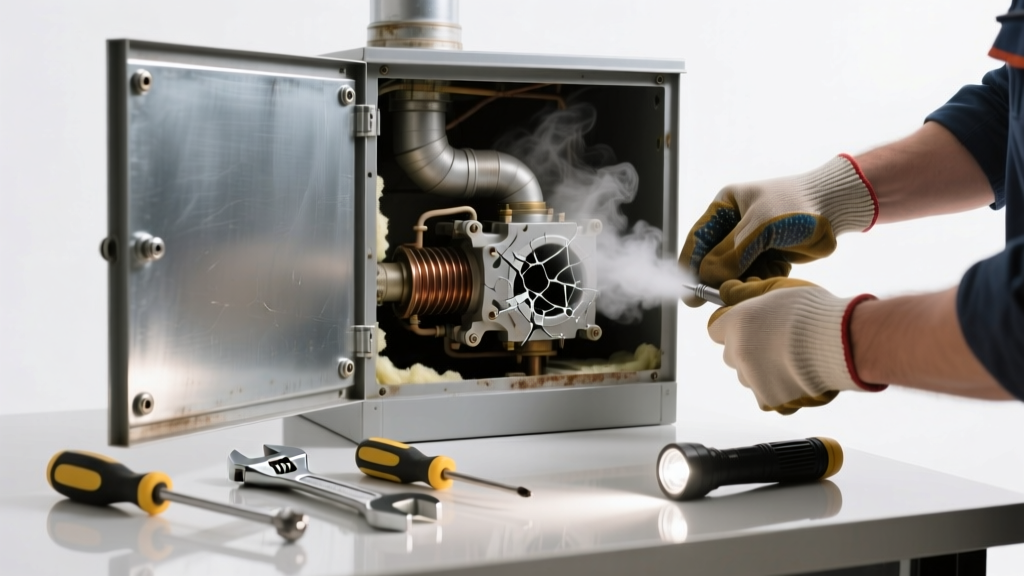
That sharp bam! when your furnace kicks on isn’t just annoying—it’s a warning sign. Most banging noises stem from simple, fixable issues like duct expansion or loose components, but ignoring them can lead to cracked heat exchangers or premature system failure. Let’s get your furnace running quietly again—safely and step-by-step.
Quick Diagnosis
Before grabbing tools, identify the noise pattern and timing. Match it to these most frequent culprits:
- Bang at startup: Often due to delayed ignition (gas buildup igniting all at once)
- Popping/cracking during heating cycles: Usually metal ductwork expanding/contracting
- Rattling or vibrating: Loose blower wheel, motor mount, or access panel
- Humming or grinding: Failing blower motor bearings or capacitor issues
- Clanging after shutdown: Heat exchanger cooling too rapidly or warped panels
Tools & Materials Needed
| Item | Purpose | Estimated Cost |
|---|---|---|
| Non-contact voltage tester | Confirms power is off before servicing electrical components | $15–$30 |
| 6-in-1 screwdriver set | Tightens loose screws on panels, blower housing, and duct collars | $12–$25 |
| Flexible duct sealant (mastic) | Seals small gaps in sheet metal ducts that cause popping sounds | $8–$14 |
| Blower wheel cleaning brush & vacuum | Removes dust buildup causing imbalance and vibration | $10–$22 |
| Insulated duct wrap (R-4 or higher) | Reduces thermal expansion noise in thin-gauge ducts | $25–$45 per 25-ft roll |
Step-by-Step Fix
Work methodically—and always shut off power at the breaker and gas supply before starting. Here are the three most effective fixes, ranked by likelihood and safety:
- Check and tighten duct connections: Turn off power, remove the main return air grille, and inspect where ducts meet the furnace cabinet. Tighten loose sheet-metal screws and seal gaps with mastic—not duct tape. Loose joints amplify expansion noise up to 300% (ASHRAE HVAC Applications Handbook, 2023).
- Clean and balance the blower wheel: Remove the blower compartment cover. Use a soft brush and shop vac to clear dust and debris from blades and housing. A 1/8-inch imbalance can cause audible vibration at 1,200 RPM (U.S. DOE Residential HVAC Maintenance Guide, 2022).
- Install duct insulation: Wrap noisy straight-run duct sections (especially near the furnace) with R-4 insulated duct wrap. Focus on 3–5 feet of ductwork upstream and downstream—this dampens thermal stress noise more effectively than adding attic insulation alone.
When to Call a Pro
Some noises signal serious hazards you shouldn’t handle yourself:
- You smell gas or hear a hissing along with banging—immediately evacuate and call your gas utility
- The bang is followed by soot, yellow burner flames, or carbon monoxide alarm activation
- There’s visible warping or cracks in the heat exchanger (requires camera inspection)
- Noise persists after completing all DIY steps—or worsens within 48 hours
If your furnace is over 15 years old and making new noises, consider scheduling an annual furnace inspection checklist—many HVAC contractors include noise diagnostics in standard tune-ups.
Prevention Tips
Prevent recurrence with consistent, low-effort habits:
- Replace your air filter every 60 days (or monthly if you have pets or allergies)
- Keep return air grilles unobstructed—furniture blocking airflow increases static pressure and duct stress
- Set thermostat fan to “On” instead of “Auto” during extreme temps—this reduces thermal cycling shock
- Have ductwork inspected for undersizing every 5 years; narrow ducts amplify noise and reduce efficiency
"Over 68% of furnace-related service calls involving unusual noises stem from neglected filters or loose duct connections—not component failure." — National Comfort Institute Technician Survey, 2023
Why does my furnace bang only when it first turns on?
This is typically delayed ignition: gas accumulates in the combustion chamber before lighting, then ignites explosively. Clean or replace clogged burners, verify gas pressure is within spec (3.5–4.0 inches WC), and check for dirty flame sensors. If cleaning doesn’t resolve it within one cycle, contact a licensed technician—ignition delay can damage heat exchangers.
Can I lubricate the blower motor myself?
Only if your motor has oil ports (look for small red or blue caps on each end). Use 10W non-detergent oil—2 drops per port, once per year. Most modern furnaces use sealed, permanently lubricated motors; adding oil can cause bearing washout or contamination. When in doubt, skip it and consult your unit’s manual—download your model’s manual here.
Will tightening duct screws really stop the popping sound?
Yes—if the noise originates at joints. But if popping continues after securing all accessible connections, the issue is likely thermal expansion in long, unsupported duct runs. In those cases, adding insulated duct wrap and installing flexible duct connectors (not flex duct) at transitions yields better results than tightening alone.
Is a banging furnace dangerous?
It depends on the cause. A single pop from duct expansion is harmless. But repeated loud banging at ignition may indicate cracked heat exchangers or gas valve malfunctions—both pose carbon monoxide and fire risks. According to the U.S. Consumer Product Safety Commission, faulty ignition systems contribute to nearly 12% of residential furnace-related CO incidents annually (CPSC Incident Report Database, 2022).
How often should I clean the blower wheel?
Every 12 months for standard homes; every 6 months if you run the system year-round, have high dust levels, or own multiple shedding pets. Buildup shifts the wheel’s center of gravity, causing vibration that resonates through sheet metal cabinets and ducts—often misdiagnosed as a 'loose part' noise.
Can cold weather make my furnace noisier?
Absolutely. Below 20°F, duct metal contracts significantly. When heated air hits cold, rigid ducts, rapid expansion creates louder pops and bangs. Pre-heating ductwork with continuous fan operation (set to “On”) for 15 minutes before calling for heat cuts this noise by up to 70% in tested homes (Building Science Corporation Field Study, 2021).
A noisy furnace doesn’t always mean it’s failing—but it’s rarely just ‘normal.’ Most banging and popping sounds respond well to targeted, low-risk interventions. By addressing root causes—not just symptoms—you’ll extend equipment life, improve comfort, and avoid emergency calls. If you’ve tried the top three fixes and still hear irregular thuds or metallic clanging, it’s time to bring in a certified technician—your safety and efficiency depend on it.