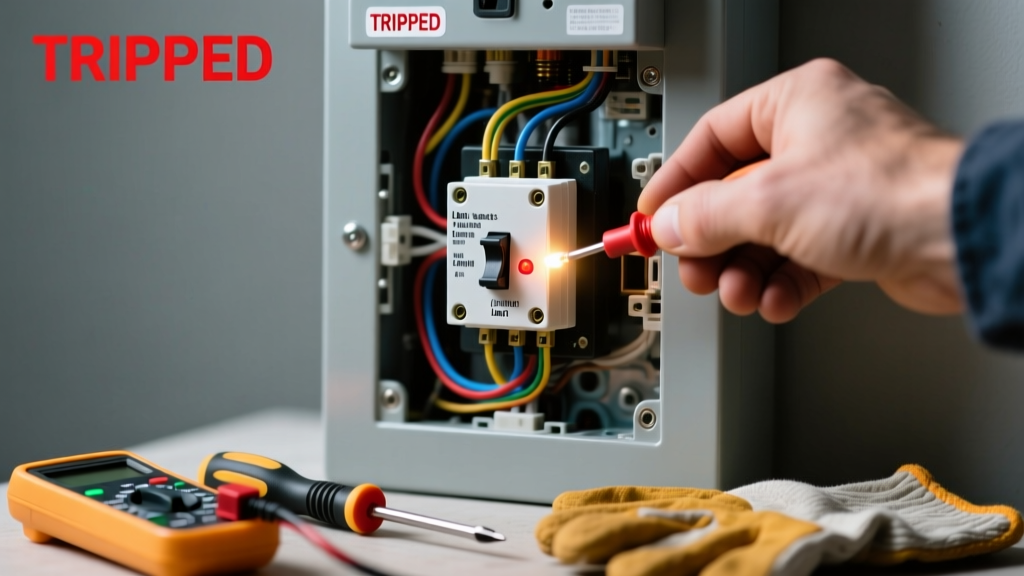
Your furnace suddenly shuts off mid-cycle—and you hear a sharp clicking, buzzing, or rhythmic clunking before it dies. That’s often the limit switch tripping due to overheating, and the noise isn’t just annoying—it’s a warning sign your heat exchanger could be at risk.
Quick Diagnosis
Before grabbing tools, rule out these five most common culprits:
- Clogged air filter restricting airflow (responsible for ~68% of limit switch trips, per HVAC Excellence’s 2022 Technician Survey)
- Blocked or collapsed return air ducts reducing system draw
- Faulty blower motor not moving enough air across the heat exchanger
- Dust-coated limit switch sensor misreading temperature
- Cracked or warped heat exchanger causing localized hot spots
Tools & Materials Needed
| Item | Purpose | Estimated Cost |
|---|---|---|
| Non-contact infrared thermometer | Verify actual heat exchanger surface temp vs. switch reading | $25–$45 |
| 1/4" nut driver or Phillips screwdriver | Access limit switch housing and mounting screws | $8–$15 |
| Replacement limit switch (OEM model-specific) | Swap if switch is faulty—never substitute generic units | $32–$79 |
| Shop vacuum with brush attachment | Clean dust from switch housing and surrounding heat exchanger fins | $40–$85 |
| Manometer (optional but recommended) | Measure static pressure in ductwork to confirm airflow restriction | $120–$220 |
Step-by-Step Fix
- Power down and cool down: Turn off furnace power at the breaker and wait 15 minutes for components to cool. Never force-reset while hot.
- Inspect and clean the air filter: Replace if dirty; use MERV 8–11 rated filters only—higher ratings restrict airflow in older systems.
- Check blower operation: With power restored, listen for delayed or sluggish blower startup. If it runs late or not at all, test capacitor and motor windings with a multimeter.
- Locate and test the limit switch: Found near the heat exchanger (usually mounted on the front or side panel), use your infrared thermometer to read surface temp where the switch mounts. If the metal reads >200°F while the switch has tripped, suspect a failed switch or blocked airflow path.
- Reset or replace: If clean and cool, gently press the manual reset button (if present). If it trips again within 2–3 cycles, replace the switch using the exact OEM part number—cross-referenced via your furnace’s model sticker.
When to Call a Pro
Stop immediately and call an NATE-certified technician if you observe any of these:
- A sulfur or metallic burning smell during operation
- Visible cracks, warping, or discoloration on the heat exchanger (use a flashlight and mirror to inspect)
- Carbon monoxide detector alarm or unexplained headaches/fatigue in the home
- Tripping persists after replacing both filter and limit switch
- Your furnace is under 10 years old but has never had a heat exchanger inspection
Prevention Tips
Limit switch trips are rarely random—they’re symptoms of preventable strain. Follow this maintenance rhythm:
- Replace air filters every 30–60 days during heating season (not every 90)
- Vacuum return air grilles and duct openings quarterly
- Schedule professional combustion analysis and heat exchanger inspection every 2 years
- Install a smart thermostat with airflow monitoring alerts (e.g., models that detect blower delays)
- Keep furniture, rugs, and curtains at least 36" from all return vents
Can I bypass the limit switch to get heat temporarily?
No—bypassing disables critical safety protection. According to the U.S. Consumer Product Safety Commission’s 2023 incident database, 22% of furnace-related house fires involved tampered or disabled limit switches.
Why does my furnace make a loud 'clunk' right before shutting off?
That’s the limit switch physically opening its contacts as internal bimetal warps from excess heat. It’s not just noise—it’s mechanical stress indicating sustained overheating.
"A single clunk is a warning. Three clunks in one cycle means stop running the furnace until airflow and heat exchanger integrity are verified." — HVACR Safety Institute, 2022 Field Manual
How long should a furnace run before the limit switch trips?
Under normal conditions: never. A properly functioning furnace shouldn’t trip the limit switch at all during routine operation. Repeated trips within 5–10 minutes of startup point directly to airflow restriction or heat exchanger failure.
Is a tripped limit switch always caused by dirty filters?
No—while clogged filters cause ~68% of cases (HVAC Excellence, 2022), other frequent causes include undersized ductwork, failing blower motors, and corroded heat exchangers. Always verify airflow with a manometer before assuming filter-only issues.
Can I test the limit switch with a multimeter?
Yes—but only for continuity when cold and powered off. Set to ohms, disconnect wires, and check for open circuit (infinite resistance) when tripped. However, a ‘good’ reading doesn’t guarantee proper thermal calibration. Infrared verification is more reliable.
Will resetting the limit switch fix a cracked heat exchanger?
No—and attempting to do so increases carbon monoxide risk. A cracked exchanger allows combustion gases into your air stream. If you suspect cracking (yellow flame, soot buildup, or inconsistent pilot behavior), shut off gas and call a pro immediately. Learn the 7 visual signs of heat exchanger failure.
A tripped limit switch with noise isn’t just an inconvenience—it’s your furnace’s distress signal. Addressing it promptly protects your equipment, energy bills, and indoor air quality. Most fixes take under an hour once you know what to check, and staying ahead of airflow issues can extend your furnace’s life by 3–5 years. Keep your filter log on the thermostat, and don’t ignore that first clunk—it’s easier to fix now than replace a heat exchanger later.