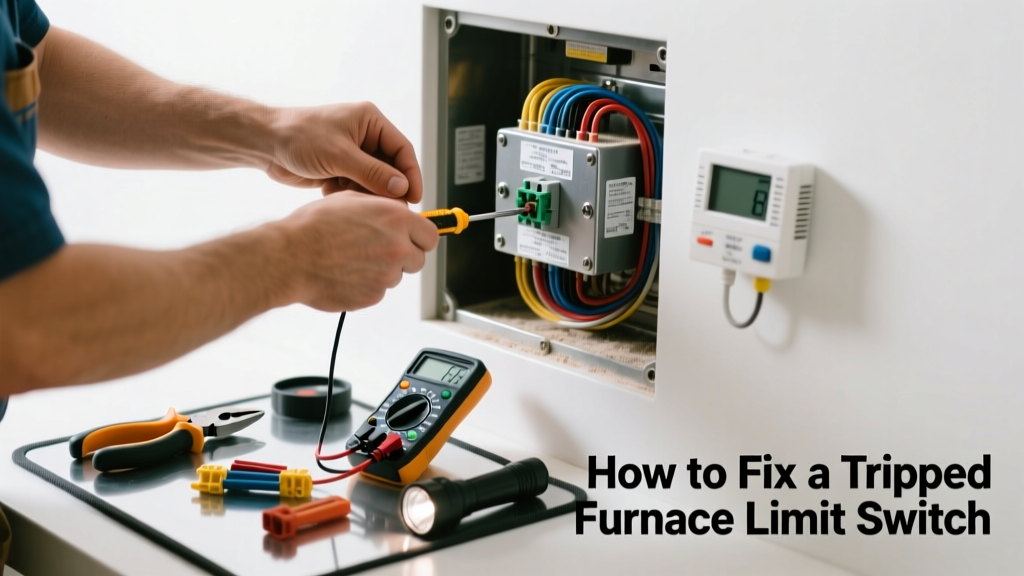
Your furnace suddenly stops blowing hot air—but the blower might still run, or it shuts down entirely after a few minutes. That’s often a tripped limit switch: a critical safety device cutting power to prevent overheating. Ignoring it risks heat exchanger damage or fire hazards.
Quick Diagnosis
The limit switch trips when the furnace gets too hot—usually due to restricted airflow, component failure, or dirty parts. Before resetting, rule out these common culprits:
- Clogged or overdue air filter (accounts for over 65% of limit switch trips, per HVAC Excellence’s 2022 Field Technician Survey)
- Blocked return air vents or closed registers
- Dirty evaporator coil or heat exchanger surfaces
- Faulty blower motor or capacitor slowing airflow
- Cracked or warped heat exchanger causing abnormal heat buildup
Tools & Materials Needed
| Item | Purpose | Estimated Cost |
|---|---|---|
| Non-contact voltage tester | Verifies power is off before accessing controls | $18–$35 |
| Phillips and flathead screwdrivers | Removing access panels and mounting screws | $8–$22 |
| Shop vacuum with brush attachment | Cleaning around burners, heat exchanger, and blower compartment | $45–$90 |
| Replacement air filter (MERV 8) | Ensures proper airflow; avoid MERV 13+ unless system is rated for it | $10–$25 |
| Combustion analyzer (optional) | Measures flue gas temps and CO levels if suspecting heat exchanger issues | Rent $75/day or hire pro |
Step-by-Step Fix
Follow these methods in order—most trips resolve at Step 1 or 2. Never bypass the limit switch.
- Power down and inspect airflow: Turn off furnace at thermostat AND circuit breaker. Replace air filter. Open all supply registers and clear obstructions from return grilles.
- Reset the limit switch: Locate the switch (typically mounted on heat exchanger near burners). Press the red manual reset button—if present. Wait 5 minutes before restoring power.
- Clean the blower wheel and housing: Remove blower assembly per your furnace model’s manual. Vacuum dust buildup; wipe blades with damp rag (never use solvents).
- Check flame pattern and ignition: After powering back on, observe burner ignition. Yellow, lazy flames or delayed ignition suggest gas pressure or orifice issues—stop here and call a pro.
When to Call a Pro
DIY ends where safety begins. Call a licensed HVAC technician immediately if:
- You smell burning plastic, sulfur, or exhaust fumes
- The limit switch trips again within 2 hours of cleaning and resetting
- Flame rollout occurs (flames escaping combustion chamber—visible as orange glow outside burners)
- You measure flue gas temperatures above 550°F with a thermometer probe (U.S. DOE recommends max 450°F for standard furnaces)
- Your furnace is over 15 years old and has repeated limit trips—heat exchanger cracks may be developing
"A limit switch that resets but trips repeatedly is rarely a switch problem—it’s almost always a symptom of restricted airflow or heat exchanger degradation." — John R. D’Amico, NATE-certified Master Trainer, HVAC Excellence 2023 Handbook
Prevention Tips
Limit switch trips are preventable with routine care. Add these to your seasonal checklist:
- Replace air filter every 1–3 months (monthly during peak heating season)
- Vacuum return air grilles and supply registers quarterly
- Schedule professional tune-up every fall—including heat exchanger inspection and blower amp-draw test
- Install a smart thermostat with airflow monitoring alerts (e.g., models that detect low CFM)
- Keep furniture, rugs, and curtains at least 36 inches from all return and supply vents
Why does my furnace limit switch trip only in cold weather?
Cold outdoor temps increase demand on your furnace, forcing longer run cycles. If airflow is already marginal (e.g., dirty filter or undersized ducts), heat builds faster—triggering the limit switch. This is why filter changes before winter matter most.
Can I bypass the limit switch to get heat temporarily?
No. Bypassing disables a critical safety device designed to prevent heat exchanger warping, cracking, or carbon monoxide release. The U.S. Consumer Product Safety Commission reports over 1,200 CO-related deaths annually—many linked to tampered safety controls.
How long does a furnace limit switch last?
Most mechanical limit switches last 10–15 years under normal conditions. However, frequent tripping accelerates wear. If your furnace is older than 12 years and the switch trips more than twice per season, consider upgrading to a modern unit with dual-stage limits and diagnostic LEDs.
Is a tripped limit switch the same as a high-limit switch?
Yes—the terms are interchangeable. "High-limit" refers to its function: it opens the circuit when internal temps exceed safe thresholds (typically 200°F–250°F, depending on furnace design). Some models have primary and secondary limits; both must reset for operation.
What’s the difference between a limit switch and a rollout switch?
The limit switch monitors overall heat exchanger temperature. A rollout switch detects flame escaping the combustion chamber—often due to blocked flue, cracked heat exchanger, or improper gas pressure. Both shut down burners but protect against different hazards. Always test both after a trip.
My furnace runs for 3 minutes then shuts off—could this be the limit switch?
Yes—especially if the blower continues running after burners shut off. That’s classic limit-switch behavior: burners cut out due to excess heat, but the blower stays on to cool the heat exchanger. Confirm by checking for error codes (e.g., Honeywell units flash 3 red lights for limit fault).
A tripped limit switch isn’t just an inconvenience—it’s your furnace sounding an alarm. Addressing root causes like airflow and cleanliness keeps your system efficient, extends equipment life, and protects your family’s safety. When in doubt, trust a certified technician—especially if you’re seeing soot, hearing popping noises from the heat exchanger, or noticing inconsistent heating room-to-room. For related troubleshooting, see our guides on furnace blower not turning on and furnace making banging noise.