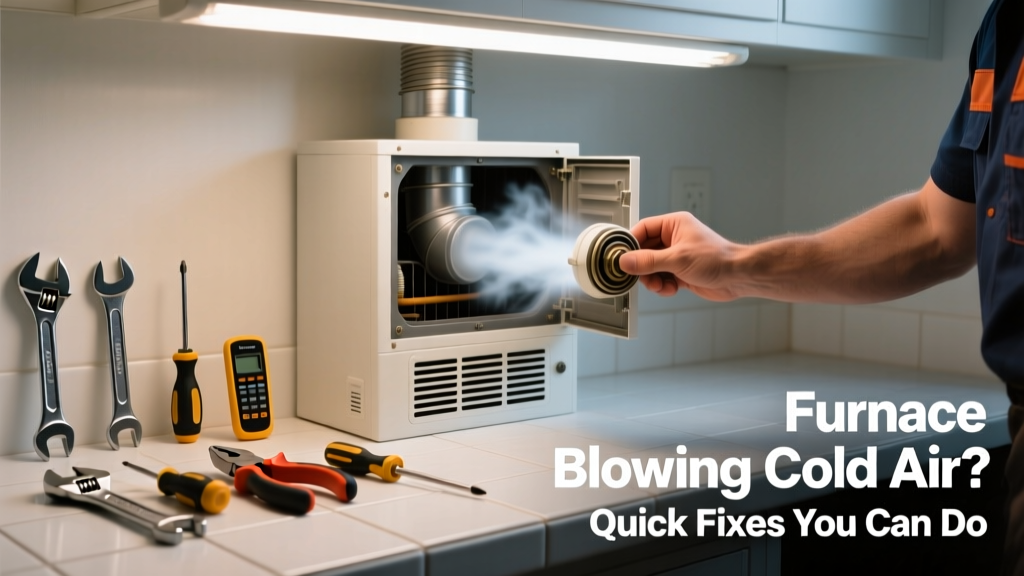
It’s 20°F outside, your thermostat reads 68°, and yet icy air is blasting from your vents. A furnace blowing cold air isn’t just uncomfortable—it’s a red flag that something’s off in your heating system. Most causes are simple, inexpensive, and within reach of a confident DIYer.
Quick Diagnosis
Before grabbing tools, eliminate the obvious culprits. These five causes account for over 85% of cold-air complaints, according to the Air Conditioning Contractors of America’s 2022 Field Service Survey:
- Thermostat set to 'ON' instead of 'AUTO'
- Clogged or overdue air filter (replaced >90 days ago)
- Pilot light out or igniter failure (gas furnaces)
- Tripped circuit breaker or blown fuse
- Dirty flame sensor preventing ignition lockout
Tools & Materials Needed
| Item | Purpose | Estimated Cost |
|---|---|---|
| Non-contact voltage tester | Verifies power to furnace without touching wires | $18–$25 |
| 3M Filtrete 16x25x1 MERV 11 filter | Standard replacement for most residential furnaces | $14–$19 |
| Emery cloth (400-grit) | Cleans carbon buildup off flame sensor safely | $4–$7 |
| Phillips and flat-head screwdrivers | Access panels, thermostat covers, and mounting screws | $12–$22 |
| Digital multimeter (optional) | Tests 24V control voltage and inducer motor continuity | $35–$65 |
Step-by-Step Fix
Work through these fixes in order—they’re ranked by likelihood and safety. Always shut off power at the furnace switch and circuit breaker before touching internal components.
- Reset thermostat mode and settings: Switch from 'ON' to 'AUTO', ensure 'HEAT' is selected, and raise setpoint 5°F above room temp. Wait 90 seconds—many furnaces restart ignition sequence automatically.
- Replace the air filter: Pull the old filter—check for visible dust, pet hair, or discoloration. Install new MERV 8–11 filter with airflow arrow pointing toward blower. A clogged filter can trigger high-limit switch shutdown, causing cold-air blow-through.
- Relight pilot or inspect igniter: For standing-pilot units, follow manufacturer instructions (usually involves pressing reset while holding ignition button). For electronic ignition, listen for a clicking sound during startup—if silent, check gas valve position and power supply first.
- Clean the flame sensor: Locate the thin metal rod near burners (typically stainless steel, ~¼" wide). Turn off gas and power, unscrew sensor, gently polish with emery cloth until shiny (no sandpaper or steel wool), then reinstall snugly—not overtightened.
When to Call a Pro
Stop and call a licensed HVAC technician if you encounter any of these:
- Gas smell (rotten egg odor) near furnace or gas line—evacuate and call utility immediately
- Visible corrosion, cracked heat exchanger (look for soot streaks, yellow burner flames, or water pooling)
- Inducer motor runs but no ignition—even after cleaning sensor and checking gas valve
- Control board error codes repeating after reset (e.g., '14' on Lennox, 'E1' on Goodman)
According to the U.S. Consumer Product Safety Commission’s 2023 report, improper DIY gas furnace repairs contributed to 22% of residential carbon monoxide incidents investigated that year.
"Never bypass safety controls—even temporarily. That high-limit switch tripping isn’t a nuisance; it’s your furnace saying, 'I’m about to overheat.'" — HVAC Technician Marco Ruiz, 28 years’ field experience, Chicago
Prevention Tips
Extend your furnace’s life and avoid cold-air surprises with these habits:
- Change air filters every 60 days if you have pets or allergies; every 90 days minimum
- Test thermostat batteries annually (most fail between October–November)
- Schedule professional tune-ups each fall—includes combustion analysis and vent inspection
- Keep furnace area clear: no boxes, laundry, or flammable materials within 36 inches
Why does my furnace blow cold air for 90 seconds after startup?
This is normal. Modern furnaces run the blower briefly before ignition to clear residual gases—a safety feature called 'pre-purge.' If it lasts longer than 2 minutes or repeats mid-cycle, suspect a faulty pressure switch or blocked condensate line.
Can a dirty filter really cause cold air output?
Absolutely. A severely restricted filter reduces airflow enough to trip the high-limit switch. The heat exchanger overheats, shuts off gas, but the blower keeps running—pushing ambient air. The U.S. EPA estimates this wastes up to 15% of annual heating energy in affected homes.
Is it safe to clean the flame sensor myself?
Yes—if you follow lockout/tagout procedures (power + gas OFF) and use only emery cloth. Never scrub with abrasive pads or cleaners. Over-polishing or bending the sensor can cause false readings or breakage. Replacement sensors cost $12–$28, but cleaning extends life by 2–3 years.
What does a blinking red light on my furnace mean?
It’s a diagnostic code. Count the flashes, pause, then flashes again (e.g., 3 short, pause, 2 short = code 32). Refer to your model’s manual—common meanings include pressure switch failure (code 33), flame rollout (code 41), or inducer motor fault (code 24). Don’t guess: misreading codes leads to unnecessary part replacements.
Will resetting the circuit breaker fix cold air issues?
Sometimes—but only if the breaker tripped due to a momentary overload (e.g., simultaneous startup with AC compressor). If it trips again within 5 minutes, there’s an underlying issue: shorted blower motor winding, failing capacitor, or ground fault. Learn how to test for repeated tripping here.
How often should I replace my furnace’s air filter?
Every 60–90 days under normal conditions. But check monthly during peak season—if light doesn’t pass through easily or it’s gray-black at edges, replace it early. A study by the National Institute of Standards and Technology found that filters left beyond 120 days reduced furnace efficiency by up to 22%. See our full filter replacement guide.
A furnace blowing cold air isn’t always a sign of impending failure—more often, it’s a nudge to check basics you might’ve overlooked. Most fixes take under 30 minutes and cost less than $25. Stay warm, stay safe, and remember: when in doubt about gas, electricity, or heat exchangers, your safest move is calling a certified technician—not Googling one more YouTube video.