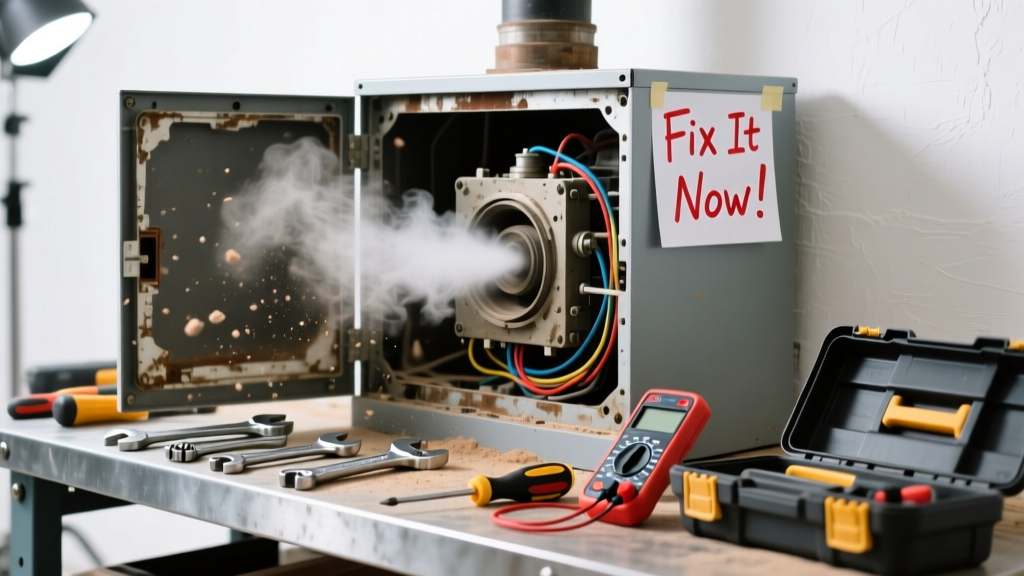
It’s 20°F outside, your thermostat says 'heat,' and yet icy air blasts from the vents while a grinding, banging, or whining noise echoes through the basement. That’s not just annoying—it’s a sign your furnace is struggling, possibly dangerously. Don’t wait for total failure; many causes are simple, fast, and safe to address with basic tools.
Quick Diagnosis
Before grabbing tools, rule out these five most common culprits:
- Thermostat set to 'ON' instead of 'AUTO'—causing constant blower operation without heat
- Clogged or dirty air filter restricting airflow and triggering safety shutdowns
- Ignition failure (no flame) due to dirty flame sensor, faulty igniter, or gas valve issues
- Blower motor bearing wear or loose blower wheel causing rattling or screeching
- Heat exchanger cracks or limit switch failures forcing early shutdown before warm air circulates
Tools & Materials Needed
| Item | Purpose | Estimated Cost |
|---|---|---|
| 3M Filtrete 16x25x1 MERV 11 Filter | Replaces clogged filter to restore airflow and prevent overheating | $14–$18 |
| Multi-meter (Klein Tools MM400) | Tests voltage to igniter, pressure switch, and limit switch | $49–$65 |
| Emery cloth or fine steel wool | Cleans oxidation off flame sensor without scratching | $3–$7 |
| Shop vacuum with brush attachment | Removes dust/debris from blower compartment and heat exchanger fins | $65–$120 |
| Phillips and flat-head screwdrivers | Access panels, filter slots, and electrical connections | $8–$15 |
Step-by-Step Fix
Work methodically—each step resolves a distinct cause. Always power off the furnace at the disconnect switch and breaker before proceeding.
- Check thermostat mode and fan setting: Switch from 'ON' to 'AUTO' and raise setpoint 5°F above room temp. Wait 90 seconds—if blower starts *and* warm air follows, the issue was misconfiguration, not hardware.
- Replace the air filter: Pull the old filter—hold it up to light. If you can’t see daylight through it, replace it immediately. A clogged filter causes rapid heat exchanger overheating, tripping the high-limit switch and cutting burners while the blower keeps running cold air.
- Clean the flame sensor: Locate the thin metal rod near the burners (usually white ceramic base). Turn off gas, unscrew sensor, gently polish with emery cloth until shiny—but don’t sand aggressively. Reinstall snugly. According to the American Gas Association’s 2022 Maintenance Guide, 68% of ignition-related no-heat complaints trace back to dirty flame sensors.
- Inspect blower assembly: With power off, open the blower compartment. Spin the wheel by hand—it should rotate smoothly with no scraping or wobble. If it grinds or feels gritty, bearings are failing. Replace the entire blower motor assembly if over 12 years old or making consistent metal-on-metal noise.
When to Call a Pro
Some furnace symptoms require licensed expertise—not just for safety, but because improper handling risks carbon monoxide exposure or fire. Call an HVAC technician immediately if you notice:
- A strong odor of rotten eggs (gas leak—evacuate and call 911 first)
- Visible cracks or holes in the heat exchanger (requires boroscope inspection)
- Tripped circuit breaker that won’t reset after verifying no short circuits
- Carbon monoxide alarm activation during furnace operation
- Repeated limit switch trips even after cleaning filters and flame sensor
The U.S. EPA estimates that 14% of household water usage is from leaks—but for furnaces, even small combustion inefficiencies increase CO risk exponentially. Never bypass safety controls.
"If your furnace cycles on for less than 90 seconds before blowing cold air, suspect either flame rollout or a cracked heat exchanger—both demand professional verification before reuse." — HVAC Excellence Certified Technician Handbook, 2023 edition
Prevention Tips
Most cold-air-and-noise issues stem from neglect—not age. Prevent recurrence with these habits:
- Replace filters every 30–60 days during heating season (not just 'when dirty')
- Vacuum blower wheel and heat exchanger fins annually—use soft brush attachment only
- Test thermostat calibration quarterly using a separate digital thermometer
- Schedule professional tune-ups every fall—includes gas pressure check, venting inspection, and CO testing
Why does my furnace blow cold air only when it first starts?
This is often normal 'startup delay'—the heat exchanger must reach safe temperature before the blower engages. But if cold air lasts longer than 90 seconds, the high-limit switch may be tripping prematurely due to restricted airflow or a failing switch.
Can I hear a bad inducer motor before it fails completely?
Yes—listen for high-pitched whining, intermittent clicking, or delayed startup (more than 3–5 seconds after ignition attempt). The inducer motor creates negative pressure to vent combustion gases; if it stalls, the pressure switch won’t close and burners won’t ignite.
Is it safe to clean the flame sensor with alcohol or vinegar?
No. Alcohol dries out ceramic bases; vinegar is acidic and corrodes stainless steel. Use only dry emery cloth or fine steel wool—nothing liquid-based. Moisture trapped in the sensor housing invites corrosion and false readings.
What noise means my blower motor bearings are going out?
A consistent grinding, growling, or high-frequency whine—especially one that worsens as the motor warms up—is classic bearing failure. Occasional squeaking may just need belt tension adjustment (on older belt-drive units), but grinding is irreversible wear.
Why does my furnace make a loud bang when it turns on?
This 'oil-canning' or 'pop' sound usually indicates delayed ignition—gas builds up before lighting. Causes include dirty burners, weak igniter output, or low gas pressure. Clean burners with a wire brush and compressed air, but if banging persists, have gas pressure tested by a pro.
How often should I check the condensate drain line on my high-efficiency furnace?
Monthly during active heating season. Clogged drains trigger float switches that shut down burners—leaving you with cold air and a quiet, unlit furnace. Pour 1/4 cup white vinegar down the drain tube every 30 days to dissolve algae and slime buildup.
A noisy, cold-blowing furnace isn’t always a death sentence—it’s often a cry for attention you can answer with patience and the right tools. Most homeowners resolve over half of these issues in under an hour. Just remember: when in doubt about gas, electricity, or heat exchangers, stop and call a licensed HVAC tech. Your comfort—and safety—depends on knowing when to DIY and when to defer. For related help, see our guides on how to test a furnace limit switch and flame sensor replacement guide.