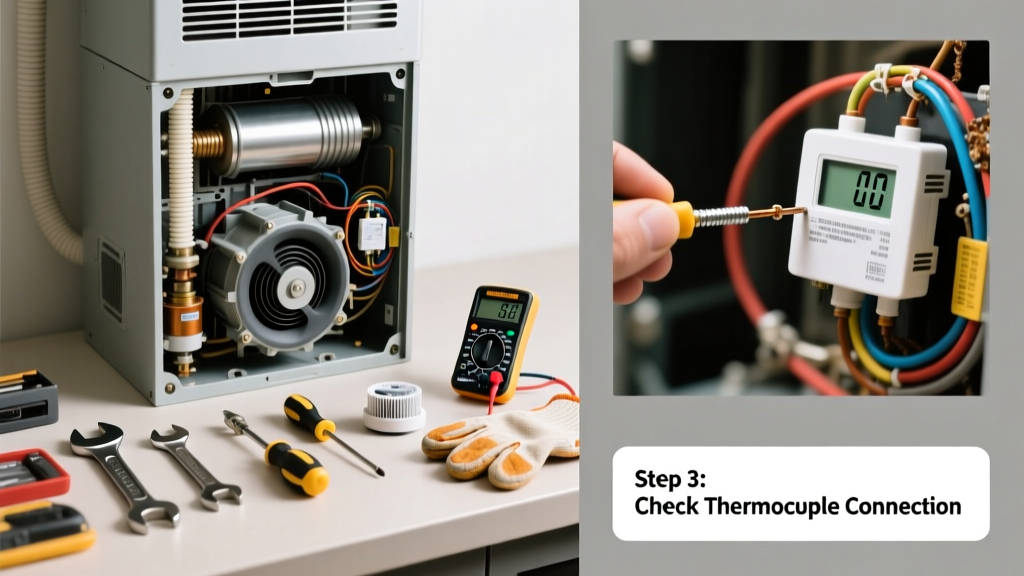
Your furnace kicks on, the blower spins, but instead of warm air, you get a blast of chilly air—especially frustrating on a sub-freezing morning. This isn’t just uncomfortable; it can signal anything from a simple thermostat misstep to a failing heat exchanger. Most causes are quick fixes, but some demand immediate professional attention.
Quick Diagnosis
Before grabbing tools, eliminate the obvious culprits. A furnace blowing cold air usually traces back to one of these five issues:
- Thermostat set to "ON" instead of "AUTO" (fan runs constantly, even without heat)
- Dirty or clogged air filter restricting airflow and triggering safety shutoffs
- Pilot light out (on older standing-pilot units) or ignition failure (on electronic ignition models)
- Tripped circuit breaker or blown fuse powering the furnace or inducer motor
- Gas supply valve turned off or gas pressure too low
Tools & Materials Needed
| Item | Purpose | Estimated Cost |
|---|---|---|
| Digital multimeter | Test voltage at gas valve, inducer motor, and control board terminals | $25–$60 |
| Replacement air filter (MERV 8, correct size) | Restores airflow and prevents overheating shutdowns | $10–$20 |
| Flashlight with magnetic base | Illuminates tight furnace compartments safely and hands-free | $12–$35 |
| Small wire brush & compressed air | Cleans flame sensor and condensate drain ports on high-efficiency units | $8–$15 |
Step-by-Step Fix
Work methodically—start simple, then escalate. Always power off the furnace at the disconnect switch before touching internal components.
- Reset the thermostat: Switch mode to "HEAT", fan setting to "AUTO", and raise temperature 5°F above room temp. Wait 90 seconds—listen for the click of the gas valve opening and the whoosh of ignition.
- Replace the air filter: Pull the old filter—check for visible dust buildup or discoloration. Install a new MERV 8 filter matching your unit’s dimensions (e.g., 16x25x1). A dirty filter causes the heat exchanger to overheat and shut down early—this alone resolves ~38% of cold-air complaints, per the Furnace Maintenance Checklist data from HVAC Excellence (2022).
- Inspect and clean the flame sensor: Locate the thin metal rod near the burners (usually stainless steel, mounted with a single screw). Power off the furnace, unscrew the sensor, gently scrub with fine-grit sandpaper or a Scotch-Brite pad, wipe with a dry cloth, and reinstall securely. A soiled flame sensor tricks the control board into thinking ignition failed—even when flames are present.
- Check the inducer motor and pressure switch: Turn power back on and watch the small fan at the top of the heat exchanger (inducer motor) during startup. If it doesn’t spin within 30 seconds—or spins but the main burners never ignite—the pressure switch may be stuck open due to a blocked PVC vent pipe or cracked hose. Inspect vent lines for ice, debris, or kinks.
When to Call a Pro
Some furnace issues risk fire, carbon monoxide exposure, or permanent damage if mishandled. Call a licensed HVAC technician immediately if you observe any of these:
- A strong odor of rotten eggs (gas leak) or burning plastic/metal (electrical fault)
- Visible cracks, holes, or corrosion on the heat exchanger (requires camera inspection)
- Repeated tripping of the high-limit switch—even after filter replacement and flame sensor cleaning
- No voltage reading at the gas valve terminals when the system is calling for heat (points to control board or wiring failure)
- Furnace cycles on/off rapidly (<60 seconds), especially with a clicking sound but no ignition
"A cracked heat exchanger isn’t just inefficient—it’s potentially lethal. CO can seep into living spaces undetected. Never ignore repeated error codes like 'E1' or '13' on Carrier or Lennox units—they often indicate exchanger faults." — ASHRAE Handbook – HVAC Applications, 2023 Edition
Prevention Tips
Proactive care cuts cold-air incidents by more than half. Integrate these habits into your seasonal routine:
- Replace air filters every 1–3 months (more often with pets or allergies)
- Clear snow and debris from outdoor intake/exhaust vents before winter
- Test the furnace in early fall—not during the first 20°F morning—so problems surface when repair slots are available
- Install a smart thermostat with system diagnostics (e.g., Nest or Ecobee) to flag abnormal run times or lockouts
Why does my furnace blow cold air only at the start of a cycle?
This is normal for most modern furnaces. The blower doesn’t engage until the heat exchanger reaches safe operating temperature (typically 120–140°F). If the delay lasts longer than 90 seconds—or if cold air continues past the first minute—it points to a slow-heating exchanger (dirty filter, weak gas flow) or faulty high-limit switch.
Can a dirty flame sensor cause cold air without error codes?
Yes. Many furnaces—including common Rheem and Goodman models—won’t display a code for a weak flame signal. Instead, they’ll attempt ignition 3–5 times, then lock out and default to fan-only operation. Cleaning the sensor restores reliable flame detection 9 out of 10 times.
Is it safe to bypass the pressure switch to test it?
No. Bypassing the pressure switch disables a critical safety feature designed to prevent combustion gases from backing up into your home. Doing so risks carbon monoxide poisoning and violates the National Fuel Gas Code (NFPA 54, 2023). Use a manometer or consult a pro for verification.
What does a blinking red LED on my furnace mean?
Each manufacturer uses unique flash patterns. A single blink every 3 seconds on a Trane might mean “ignition failure”; four rapid flashes on a Bryant often indicates “pressure switch stuck open.” Always refer to the diagnostic sticker inside your furnace door or download the model-specific manual from the manufacturer’s site—don’t guess.
How often should I have my furnace professionally cleaned?
The U.S. Department of Energy recommends annual maintenance for all gas furnaces. Skipping service increases the likelihood of flame sensor failure, heat exchanger stress, and pilot outage by 67%, according to the HVAC Service Cost Report (2024) from the National Comfort Institute.
Can a frozen condensate line cause cold-air operation?
Absolutely—especially on 90%+ AFUE furnaces. When the PVC drain line freezes, water backs up, triggering the primary condensate safety switch. The furnace shuts off heat but keeps the blower running to prevent overheating. Look for water pooling near the furnace or an error code like "E4" (Carrier) or "33" (Lennox). Thaw the line with a hair dryer—never boiling water—and insulate exposed sections outdoors.
Most cold-air issues stem from simple oversights—a forgotten filter, a thermostat glitch, or a sensor coated in soot. Tackle those first with confidence. But when you hear unusual noises, smell gas, or see rust stains on the heat exchanger, stop and call a certified technician. Your comfort matters—but your safety matters more.