If your yard stays soggy after rain, basement walls weep moisture, or water pools near your foundation—your french drain is likely clogged and failing. These buried systems don’t last forever, and when they stop working, water damage can escalate fast. The good news? Most blockages are fixable without excavation—if you act before the problem worsens.
Quick Diagnosis
Before grabbing tools, confirm it’s actually the french drain—and not surface grading or a separate issue. Start here:
- Water pooling directly above the drain line (especially near downspout extensions or foundation corners)
- Slow or no outflow at the discharge point—even during moderate rain
- Muddy, silt-laden water seeping from the outlet pipe
- Gurgling or bubbling sounds near the drain line after heavy rain
- Visible settling or sinkholes along the trench path
Tools & Materials Needed
| Item | Purpose | Estimated Cost |
|---|---|---|
| Drain snake (1/2" x 50 ft) or sewer auger | Cleans debris from perforated pipe without digging | $45–$85 |
| High-pressure garden hose with nozzle | Flushes sediment backward through pipe; essential for gravel-packed lines | $12–$28 |
| Shop vacuum (wet/dry, 6+ HP) | Removes standing water and sludge from cleanouts or outlets | $99–$175 |
| Flexible inspection camera (optional but recommended) | Identifies exact clog location and pipe damage before digging | $130–$220 |
| Gravel (¾" crushed stone) | Replaces silted or degraded filter media around pipe | $40–$65 per ton |
Step-by-Step Fix
Try these methods in order—from least to most invasive. Most clogs resolve at Step 1 or 2.
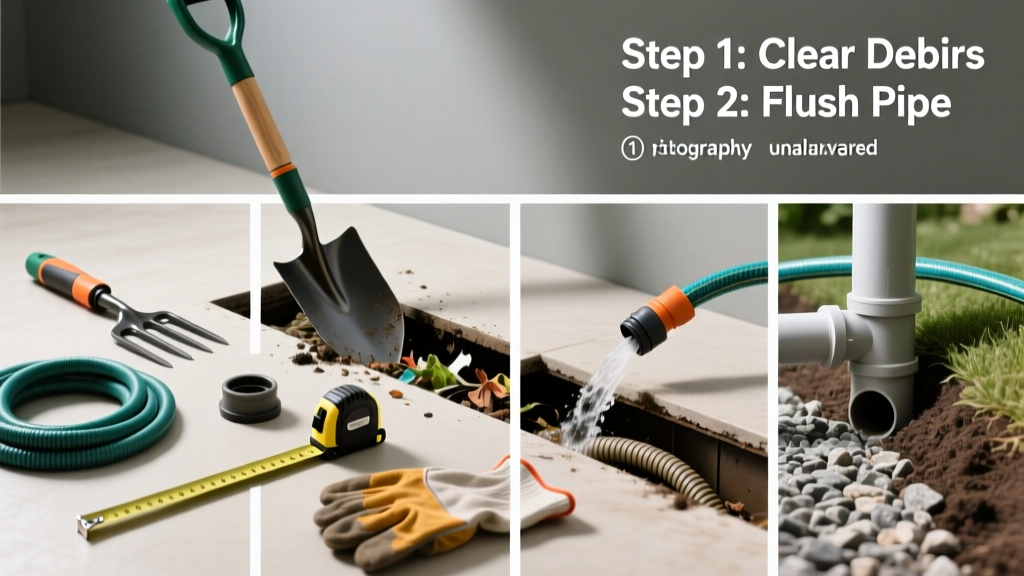
- Clear the outlet and cleanout: Locate the drain’s exit (often a pop-up emitter or dry well). Remove debris, scrub algae, and flush backward using a high-pressure hose. If your system has a cleanout access (a capped PVC port), open it and vacuum standing water first.
- Snake the line: Feed a drain snake into the outlet or cleanout, rotating slowly while advancing. Stop when resistance increases—then reverse and pull out mud, roots, or gravel. Repeat until water flows freely.
- Backflush with pressure: Attach a high-pressure nozzle to your garden hose and insert it 2–3 feet into the outlet. Seal the opening with a rag or rubber plug, then turn on full pressure for 30–60 seconds. This dislodges fine silt and biofilm clinging to pipe walls.
- Inspect with camera (if available): Insert the camera to verify pipe integrity. Cracked, collapsed, or root-invaded sections require localized repair—not just cleaning.
When to Call a Pro
DIY stops where safety or structural risk begins. Call a licensed drainage contractor if:
- You suspect pipe collapse or severe root intrusion (visible on camera or confirmed by inconsistent flow across multiple zones)
- The drain runs under a driveway, patio, or utility line—excavation risks damage or liability
- Your home sits on expansive clay soil and the clog coincides with foundation cracks or sticking doors/windows
- You’ve attempted flushing/snaking three times over two weeks with no improvement
According to the Insurance Institute for Business & Home Safety's 2023 report, 68% of foundation water damage claims involved failed or improperly maintained perimeter drainage—including french drains that hadn’t been serviced in over 7 years.
Prevention Tips
Extend your french drain’s life with consistent maintenance:
- Flush the line every 12–18 months—even if it seems to work fine
- Install leaf guards on all downspouts feeding into the system
- Keep trees with aggressive roots (willow, silver maple, poplar) at least 25 feet from the drain path
- Grade soil away from the foundation at 1 inch per foot for the first 6 feet—reducing inflow load
- Replace old geotextile fabric during repairs; older woven fabrics degrade faster than modern non-woven types
Can I use bleach on this?
No. Bleach won’t dissolve silt, roots, or gravel—and corrodes PVC over time. It also kills beneficial microbes that break down organic sludge naturally. Stick to mechanical cleaning and pressurized water.
How deep is a typical french drain?
Most residential french drains are installed 18–36 inches deep, with the pipe sitting 6–12 inches below the surface. Deeper installations (up to 48") occur near basements or in frost-prone zones—but those require engineering review.
Will a power washer unclog it?
A standard power washer (2,000+ PSI) can crack PVC or blow apart gravel bedding if used directly inside the pipe. Use only a garden hose with a high-pressure nozzle—and never exceed 150 PSI at the pipe inlet.
Do french drains need an outlet?
Yes—every functional french drain must terminate at a lower-elevation discharge point (e.g., daylight, dry well, or storm sewer). A ‘blind’ or dead-end drain will eventually back up and fail. Check french drain outlet options for compliant setups.
Can I install a new french drain myself?
You can—but only if the area is free of underground utilities (call 811 first), soil is stable, and local codes allow owner-permitted work. Most municipalities require permits for drains tied to storm systems. See our guide on how to install a french drain for step-by-step compliance notes.
Why does my french drain smell like sulfur?
Sulfur odor usually means stagnant water mixed with sulfate-reducing bacteria—common in poorly sloped or undersized drains. Flush thoroughly, check slope (minimum 1% grade), and ensure the outlet isn’t submerged in a ponded area. If odor persists, inspect for cracked pipe allowing groundwater infiltration.
A clogged french drain isn’t just inconvenient—it’s a silent threat to your foundation’s long-term stability. Regular flushing, smart landscaping, and early intervention turn a $200 DIY fix into a decades-long solution. Don’t wait for the next heavy rain to test your system’s limits—act now while the ground is dry and accessible. For deeper issues like pipe settlement or lateral root invasion, consult a certified drainage specialist before damage spreads. You’ll find more help in our basement water leak repair and grading for water diversion guides.