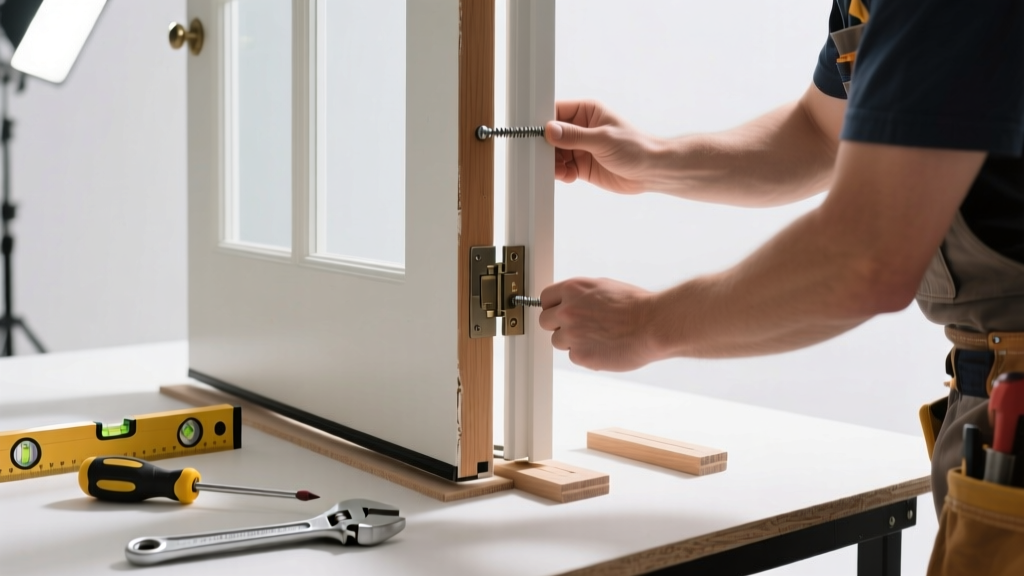
If your French doors won’t latch, scrape the frame, or leave uneven gaps, misalignment is likely the culprit—not worn hardware or warped wood (yet). Most alignment issues stem from simple causes like loose hinges or settled thresholds, and over 70% can be resolved in under an hour with basic tools. Don’t rush to replace the whole unit—start here.
Quick Diagnosis
Before grabbing tools, identify the root cause. Check these five common culprits first:
- Hinge screws loosened or stripped in the jamb or door edge
- Threshold settling or shifting due to moisture or soil movement
- Swelling of wood from humidity (especially in older solid-wood doors)
- Warped hinge mortises or bent hinge leaves
- Uneven floor or foundation shift affecting the entire door assembly
Tools & Materials Needed
| Item | Purpose | Estimated Cost |
|---|---|---|
| 3/16" hex key (Allen wrench) | Tightens concealed hinge screws on most modern French door systems | $4–$8 |
| Phillips #2 screwdriver | Secures surface-mounted hinge plates and strike plates | $6–$12 |
| Shim set (plastic or cedar) | Corrects minor hinge or threshold gaps without over-tightening | $5–$10 |
| Level (24" or longer) | Verifies vertical plumb and horizontal level across both doors and frame | $12–$25 |
| Wood filler & sandpaper (120-grit) | Fills stripped screw holes before re-drilling; smooths minor rub marks | $8–$15 |
Step-by-Step Fix
Work methodically—from top to bottom, hinge by hinge. Always adjust one variable at a time and test after each change.
- Tighten all hinge screws: Start with the top hinge on the active door. Use the hex key or screwdriver to snug each screw—don’t overtighten. If a screw spins freely, remove it, fill the hole with wood glue and a toothpick, let dry 30 minutes, then reinsert.
- Shim the bottom hinge: If the door drags at the bottom corner, loosen the bottom hinge’s jamb-side screws slightly, insert a 1/16" cedar shim behind the hinge leaf, then retighten. Recheck gap uniformity with a credit card (ideal gap: 1/8").
- Adjust the strike plate: If only the latch doesn’t catch, loosen strike plate screws and shift it 1/32" toward the latch side using a small pry bar or needle-nose pliers—then resecure.
- Check and level the threshold: Place your level across the threshold. If it’s sloped more than 1/16" over 24", lift the threshold, add shims beneath low spots, and reattach with corrosion-resistant screws.
When to Call a Pro
Some misalignment signals deeper structural issues. Call a licensed door technician if you encounter any of these:
- The door frame itself is visibly racked (diagonally twisted), indicating foundation movement
- Both doors sag toward the center—even after hinge adjustment—and gaps widen near the top corners
- You’ve stripped three or more hinge screw holes in the same location, suggesting compromised framing
- There’s visible cracking in drywall around the header or jambs, especially after recent heavy rain or freeze-thaw cycles
According to the National Association of Home Builders’ Door Installation Standards Handbook (2022), “Misalignment persisting after hinge and threshold correction should trigger a structural evaluation—particularly in homes over 15 years old with slab-on-grade foundations.”
Prevention Tips
Maintain alignment year-round with these habits:
- Inspect hinge screws every 6 months—tighten at the first sign of play
- Run a dehumidifier in humid climates during summer; keep indoor RH between 35–55%
- Apply silicone-based lubricant to hinges annually—not WD-40, which attracts dust
- Clear drainage paths around exterior thresholds to prevent water pooling and wood swelling
Why does my French door only bind on hot, humid days?
Wood expands across the grain—so high humidity makes stiles and rails swell laterally, increasing friction against the frame. This is especially common with solid mahogany or oak doors installed without proper seasonal expansion gaps. A 2% moisture content increase can swell a 36" wide door by up to 1/16"—enough to prevent latching. Fix sticking wood door techniques apply here too.
Can I plane the edge of a French door to fix alignment?
Yes—but only as a last resort and no more than 1/32" per pass. Use a sharp block plane and work across the grain first, then with it. Sand smooth and reseal with matching finish. Over-planing weakens the stile and voids most manufacturer warranties. Better to shim hinges or adjust the strike.
Do French doors need different hinge types than single doors?
Yes. Most French doors use heavy-duty, non-mortise, adjustable pivot hinges or concealed European-style hinges rated for 150+ lbs per door. Standard butt hinges lack the load capacity and micro-adjustment range needed. Swapping to inadequate hinges accelerates misalignment—always match OEM specs or consult the door hinge types guide.
How do I know if the problem is the frame or the door?
Close both doors and measure the gap between them at top, middle, and bottom. If the gap varies more than 1/8", the frame is likely out of square. If gaps are uniform but one door rubs only at the top corner, the door itself is warped. You can also remove both doors temporarily and lay them flat on a level surface—if they rock, warping is confirmed.
Will tightening hinge screws fix a door that won’t stay closed?
Sometimes—but not always. If the door drifts open on its own, check the hinge pin angle first: a slight inward tilt (toward the room) creates self-closing action. Loosen the top hinge’s jamb screws, insert a thin shim behind the hinge, and retighten to induce 1–2° of tilt. If it still drifts, the issue may be a failed hydraulic closer or worn pivot bearing—not alignment alone.
What’s the ideal gap between French doors and the frame?
The International Residential Code (IRC R612.3, 2021) specifies 1/8" ± 1/32" clearance around all edges for operable doors. Gaps larger than 3/16" invite drafts and reduce energy efficiency; smaller than 1/16" risk binding, especially in seasonal humidity swings. Use a feeler gauge or folded standard paper (0.004") to verify consistency.
French doors rely on precision—not brute force. Small adjustments, repeated thoughtfully, restore smooth operation far more reliably than aggressive fixes. If your doors still don’t meet in the center after following these steps, revisit the threshold and hinge shims before assuming replacement is necessary. And remember: a well-aligned French door shouldn’t require slamming—or a shoulder bump—to close.