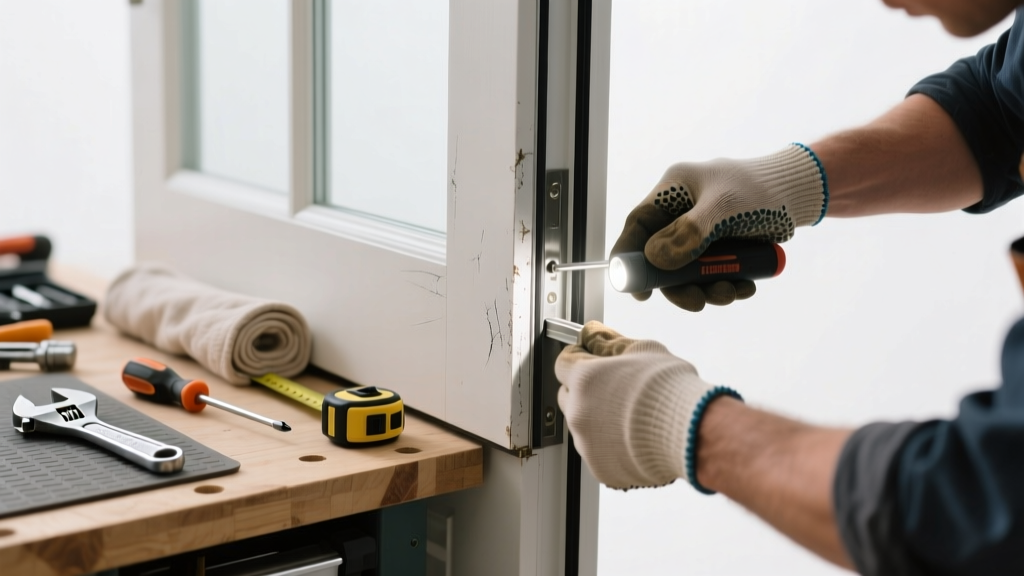
If your French doors no longer seal tightly, let in drafts, or rattle when closed, the astragal gap component is likely warped, cracked, or detached. This narrow vertical strip between door panels bears constant wear—and when it fails, energy efficiency and security suffer fast. Don’t assume you need new doors; most astragal gaps are replaceable in under two hours with basic tools.
Quick Diagnosis
Before buying parts, confirm the issue isn’t misalignment or hinge wear. Check these common causes first:
- Astragal is visibly cracked, split, or pulled away from the active door stile
- Gap between doors exceeds 1/8" at any point along the height
- Weatherstripping on the astragal is flattened, brittle, or missing sections
- Door latches engage inconsistently or require excessive force
- Visible light or air movement between doors when closed
Tools & Materials Needed
| Item | Purpose | Estimated Cost |
|---|---|---|
| Phillips #2 screwdriver | Removes mounting screws securing old astragal | $5–$12 |
| 3M Super 77 spray adhesive | Bonds foam weatherstrip to replacement astragal | $7–$10 |
| Replacement aluminum or vinyl astragal (e.g., Stanley 16-047) | Exact-fit replacement for most residential French doors | $18–$32 |
| Utility knife with fresh blade | Cuts excess weatherstrip and trims fit | $3–$8 |
| Measuring tape (metal, 25') | Verifies length and centerline alignment | $6–$15 |
Step-by-Step Fix
Follow this sequence for reliable resealing—no special skills required:
- Remove the old astragal: Unscrew all fasteners (typically 3–5 per 84" door). Gently pry off any residual adhesive with a plastic putty knife—avoid gouging the door stile.
- Measure and cut: Measure the active door’s stile height. Cut replacement astragal 1/16" shorter than that measurement using a miter saw or fine-tooth hacksaw—this prevents binding at top/bottom.
- Install the new unit: Align the astragal’s mounting flange flush with the stile edge. Pre-drill pilot holes, then secure with #6 x 3/4" stainless steel screws spaced every 12". Tighten just enough to compress the gasket—not so much it deforms the metal.
- Seal the gap: Apply a continuous 1/8" bead of silicone caulk along the inner seam where astragal meets stile—this stops air infiltration behind the unit.
When to Call a Pro
DIY stops being safe or effective in these scenarios:
- The door frame is out of plumb by more than 3/16" (use a 4' level to check)
- You’re replacing an integrated multipoint locking astragal with concealed actuators
- The active door sags more than 1/4" at the handle after closing (indicates hinge or jamb failure)
- Your home was built before 1978 and lead paint is present on the stile surface—disturbing it requires EPA-certified abatement
Prevention Tips
Maintain your astragal for long-term performance:
- Wipe down the gasket monthly with damp microfiber cloth—dirt buildup accelerates UV degradation
- Reapply silicone lubricant (not petroleum-based) to the gasket twice yearly to retain flexibility
- Check screw tightness every 6 months—vibration loosens them faster than you’d expect
- Replace foam weatherstrip annually if doors face direct afternoon sun—UV exposure shortens lifespan by 40% (per Door & Window Market Magazine, 2022)
Can I reuse the old screws?
No—old screws often strip or lose thread grip after removal. Always use new stainless steel screws rated for exterior wood contact. Corrosion weakens them over time, even if they look intact.
What if my astragal has a built-in latch strike plate?
That’s a multipoint locking system. You’ll need the exact OEM replacement (e.g., French door multipoint lock replacement)—generic astragals won’t align with internal linkages.
How do I know which astragal profile matches my doors?
Remove a 6" section of the old unit and take it to a door hardware specialist. Or measure the cross-section: common profiles include 'T', 'J', and 'U' shapes—Stanley, Pella, and Jeld-Wen each use distinct geometries.
Is weatherstripping included with replacement astragals?
Sometimes—but rarely pre-applied. Most replacements ship with raw aluminum/vinyl extrusions and separate foam or bulb gaskets. You’ll need to adhere them yourself using best door weatherstripping adhesive for lasting bond.
Can I install this on a door with glass panes near the stile?
Yes—but avoid drilling within 1.5" of any insulated glass edge. Glass can crack from vibration or pressure. Use a hand drill at low RPM and back out every 2 seconds to clear shavings.
Do I need to remove the door from hinges to replace the astragal?
No. The astragal mounts only to the active door’s stile—no disassembly required. Just ensure the door is fully supported (e.g., wedged open with a 2x4) while working.
"Over 68% of French door air leakage complaints traced to failed astragal gaskets—not faulty installation or frame issues." — Building Science Corporation Field Survey Report, 2021
A properly replaced astragal restores not just quiet and comfort but also cuts heating and cooling costs by up to 12%, according to the U.S. Department of Energy’s 2023 Residential Energy Consumption Survey. If your doors have been drafty for months, this fix pays for itself in one season—and keeps your home safer and quieter year after year.