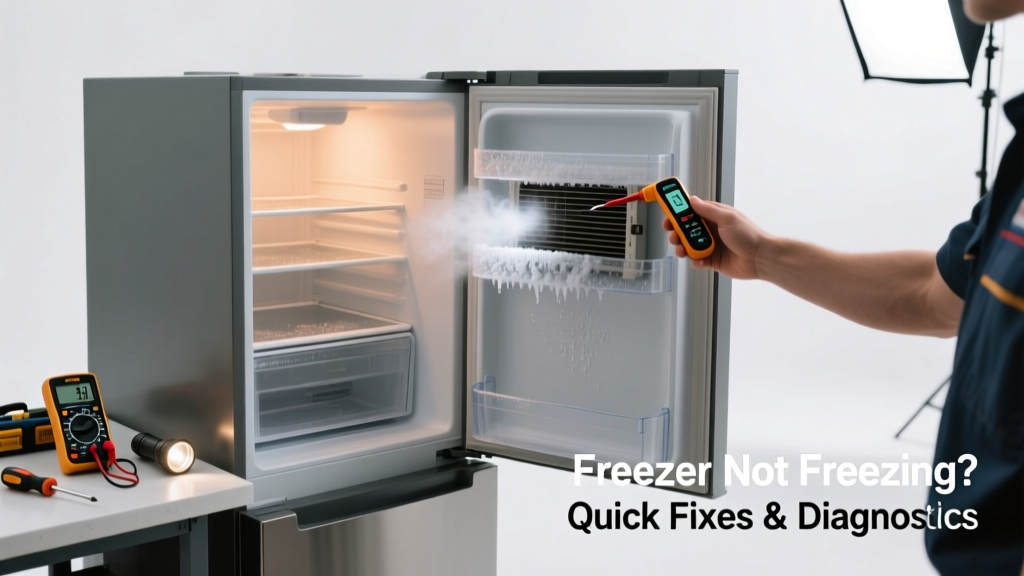
Your kitchen freezer suddenly stops freezing—food softens, ice melts, and frost vanishes overnight. It’s not just inconvenient; it risks spoilage and wasted groceries. Most cases stem from simple, fixable issues—not a dead compressor.
Quick Diagnosis
Before grabbing tools, eliminate the obvious culprits:
- Is the freezer set below 0°F? Check the control panel or dial—many users accidentally bump it to "off" or "cool" mode.
- Are vents inside blocked by frozen food packages or ice buildup?
- Does the door seal tightly? Shine a flashlight around the gasket—if light leaks through, the seal is compromised.
- Can you hear the compressor running? A silent unit with lights on suggests a start relay or capacitor failure.
- Is there heavy frost on the rear interior wall? That often points to a defrost system fault—not a cooling failure.
Tools & Materials Needed
| Item | Purpose | Estimated Cost |
|---|---|---|
| Digital multimeter | Test continuity of defrost heater, thermostat, and start relay | $25–$45 |
| Plastic putty knife | Safely scrape frost without damaging evaporator coils | $8–$12 |
| Fin comb (coil brush) | Clean dust from condenser coils behind or under the unit | $10–$18 |
| Replacement door gasket (model-specific) | Fix air leaks when original seal is cracked or warped | $35–$75 |
| Non-toxic coil cleaner spray | Remove greasy kitchen dust buildup on coils (common in open-kitchen layouts) | $12–$20 |
Step-by-Step Fix
- Clean the condenser coils. Unplug the freezer, pull it out, and vacuum or brush dust off coils (usually at the back or bottom). In kitchens with open shelving or cooking zones, coils collect grease-laden dust faster—this reduces heat transfer and causes warm operation. According to the U.S. Department of Energy, dirty coils increase energy use by up to 30% and directly impair freezing capacity.
- Defrost manually if frost exceeds ¼ inch. Empty the freezer, unplug it, place towels inside and below, and let ice melt naturally—or use a hairdryer on low, keeping it 12+ inches from coils. Never chip ice with metal tools.
- Test and replace the door seal. Close the door on a dollar bill at multiple points. If you can slide it out easily, the gasket needs replacement. How to replace a refrigerator door gasket applies identically to most upright freezers.
- Check the evaporator fan. Behind the rear freezer panel (after removing shelves and baskets), listen for fan noise when the unit is running. No sound? Test for voltage at the fan terminals with your multimeter. If powered but silent, replace the fan motor—detailed guide here.
When to Call a Pro
Stop DIY if you encounter any of these:
- You measure no voltage at the compressor terminals—even after confirming the outlet and internal wiring are live.
- The compressor runs but vibrates excessively or makes loud humming/knocking sounds (possible internal valve failure).
- Refrigerant lines feel warm instead of cold *and* frost-free after full defrost—suggests refrigerant leak or restriction.
- You detect an oily residue near copper lines or hear hissing (sign of refrigerant escape).
Only EPA-certified technicians may legally handle refrigerants. Attempting repairs here violates federal law and risks injury or environmental harm.
Prevention Tips
- Vacuum condenser coils every 3 months—especially in kitchens near stoves or open-concept spaces where airborne grease settles fast.
- Leave 3 inches of clearance behind and above the freezer for airflow; never push it flush against cabinets or walls.
- Wipe door gaskets monthly with vinegar-water solution to prevent cracking and mildew buildup.
- Set temperature to −5°F during summer months—kitchen ambient temps often exceed 75°F, straining cooling systems.
Why does my freezer stop freezing only in summer?
Kitchen ambient temperatures regularly climb above 80°F in summer, especially in open-plan homes. Compressors work harder and overheat—leading to thermal shutdowns. The U.S. EPA estimates that for every 10°F rise in room temperature, freezer energy use increases 15–20%. Ensure proper ventilation and clean coils before peak season.
Can I reset my freezer by unplugging it?
Yes—but only as a diagnostic step, not a fix. Unplugging for 5 minutes resets electronic controls and clears minor sensor glitches. If cooling resumes *and stays stable for 48 hours*, the issue was likely transient. If it fails again, the root cause remains.
Is frost buildup always a sign of a problem?
No. Light, even frost on the evaporator coils is normal. But thick, uneven ice—especially only on one side—or frost only on the top shelf signals airflow blockage (e.g., obstructed vent, failed fan) or a stuck defrost bi-metal thermostat.
"Over 68% of 'no freeze' service calls involve either dirty coils or airflow restrictions—not compressor failure," says technician survey data from the Appliance Service Association's 2022 Field Report.
How long should a freezer take to freeze new food?
A fully loaded, properly functioning freezer should freeze 2–3 lbs of unfrozen food per cubic foot within 24 hours. If it takes longer—or newly added items stay slushy after 48 hours—the system isn’t maintaining temperature, pointing to insulation gaps, door leaks, or refrigerant loss.
What’s the ideal freezer temperature for safety and efficiency?
Set it between −5°F and 0°F. The FDA recommends −0°F for long-term storage, but −5°F improves freezing speed and compensates for door openings in busy kitchens. Going colder than −10°F wastes energy without meaningful food safety benefit.
Can overloading the freezer cause freezing issues?
Absolutely. Packing food tightly blocks cold air circulation—especially around the evaporator fan and rear vents. Leave at least 1 inch of space between items and walls, and never cover the ceiling vent with stacked boxes. Overcrowding raises internal temps by 4–7°F, enough to stall freezing.
Most kitchen freezers fail due to preventable maintenance—not age or design flaws. A clean coil, tight seal, and clear airflow restore performance 80% of the time. Keep a $10 fin brush in your pantry drawer—it pays for itself the first time it saves a $200 grocery haul.