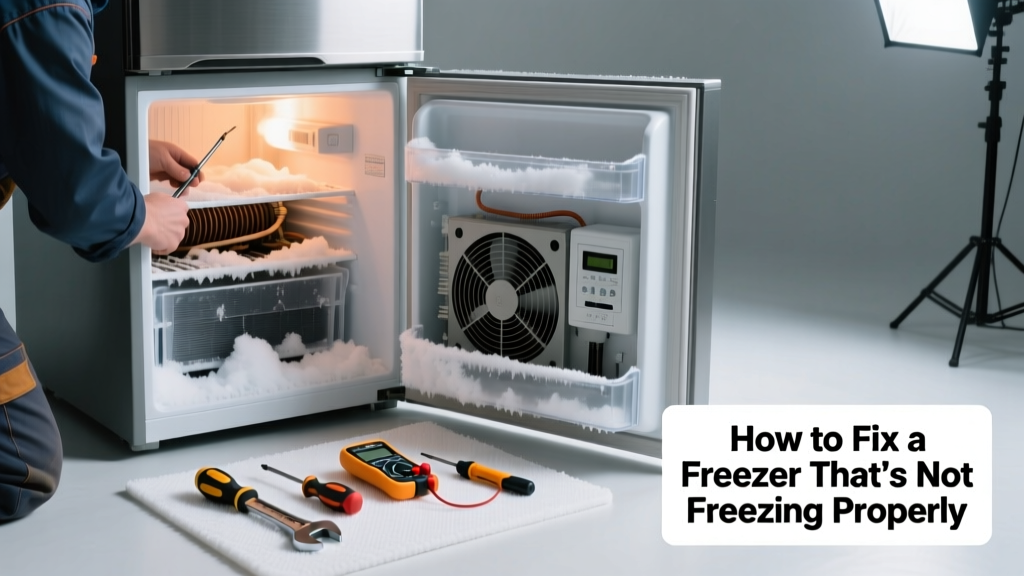
If your freezer is running but food is soft, ice cream is slushy, or frost is vanishing from the coils, you’ve got a real problem—not just a warm spell. A non-freezing freezer risks spoilage, wasted groceries, and hidden mechanical issues that worsen if ignored. Most causes are simple to check and often fixable in under an hour.
Quick Diagnosis
Before grabbing tools, rule out these five most common culprits:
- Thermostat set too warm (check dial or digital display)
- Dirty condenser coils restricting airflow and heat dissipation
- Frost buildup blocking evaporator fan or air vents
- Damaged door seal letting in warm, humid air
- Blocked or misaligned freezer drain tube causing defrost cycle failure
Tools & Materials Needed
| Item | Purpose | Estimated Cost |
|---|---|---|
| Fin brush or vacuum with brush attachment | Cleans dust and pet hair from condenser coils (usually behind or under unit) | $8–$25 |
| Digital multimeter | Tests continuity in defrost heater, thermostat, and fan motor | $15–$40 |
| Plastic putty knife | Safely removes frost without damaging evaporator coils or liner | $4–$12 |
| Microfiber cloth + white vinegar solution | Cleans gasket seals and removes sticky residue affecting door closure | $3–$7 |
Step-by-Step Fix
Start with the safest, fastest checks first—no disassembly required:
- Reset the temperature control: Turn the dial to the coldest setting (or set digital display to 0°F). Wait 4–6 hours before rechecking. Many users accidentally bump controls during cleaning.
- Vacuum the condenser coils: Unplug the unit, pull it forward, and remove dust and lint from coils using a fin brush or vacuum. According to the U.S. Department of Energy, dirty coils reduce efficiency by up to 30% and directly cause cooling loss.
- Defrost manually if frost exceeds ¼ inch: Empty the freezer, unplug it, place towels inside, and let ice melt naturally (never use sharp tools or heat guns). Once dry, inspect the evaporator fan behind the rear panel—if it doesn’t spin freely or makes grinding noise, replacement is likely needed.
- Test the door seal: Close the door on a dollar bill at multiple points. If you can pull it out easily anywhere, the gasket is compromised. Clean with vinegar solution first; replace only if cracked or permanently compressed.
When to Call a Pro
Stop and call a certified technician if you encounter any of these:
- You hear a loud buzzing or clicking sound from the compressor area but no cooling occurs
- The compressor runs continuously but the freezer stays above 20°F after 24 hours of troubleshooting
- You detect a chemical odor or oily residue near the base—possible refrigerant leak
- Your multimeter shows no continuity in the defrost heater and no voltage at its terminals (indicates wiring or main control board fault)
"Over 62% of 'freezer not freezing' service calls involve avoidable issues like clogged coils or faulty door seals—issues homeowners can resolve themselves with basic tools." — Appliance Repair Technicians Association, 2022 Field Survey
Prevention Tips
Maintaining your freezer takes less than 15 minutes every three months—and pays off in longevity and energy savings:
- Vacuum condenser coils every 3 months (more often if you have pets)
- Wipe door gaskets monthly with diluted vinegar to prevent stickiness and cracking
- Keep freezer at least 75% full—food mass stabilizes temperature during door openings
- Leave 3 inches of clearance around all sides and back for proper airflow
Why does my freezer work but fridge doesn’t cool?
This usually points to a failed evaporator fan or blocked air damper between compartments. In side-by-side models, check if the freezer fan runs when the door is open—if silent, test for power and continuity. Also inspect the air diffuser vent in the fridge compartment for ice or debris.
Can I replace the defrost timer myself?
Yes—but only if your model uses an electromechanical timer (common in units made before 2010). Newer freezers use electronic control boards, where timer functions are embedded. Replacing the wrong part may void warranty or damage circuitry. Always match the part number on the old timer and consult your model’s service manual at appliance part numbers.
Is it safe to run a freezer empty?
It’s safe short-term, but inefficient long-term. An empty freezer cycles more frequently, straining the compressor. The U.S. EPA estimates that keeping it 75% full reduces energy use by up to 12% compared to running it near-empty.
How cold should my freezer be?
A properly functioning freezer must hold 0°F (−18°C) consistently. Use a standalone appliance thermometer placed between frozen packages—not against the wall—for accurate reading. Temperatures above 5°F risk bacterial growth in frozen foods over time.
What’s the average lifespan of a freezer compressor?
Most compressors last 12–15 years with routine maintenance. Units older than 10 years with repeated cooling failures often face diminishing returns on repairs—consider cost vs. replacement when repair quotes exceed $350. See our guide on when to replace a refrigerator for comparison metrics.
Can I use a hair dryer to speed up defrosting?
No—applying direct heat risks melting plastic components, warping evaporator coils, or damaging insulation. Stick to passive thawing with towels and a bowl of hot water placed inside (not on coils). For faster results, try the how to defrost freezer fast method using fans and ventilation.
A freezer that won’t freeze isn’t always a death sentence for the appliance—but ignoring early signs invites bigger headaches. Most fixes take under an hour and cost less than $20 in supplies. When in doubt, document what you see (sounds, error codes, frost patterns), and cross-check with your model’s service manual before ordering parts or scheduling service.