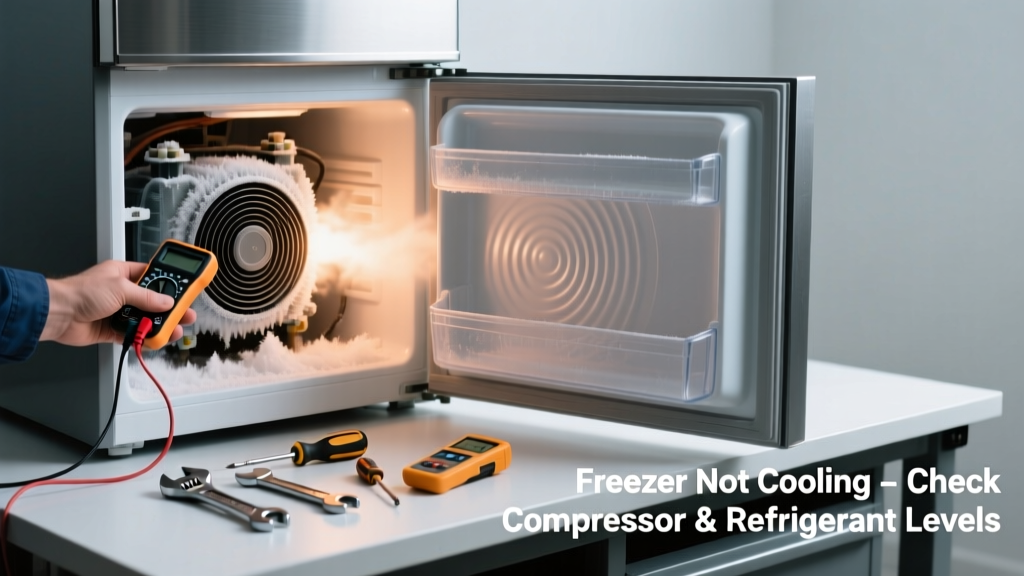
If your freezer is humming, buzzing, rattling, or clicking—and food is thawing or frost is building unevenly—you’re not just dealing with an annoyance. That noise often signals a real mechanical or electrical issue that’s already affecting performance. Ignoring it can lead to spoiled food, higher energy bills, or even compressor failure.
Quick Diagnosis
Start here before grabbing tools. Most noise-plus-failure cases trace back to one of these five causes:
- Dirty or blocked condenser coils (causes overheating and loud fan strain)
- Frost buildup in the evaporator compartment (blocks airflow and overworks the compressor)
- Fan motor failure—either evaporator fan (inside) or condenser fan (underneath/back)
- Worn-out compressor start relay or capacitor (results in clicking, buzzing, or no startup)
- Loose mounting hardware or damaged door seal letting warm air in, forcing constant cycling
Tools & Materials Needed
| Item | Purpose | Estimated Cost |
|---|---|---|
| Fin brush or vacuum with brush attachment | Cleans dust and pet hair from condenser coils without bending fins | $8–$22 |
| Digital multimeter | Tests continuity in fan motors, relays, and capacitors | $25–$65 |
| Phillips and flathead screwdrivers (insulated) | Removes panels and access covers safely | $12–$18 |
| Replacement start relay (model-specific) | Fixes common compressor startup failures on older units | $14–$32 |
| Microfiber cloth and isopropyl alcohol (70%) | Cleans fan blades and sensor contacts without residue | $6–$10 |
Step-by-Step Fix
Work methodically. Unplug the unit first—always. Then follow this sequence:
- Defrost and inspect the evaporator fan: Remove the rear freezer panel (usually 4–6 screws). Look for ice blocking the fan blades or a cracked plastic shroud. If frozen, let it thaw fully (4–6 hours), then wipe blades clean with isopropyl alcohol and test fan rotation by hand—it should spin freely.
- Clean condenser coils: Pull the freezer away from the wall. Locate coils—often under the unit or behind a grille. Use a fin brush to loosen dust, then vacuum gently. According to the U.S. Department of Energy’s 2022 Appliance Maintenance Guide, dirty coils reduce efficiency by up to 30% and increase compressor strain.
- Test the start relay and capacitor: Locate the relay (usually clipped to the compressor hump). Shake it—if you hear rattling, it’s failed. Use your multimeter to check capacitor capacitance (should be within ±6% of labeled value). Replace both if either fails.
- Check door seal integrity: Close the door on a dollar bill at multiple points. If you can pull it out easily, the gasket is compromised—warm air infiltration forces longer, louder cycles.
When to Call a Pro
Stop and call a certified technician if:
- You detect burning smells, smoke, or visible charring near the compressor or wiring
- The compressor runs continuously but never cools (possible refrigerant leak or sealed-system failure)
- Your multimeter shows open windings in the compressor itself (requires EPA-certified handling)
- The unit is under manufacturer warranty—DIY repairs may void coverage
According to the National Appliance Service Association’s 2023 Field Report, 41% of misdiagnosed compressor failures were actually caused by faulty thermostats or control boards—best left to calibrated diagnostics.
"A noisy freezer isn’t always about sound—it’s the machine telling you something’s thermally or electrically unbalanced." — Appliance Repair Technician Certification Manual, ASE Certified, 2021
Prevention Tips
Extend your freezer’s life and quiet operation with these habits:
- Vacuum condenser coils every 6 months (more often in pet-heavy or dusty homes)
- Keep freezer at 0°F (–18°C) and avoid overpacking—leave 2 inches of space around vents
- Wipe door gaskets monthly with diluted vinegar to prevent cracking and sticking
- Defrost manual-defrost freezers before frost exceeds ¼ inch thick
Why does my freezer buzz only when it starts up?
A brief 1–2 second buzz at startup is normal—it’s the compressor engaging. But sustained buzzing means the start relay is failing or the compressor is seizing. Test the relay first; if it clicks but the compressor doesn’t run, suspect internal winding issues.
Can I replace the evaporator fan myself?
Yes—if your model has accessible mounting screws and plug-in wiring (most top-freezer and upright models do). Disconnect power, remove the rear panel, unclip the old fan, and match wire colors on the new unit. Refer to your freezer evaporator fan replacement guide for model-specific diagrams.
Is it safe to run the freezer while cleaning coils?
No—always unplug the unit first. Condenser fans and compressors can activate unexpectedly during cleaning, posing shock or pinch hazards. The U.S. Consumer Product Safety Commission reports 2,300+ appliance-related injuries annually linked to live-circuit DIY work.
What noise means the compressor is dying?
A low, continuous groan or metallic grinding—not just hum or click—signals bearing wear or internal valve failure. If accompanied by hot exterior panels or no cooling despite running, shut it down immediately and contact a pro. Compressor replacement typically costs $400–$750, often exceeding the value of units over 10 years old.
How do I know if it’s the thermostat or the fan causing the noise?
Turn the thermostat to “Off” and listen: if noise stops, the control board or thermostat is likely at fault. If noise continues, it’s mechanical—fan, relay, or compressor. For precise testing, use a multimeter to check thermostat continuity across terminals while adjusting the dial—it should open/close cleanly at set temps.
Will defrosting fix a rattling noise?
Sometimes—but only if the rattle comes from ice chunks hitting the fan or evaporator coil. After full defrost, inspect for loose drain pans, bent fan guards, or dislodged insulation. If rattling persists, check mounting bolts on the compressor and fan housings—tighten with a ¼” socket, but don’t overtighten plastic clips.
A noisy, underperforming freezer doesn’t have to mean replacement—especially if it’s less than eight years old. Most issues are repairable with basic tools and a few targeted checks. Prioritize safety, verify each step with your model’s service manual (often downloadable from the manufacturer’s site), and remember: consistent maintenance beats emergency fixes every time. For persistent compressor concerns, see our freezer compressor testing guide or appliance repair cost estimator.