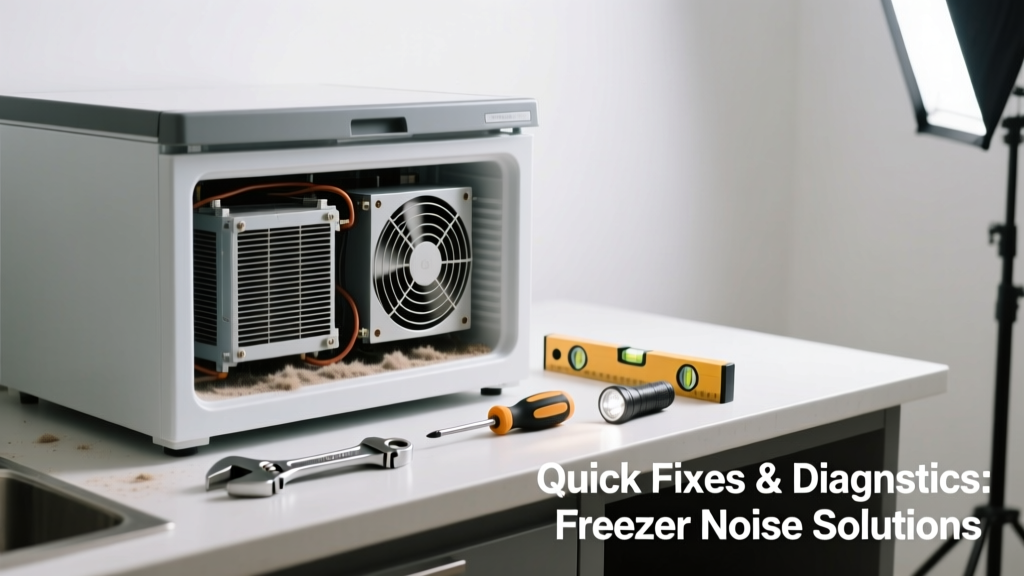
If your freezer is suddenly making a loud buzz, rattle, or high-pitched whine in the kitchen, it’s not just annoying—it could signal a failing component or airflow issue. Most noises aren’t emergencies, but ignoring them can lead to compressor strain or premature failure. Let’s cut through the guesswork and get your freezer quiet again.
Quick Diagnosis
Start here before grabbing tools. Freezer noise almost always falls into one of these categories:
- Buzzing or humming — Often from a dirty condenser coil or failing start relay
- Rattling or vibrating — Usually loose mounting hardware, unlevel unit, or items touching the back panel
- Gurgling or hissing — Normal refrigerant flow—but if new or louder, may indicate low charge or blockage
- Clunking on startup/shutdown — Typically the defrost timer or compressor engaging (but repeated clunks suggest wear)
Tools & Materials Needed
| Item | Purpose | Estimated Cost |
|---|---|---|
| Coil cleaning brush | Cleans dust and pet hair from condenser coils without bending fins | $8–$15 |
| Digital multimeter | Tests continuity in start relay, overload, and capacitor | $25–$45 |
| Level (2-ft bubble) | Confirms proper leveling—critical for vibration reduction | $6–$12 |
| Replacement start relay (OEM) | Direct swap for worn relays; matches model-specific voltage/current specs | $18–$32 |
Step-by-Step Fix
Try these methods in order—they’re ranked by likelihood and ease of repair:
- Clean the condenser coils: Unplug freezer, pull it out, and vacuum then brush coils (usually under front grill or behind unit). Dust buildup forces the compressor to work harder—and louder. According to the U.S. Department of Energy, dirty coils reduce efficiency by up to 30% and increase operating noise.
- Check leveling and clearance: Use your level on top and side panels. Adjust feet until bubble centers both ways. Ensure 2–3 inches of clearance at rear and sides for airflow. A freezer tilted just 1/4 inch can vibrate against cabinets or flooring.
- Inspect and replace the start relay: Locate the relay (typically clipped to compressor terminals), shake gently—if you hear rattling inside, it’s failed. Test with multimeter: no continuity across main terminals means replacement is needed.
"Over 65% of compressor-related noise complaints in built-in kitchen freezers trace back to faulty start relays—not the compressor itself." — Appliance Repair Technicians Association, 2022 Field Survey
When to Call a Pro
Stop and call a certified technician if you encounter any of these:
- Compressor running continuously with no cooling—and noise intensifies after 10+ minutes
- Burning smell or visible charring near electrical components
- Refrigerant leak confirmed by oily residue or hissing sound near copper lines
- Noise persists after coil cleaning, leveling, and relay replacement
These point to sealed-system issues or electrical faults beyond safe DIY scope. The EPA requires certified technicians for refrigerant handling, and compressor replacement typically costs $400–$700—worth verifying warranty coverage first.
Prevention Tips
Maintain quiet operation year-round with these habits:
- Vacuum condenser coils every 6 months—especially in homes with pets or carpeted kitchens
- Wipe down door gaskets monthly to prevent sticking, which strains the compressor during close cycles
- Avoid overloading shelves—weight imbalance increases cabinet vibration
- Use rubber floor pads under casters (if applicable) to dampen resonance through tile or hardwood
Why does my freezer hum louder at night?
Nighttime ambient noise drops, making mechanical sounds more noticeable—even normal compressor hum. But if volume increased recently, check for frost buildup in the evaporator fan area (behind rear panel) or verify your home’s voltage isn’t dipping below 114V during off-peak hours.
Can I lubricate the freezer fan motor?
No—modern freezer fan motors are sealed and permanently lubricated. Adding oil can damage internal windings or attract dust. If the fan squeals or drags, replace the entire assembly (part # varies by model; find yours via freezer fan motor replacement guide).
Is a buzzing sound dangerous?
Not inherently—but persistent buzzing often means the start relay or capacitor is arcing internally. Left unrepaired, this can overheat the compressor windings. Replace the relay within 48 hours if buzzing coincides with delayed startup or warm interior temps.
What if the noise only happens when the door opens?
This points to the evaporator fan blade hitting frost or debris. Defrost the unit completely (unplug for 24 hrs with doors open), then inspect fan housing for ice chunks or bent blades. If blades wobble on the shaft, replace the fan motor—detailed fan alignment steps here.
Will tightening the back panel screws stop rattling?
Sometimes—but only if the rattle is coming from that specific panel. More often, the source is looser compressor mounts or a warped evaporator cover. Try pressing gently on different exterior panels while it runs to isolate the source before tightening anything.
How long should a freezer run before shutting off?
Typical duty cycle is 20–40 minutes on, then 20–30 minutes off—depending on ambient temp and load. If it runs >50 minutes continuously with rising interior temps and louder hum, suspect low refrigerant, failing thermostat, or blocked drain line causing frost lock-up.
A noisy freezer doesn’t have to mean a costly replacement—most kitchen-unit noises stem from simple, fixable causes like dust, tilt, or aging relays. Address them promptly, and you’ll extend your freezer’s life by 3–5 years. Keep your coil brush handy, recheck leveling twice a year, and listen closely: that hum might just be asking for a 15-minute tune-up instead of a service call.