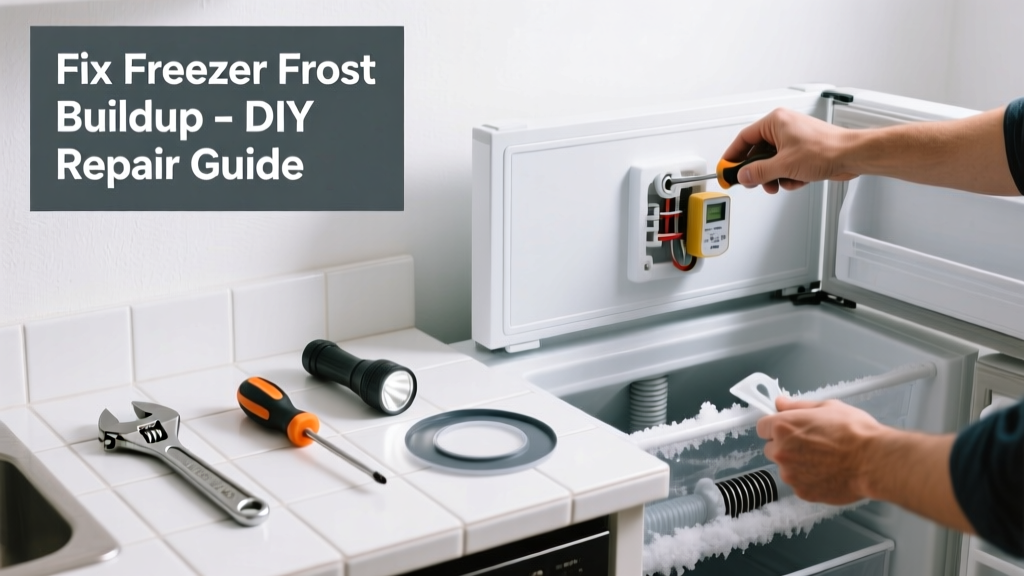
Waking up to a freezer packed solid with ice—no airflow, no space for groceries, and that telltale humming getting louder—is frustrating and costly. Frost buildup isn’t just an eyesore; it signals inefficiency, higher energy bills, and potential compressor strain. The good news? Most causes are simple to identify and fix in under an hour.
Quick Diagnosis
Before grabbing tools, rule out the usual suspects:
- Door seal (gasket) is cracked, warped, or covered in grime
- Freezer door left ajar or not closing fully due to misaligned hinges or shelf obstruction
- Defrost heater, thermostat, or timer has failed (common in units over 6 years old)
- Evaporator fan isn’t running—listen for airflow behind the rear panel
- Drain hole is clogged with ice or debris, preventing defrost water from escaping
Tools & Materials Needed
| Item | Purpose | Estimated Cost |
|---|---|---|
| Plastic putty knife or credit card | Gently scrape frost without damaging evaporator coils | $2–$5 |
| Shop vacuum with crevice tool | Remove loose frost and debris from drain pan and ducts | $30–$60 |
| Flexible pipe cleaner or turkey baster | Clear clogged defrost drain (1/4" ID) | $3–$8 |
| White vinegar (distilled) | Dissolve mineral deposits in drain line; safe for food-grade surfaces | $3–$6 |
| Multimeter (digital) | Test continuity of defrost heater and thermostat (optional but recommended) | $15–$40 |
Step-by-Step Fix
Follow these methods in order—most issues resolve at Step 1 or 2:
- Defrost manually: Unplug freezer, remove all food, and let ice melt naturally (6–12 hrs). Speed it up with a bowl of hot water placed inside (never use heat guns or hair dryers—risk of coil damage).
- Clean the door gasket: Wipe with warm soapy water, then inspect for tears or gaps. Test seal integrity by closing door on a dollar bill—if you can pull it out easily, replace the gasket (how to replace refrigerator door gasket).
- Unclog the defrost drain: Locate the drain hole (usually behind rear panel or under crisper drawer), clear ice with pipe cleaner, then flush with 1 oz warm vinegar + 1 oz hot water. Repeat until water flows freely into drain pan.
- Check evaporator fan: After removing rear panel (consult your model’s service manual), verify fan spins freely and runs when freezer is powered on. If silent or sluggish, replace fan motor (evaporator fan replacement guide).
When to Call a Pro
DIY stops where safety or precision begins:
- You measure open continuity (infinite resistance) on both defrost heater and thermostat using a multimeter—this points to wiring or main control board failure
- Frost returns within 3–5 days after full defrost and drain cleaning
- You hear loud grinding, hissing, or refrigerant leaks (oily residue near copper lines)
- Your freezer uses adaptive defrost control (common in Samsung, LG, Whirlpool 2018+ models)—board diagnostics require proprietary software
According to the U.S. EPA, 14% of household water usage is from leaks—including clogged defrost drains that overflow and cause secondary moisture damage (EPA WaterSense, 2022).
Prevention Tips
Keep frost at bay year-round with these habits:
- Limit door openings—especially in humid kitchens—and always close fully
- Let hot food cool to room temperature before storing (steam = instant frost)
- Wipe exterior gasket weekly with vinegar solution to prevent mold and sticking
- Defrost manual-defrost freezers every 6 months—even if frost is under ¼ inch
- Replace door gaskets every 5–7 years, even if they look intact (seal elasticity degrades)
Can I use bleach to clean the defrost drain?
No. Bleach corrodes aluminum drain pans and reacts with residual vinegar or food particles, releasing chlorine gas. Stick to distilled white vinegar or diluted hydrogen peroxide—it breaks down biofilm safely.
Why does frost build up only on the back wall?
This usually means the evaporator fan isn’t circulating cold air forward—so moisture condenses and freezes directly on the coldest surface. Confirm fan operation before assuming coil or refrigerant issues.
Will unplugging my freezer damage the compressor?
No—modern compressors tolerate short-term power loss. But avoid repeated on/off cycling within 5 minutes; wait at least 10 minutes between restarts to prevent oil migration and valve stress.
How do I know if my defrost heater is bad?
With power off, disconnect wires and test heater terminals with a multimeter on ohms mode. A working heater reads 15–50 Ω. Infinite resistance (OL) means it’s open and must be replaced (defrost heater testing guide).
Is frost buildup dangerous?
Yes—beyond energy waste, thick frost insulates evaporator coils, forcing the compressor to run longer. The AHAM estimates that 1 inch of frost increases energy use by up to 25% (Association of Home Appliance Manufacturers, 2021).
Can I ignore light frost on the coils?
Light, even frost (under 1/8") during normal operation is fine. But if it’s patchy, thickens near the bottom, or persists after defrost cycles, it signals airflow restriction or failing components—not just humidity.
A well-maintained freezer should run quietly, hold 0°F consistently, and never need manual defrosting more than once a year. Treat early signs seriously: that first ½-inch of stubborn frost is your system sending a warning—not just asking for attention.