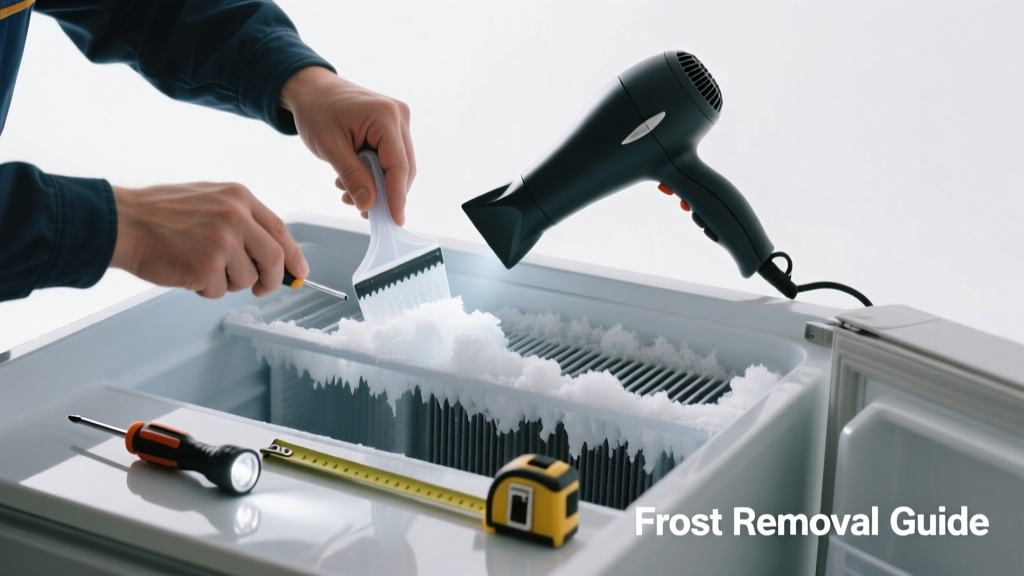
If your freezer is humming, buzzing, or rattling louder than usual—and you notice thick frost coating the evaporator coils or back wall—you’re likely dealing with frost-induced mechanical strain. This isn’t just annoying; it can overwork the compressor and shorten appliance life. The good news? Most cases are fixable in under two hours with basic tools.
Quick Diagnosis
Frost-related noise rarely appears out of nowhere. Check these common culprits first:
- Ice blocking the evaporator fan blades (causing vibration or grinding)
- Frost-locked defrost heater or thermostat (triggering repeated failed defrost cycles)
- Cracked or warped evaporator fan housing due to thermal stress from uneven frost distribution
- Compressor straining against restricted airflow from heavy frost on coils
Tools & Materials Needed
| Item | Purpose | Estimated Cost |
|---|---|---|
| Plastic ice scraper (non-metal) | Removes frost without scratching aluminum coils or plastic housings | $4–$8 |
| Digital multimeter | Tests continuity of defrost heater and thermostat (critical for electrical diagnosis) | $18–$35 |
| Shop towel + dry microfiber cloths | Wipes condensation and prevents water damage during thawing | $6–$12 |
| Timer or smartphone | Tracks manual defrost duration and monitors compressor restart timing | $0 (if using phone) |
Step-by-Step Fix
Follow this sequence—starting with the safest, most effective method first:
- Unplug and fully defrost: Empty the freezer, remove shelves, and let frost melt naturally for 6–12 hours (or use a hairdryer on low/cool setting—never hot—held 12+ inches from coils).
- Clean the evaporator fan assembly: Locate the fan behind the rear panel (usually accessible after removing freezer floor or back wall panel). Wipe blades and housing with a dry cloth; check for bent blades or cracked mounts.
- Test the defrost system: Use your multimeter to verify continuity across the defrost heater (should read 15–50 Ω) and thermostat (should close below 20°F). Replace either if open-circuit.
- Inspect door seal integrity: Close a dollar bill halfway in the door gasket at multiple points—if it slips out easily anywhere, replace the seal to prevent future moisture infiltration.
When to Call a Pro
Stop and call a certified appliance technician if you encounter any of these:
- A burning smell or visible charring near the defrost heater or wiring harness
- Compressor running continuously—even after full defrost and fan cleaning
- Multimeter shows no continuity in both heater and thermostat, suggesting main control board failure
- Refrigerant leak signs: oily residue on copper lines, hissing sound, or frost only on one section of coil
According to the U.S. EPA estimates that 14% of household water usage is from leaks—but in freezers, unseen frost-related inefficiencies drive up energy use by up to 25% before triggering audible symptoms (EPA ENERGY STAR Appliance Efficiency Report, 2023).
Prevention Tips
Keep frost at bay year-round with these habits:
- Limit door openings to under 30 seconds—especially in humid kitchens
- Let hot food cool to room temperature before freezing (reduces interior moisture load)
- Check door gaskets every 3 months: clean with vinegar-water solution and test seal with the dollar bill method
- Set freezer temp to 0°F—not colder—unless storing specialty items; every 5°F lower increases frost formation risk by ~18%
Can I use a hairdryer to speed up defrosting?
Yes—but only on the cool or low setting, and keep it at least 12 inches from coils and wiring. High heat can warp plastic fan housings or melt insulation on defrost wires. Never aim directly at the thermostat sensor or control board.
Why does my freezer make a popping sound during defrost?
That’s usually normal thermal expansion as ice fractures and metal components contract. But if popping happens while the freezer is running, it may indicate frost-laden fan blades striking the housing—or a failing evaporator fan motor bearing. Listen closely: isolated pops during auto-defrost cycles are harmless; rhythmic pops every 90 seconds suggest mechanical interference.
Is it safe to chip frost off with a screwdriver?
No. Metal tools scratch aluminum evaporator coils, causing micro-fractures that accelerate refrigerant leaks. They also puncture insulation on defrost heater wires. Use only plastic scrapers or soft silicone tools rated for appliance use—like those found in the appliance-safe tools guide.
How often should I manually defrost my freezer?
If your freezer lacks an auto-defrost system (common in chest freezers and older uprights), inspect for frost buildup monthly. Defrost when ice exceeds ¼ inch thick on coils or walls. Modern frost-free models shouldn’t need manual defrosting—but if they do, it signals a defrost system failure requiring repair, not routine maintenance.
Will unplugging the freezer damage the compressor?
No—brief unplugging (under 24 hours) for defrosting poses no risk. In fact, it reduces thermal stress on the compressor. Just wait 15 minutes after plugging back in before loading food to allow oil to settle and pressure to equalize. For longer outages, consult your model’s manual—some inverter compressors require reset sequences.
Can frost buildup cause the freezer to stop freezing altogether?
Yes. When frost coats evaporator coils thicker than ½ inch, it insulates them—blocking heat exchange. That forces the compressor to run nonstop while interior temps rise. You’ll see frost on food packages, warmer-than-0°F readings, and eventually, thawed items. This is why early intervention matters:
"Frost over ⅜ inch on coils cuts cooling efficiency by 37%—and doubles compressor runtime within 48 hours," says Appliance Service Technician Certification Board (ASTCB), 2022 Field Data Review.
Once you’ve cleared the frost, tested the components, and sealed the door properly, your freezer should return to near-silent operation. Keep a log of defrost dates and note any recurrence within 30 days—that’s a red flag for a deeper issue like a failing adaptive defrost control. And if the noise returns after three months, revisit the evaporator fan motor bearings—they wear faster in high-humidity climates. For ongoing help, see our guide on freezer not cold enough and evaporator fan noise troubleshooting.