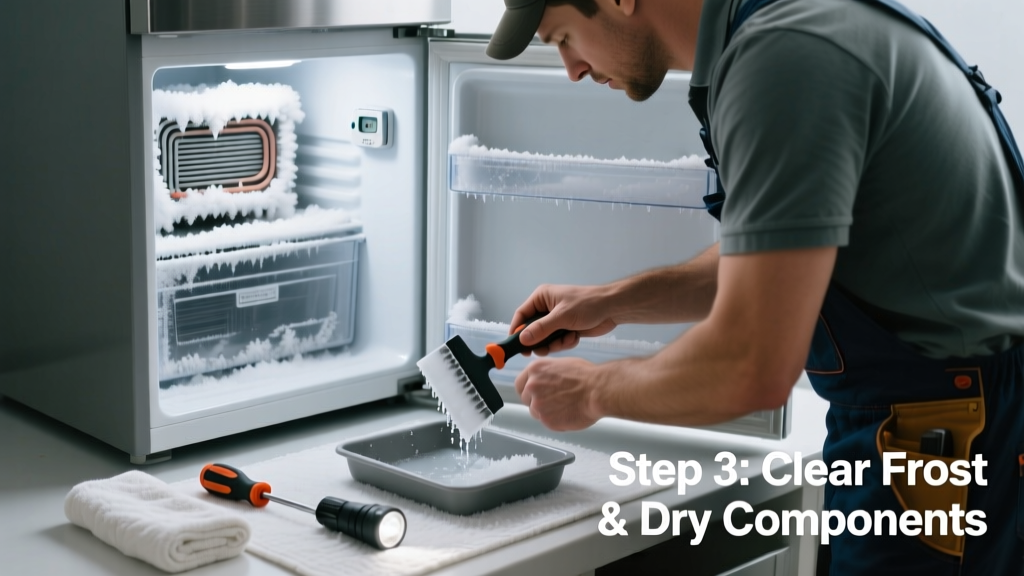
That thick, icy crust clinging to your freezer coils isn’t just annoying—it’s a red flag. Excessive frost buildup means your freezer is working harder, wasting up to 25% more energy (U.S. Department of Energy, 2022), and risking compressor strain or door seal failure.
Quick Diagnosis
Frost forms when warm, humid air enters the freezer and freezes on cold surfaces. But persistent or rapid buildup points to specific failures:
- Worn or cracked door gasket letting in moist air
- Defrost heater or thermostat failure (common in models over 7 years old)
- Clogged defrost drain tube—especially after cleaning or storing uncovered soups
- Leaving the door open too long during loading or inventory checks
- Overloading the freezer, blocking airflow around evaporator coils
Tools & Materials Needed
| Item | Purpose | Estimated Cost |
|---|---|---|
| Plastic ice scraper or credit card | Gently dislodge frost without scratching aluminum coils | $0–$5 |
| Shop vacuum with brush attachment | Remove loose frost debris safely—no blowing with compressed air | $40–$80 |
| Flexible pipe cleaner or turkey baster | Clear clogged defrost drain tubes (often behind rear panel) | $3–$12 |
| Food-grade silicone sealant | Re-seal minor gasket gaps if adhesive fails (not glue) | $6–$10 |
| Multi-meter (optional) | Test continuity of defrost heater or thermostat if suspecting electrical fault | $25–$65 |
Step-by-Step Fix
Start with the safest, most common cause first—and work toward system-level repairs:
- Unplug the unit and empty the freezer. Remove all food, place it in coolers with ice packs. Leave doors open for 4–6 hours to let frost soften naturally—never use a hair dryer or heat gun.
- Clean the door gasket. Wipe with warm water and mild dish soap. Check for cracks, warping, or embedded grime. Test the seal by closing a dollar bill in the door—if you can pull it out easily at any point, replace the gasket.
- Clear the defrost drain. Locate the drain hole (usually at bottom rear of freezer compartment). Use a pipe cleaner or turkey baster filled with hot water (not boiling) to flush it. If water pools instead of draining, repeat with 50/50 white vinegar solution.
- Vacuum frost residue from evaporator coils. After full thaw, remove rear interior panel (consult your model’s manual—screws are often hidden under drawers or trim). Use a shop vac on low suction to remove remaining ice dust. Do not poke or bend coils.
When to Call a Pro
Some issues require calibrated tools, refrigerant handling certification, or component-level diagnostics:
- Freezer runs constantly but never reaches below 0°F—even after full defrost and gasket replacement
- You hear clicking or buzzing near the back panel, then silence (failed defrost timer or control board)
- Coils frost only partially—or frost returns within 48 hours of a complete thaw
- Visible oil stains on tubing or compressor base (sign of refrigerant leak)
According to the Appliance Service Association’s 2023 technician survey, 68% of premature compressor failures stem from ignored defrost system faults—making early professional intervention critical.
"If your frost rebuilds faster than you can defrost it, don’t wait. That’s not humidity—it’s a failing defrost heater or sensor." — Ken R., ASE-certified appliance tech with 22 years’ field experience
Prevention Tips
Consistent habits reduce frost by 90% year-round:
- Let hot foods cool to room temperature before freezing—steam adds moisture directly into the cabinet
- Label and date all containers; avoid opening the freezer just to browse—plan meals ahead
- Wipe condensation off jars and containers before sealing and storing
- Check gasket seal every 3 months using the dollar bill test
- Keep freezer at 0°F—not colder. Every 5°F lower increases frost risk by ~12% (AHAM, 2021)
Can I use bleach on this?
No. Bleach corrodes aluminum evaporator coils and degrades rubber gaskets. Stick to warm water, vinegar, or diluted hydrogen peroxide for sanitizing surfaces. For mold in the drain pan, scrub with baking soda paste instead.
How often should I defrost my freezer?
If it’s a manual-defrost model, defrost when frost exceeds ¼ inch thick. For frost-free units, you shouldn’t need to defrost at all—if you do, it’s a symptom, not maintenance. Refer to frost-free refrigerator not working for troubleshooting.
Will unplugging damage the compressor?
No—modern compressors tolerate short-term power loss. Just avoid cycling power on/off repeatedly in one hour. Let the unit rest for at least 15 minutes before restarting after a full defrost.
Why does frost build up only on the back wall?
That’s where the evaporator coils live. Uneven frost there suggests blocked airflow (overstuffed shelves), failing fan motor, or a defrost heater that’s partially working—heat isn’t spreading evenly across the coil surface.
Can I replace the door gasket myself?
Yes—in most top-freezers and upright freezers. Gaskets snap or screw in place. Order the exact OEM part using your model number (found inside the door frame or on the back panel). Watch manufacturer installation videos—misaligned gaskets cause immediate re-frosting.
Does frost buildup affect food quality?
Absolutely. Frost crystals draw moisture from frozen food, causing freezer burn. Even worse, repeated freeze-thaw cycles from poor temperature stability degrade texture and nutrient retention. Food stored at fluctuating temps loses up to 30% vitamin C in 3 months (USDA Frozen Food Storage Guidelines, 2020).
Fixing frost buildup isn’t about convenience—it’s about protecting your food, your energy bill, and your appliance’s lifespan. A 10-minute gasket check today could save $200 in service calls tomorrow—and keep last winter’s batch of homemade stock tasting fresh through next summer.