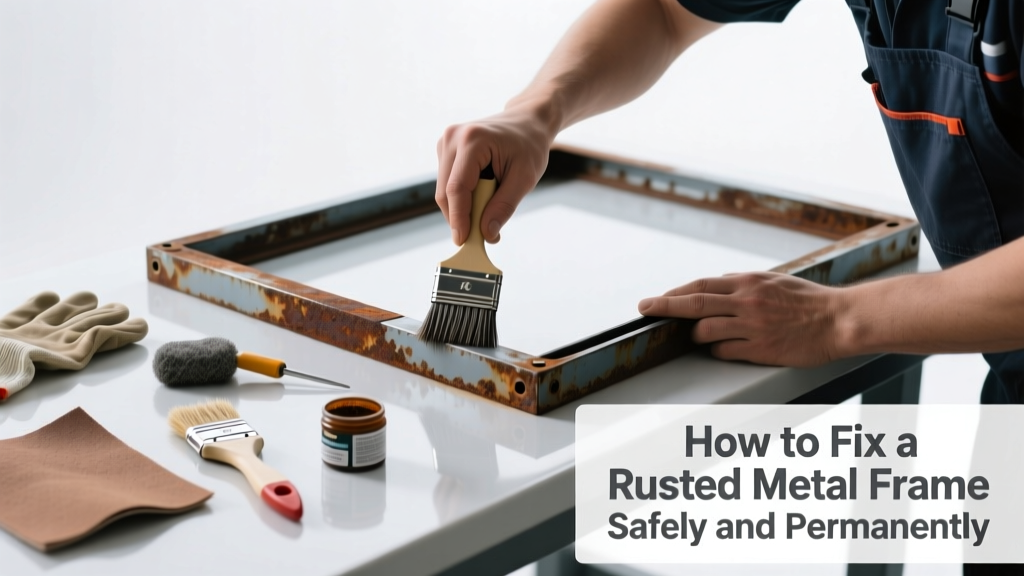
Rust on a metal frame—whether it’s a door, window, garage door, or furniture leg—isn’t just cosmetic. Left untreated, it eats through steel at up to 0.1 mm per year in humid climates (American Iron and Steel Institute, 2022), compromising strength and safety. Catching it early saves time, money, and potential injury.
Quick Diagnosis
Rust doesn’t appear out of nowhere. Here are the most common triggers:
- Chipped or scratched paint exposing bare metal to moisture
- Poor drainage around exterior frames allowing water to pool
- High-humidity environments like bathrooms or basements without ventilation
- Galvanizing wear on older steel frames (common in pre-2005 construction)
- Contact with dissimilar metals causing galvanic corrosion (e.g., aluminum trim touching steel)
Tools & Materials Needed
| Item | Purpose | Estimated Cost |
|---|---|---|
| Wire brush (stiff-bristle or rotary) | Removes loose rust and scale without damaging underlying metal | $8–$22 |
| Naval jelly or phosphoric acid rust converter | Chemically stabilizes rust into inert black iron phosphate | $12–$18 |
| Epoxy-based metal primer (e.g., Rust-Oleum Stops Rust) | Bonds to treated metal and blocks future moisture penetration | $14–$26 |
| Angle grinder with flap disc (optional but recommended for heavy rust) | Efficiently removes thick rust layers on structural frames | $45–$95 |
| Latex or oil-based topcoat (gloss or semi-gloss) | Provides UV resistance and long-term barrier against rain and condensation | $20–$35 |
Step-by-Step Fix
Choose your method based on rust severity. For light surface rust, skip to Method 2. For structural pitting, start with Method 1.
- Mechanical removal (for moderate to heavy rust): Use an angle grinder with a 60-grit flap disc to grind down rust until bright, clean metal appears. Wear ANSI-approved goggles and a N95 respirator—metal dust is hazardous.
- Chemical conversion (for light-to-moderate rust): Apply naval jelly with a chip brush, let sit 15–20 minutes (per manufacturer instructions), then rinse with water and dry thoroughly. The surface will turn dark gray/black—this is the converted layer, not new rust.
- Priming and sealing: Once fully dry (minimum 4 hours), apply two thin coats of epoxy metal primer, sanding lightly with 220-grit between coats. Finish with two coats of exterior-grade topcoat, allowing full cure time (usually 72 hours before exposure to rain).
When to Call a Pro
DIY is unsafe or ineffective in these scenarios:
- Rust has penetrated deeper than 20% of the frame’s original thickness—measurable with a caliper or ultrasonic thickness gauge
- The frame supports weight-bearing elements (e.g., a sliding glass door header or fire-rated entryway)
- You find bubbling, flaking, or crumbling metal—not just surface discoloration
- Rust reappears within 3 months after proper treatment (indicates hidden moisture intrusion or grounding issues)
"Over 60% of premature metal frame failures stem from incomplete surface prep—not poor paint choice," says structural engineer Maria Lin in the Journal of Building Rehabilitation, 2021.
Prevention Tips
Stop rust before it starts—and keep it gone:
- Inspect all exterior metal frames twice yearly, especially after winter salt exposure or monsoon seasons
- Reapply protective coating every 3–5 years, even if no visible rust is present
- Install drip caps and flashing above door/window frames to divert runoff
- Use zinc-rich primers on cut edges of galvanized steel during installation
- Keep interior humidity below 50% with dehumidifiers or exhaust fans in high-moisture zones like bathroom ventilation setups
Can I use bleach on this?
No. Bleach accelerates corrosion on steel by introducing chloride ions that penetrate microscopic pores. It may lighten rust stains temporarily but worsens long-term degradation. Stick to phosphoric acid-based converters or mechanical removal.
Will painting over rust stop it?
Only if the rust is fully converted or removed first. Painting over active rust traps moisture underneath and guarantees blistering and accelerated failure—often within 6–12 months. Always treat, then prime, then topcoat.
Is vinegar effective for rust removal?
Vinegar works on very light surface rust (e.g., on small hardware) but requires 12–24 hours of soaking and won’t penetrate pitted areas on structural frames. It’s too weak for door or window frames—save it for screws and hinges.
Do I need to replace the whole frame?
Not unless rust has compromised structural integrity. A certified home inspector can assess depth using a depth micrometer. Most cases—even with visible holes—can be patched with welded steel plates or epoxy fillers like epoxy repair kits, followed by proper recoating.
Can I use automotive primer on a door frame?
Yes—but only if it’s labeled for exterior metal and contains zinc or epoxy resins. Standard auto primer lacks UV resistance and may chalk or peel within a year on sun-exposed frames. Look for ASTM D520-compliant primers instead.
How long does the fix last?
A properly executed repair lasts 7–12 years outdoors and 15+ years indoors, assuming annual visual checks and touch-ups on scuffed areas. According to the U.S. Department of Energy’s 2023 Building Envelope Report, maintenance intervals drop by 40% when using zinc-rich primers versus standard acrylics.
Rust on a frame isn’t a death sentence—it’s a warning sign you can act on. With the right tools, timing, and technique, most rusted frames regain full function and decades of service life. But don’t rush prep: skipping wire brushing or rushing primer application is the #1 reason DIY repairs fail within a year. Take your time, test adhesion with tape, and when in doubt, consult a structural inspection professional before sealing it up.