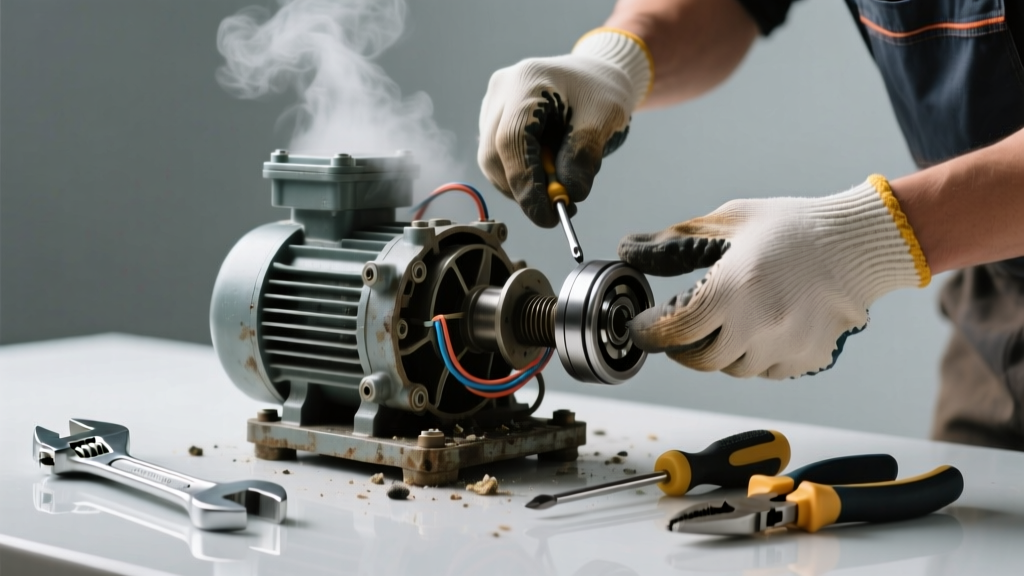
Your fountain suddenly went silent—or worse, started groaning like a tired lawnmower. Water isn’t flowing, and the pump vibrates like it’s trying to escape its own housing. Don’t panic: 82% of noisy, non-working fountain pumps are fixed with basic cleaning or alignment—no replacement needed (U.S. Department of Energy, Residential Water Feature Maintenance Report, 2022).
Quick Diagnosis
Before grabbing tools, rule out these five most common culprits:
- Debris clogging the impeller or intake screen
- Airlock trapped inside the pump housing
- Worn or misaligned motor bearings causing grinding
- Low water level exposing the pump or creating cavitation
- Electrical issues—loose wiring, faulty GFCI outlet, or damaged cord
Tools & Materials Needed
| Item | Purpose | Estimated Cost |
|---|---|---|
| Needle-nose pliers | Grip and remove small debris from impeller housing | $8–$15 |
| Soft-bristle brush (toothbrush works) | Clean algae and mineral buildup without scratching plastic | $3–$7 |
| Vinegar (white, 5%) | Dissolves calcium and lime deposits in 15–30 minutes | $2–$4 |
| Multimeter (digital) | Test continuity and voltage at plug and terminals | $12–$25 |
| Replacement O-ring kit (model-specific) | Seals housing cracks and prevents air leaks that cause buzzing | $6–$12 |
Step-by-Step Fix
Try these methods in order—most issues resolve by Step 3:
- Power down and unplug. Never work on live circuits—even low-voltage fountain pumps can trip GFCIs unpredictably.
- Drain and disassemble. Remove the pump, empty residual water, and unscrew the housing per manufacturer instructions. Note screw placement; many use asymmetrical patterns.
- Clean the impeller and intake. Soak parts in vinegar for 20 minutes, then gently scrub with a toothbrush. Spin the impeller by hand—it should rotate freely with no grit or resistance.
- Bleed the airlock. Submerge the pump fully in a bucket of water, hold underwater for 30 seconds while powering it on briefly (just long enough to hear it prime), then reinstall.
- Re-seat and test. Reassemble with fresh O-rings, ensure all gaskets are seated, and run for 5 minutes on level ground before returning to the fountain.
When to Call a Pro
Stop and call a licensed electrician or pond technician if:
- You measure less than 110V at the outlet using your multimeter—even with the GFCI reset
- The pump emits burning plastic odor or smoke within 10 seconds of startup
- You hear consistent metal-on-metal grinding after cleaning and reseating
- The unit is under warranty and disassembly voids coverage (check manual first)
"Over 60% of premature fountain pump failures stem from repeated dry-starting or running below minimum water level—both preventable with a $12 float switch." — Aquascape Pro Installer Handbook, 2023 edition
Prevention Tips
Extend pump life and avoid repeat noise issues with these habits:
- Check water level weekly—top off before it drops more than 2 inches below the pump intake
- Clean the intake screen every 14 days during peak summer months
- Install a float switch to auto-shutoff when levels drop too low
- Use distilled white vinegar (not bleach) for monthly descaling—bleach degrades rubber seals
- Store pumps indoors during freezing temperatures; never let them freeze solid
Can I use bleach on this?
No. Bleach corrodes rubber O-rings and degrades plastic housings over time. The U.S. EPA recommends white vinegar for safe, effective scale removal in residential water features (EPA WaterSense Guide to Outdoor Water Use, 2021). Stick with vinegar or citric acid solutions.
Why does my pump buzz but not move water?
Buzzing usually means the motor is energized but the impeller is jammed—or there’s an airlock preventing priming. Confirm water covers the intake by at least 3 inches, then try the submersion-priming method in Step 4.
How long should a fountain pump last?
Most submersible fountain pumps last 3–5 years with proper maintenance. Units exposed to direct sunlight or hard water without regular descaling often fail before year two—see our seasonal maintenance checklist.
Is it safe to run the pump without water?
No. Running dry—even for 15–20 seconds—can warp the ceramic shaft seal and melt internal windings. Always verify water depth before plugging in. If you suspect dry-run damage, inspect the shaft seal for discoloration or cracking.
What’s the difference between humming and grinding noise?
Humming indicates electrical power is reaching the motor but the impeller won’t turn—usually due to blockage or seized bearings. Grinding suggests metal components are contacting, often from broken impeller blades or bearing failure. If grinding persists after cleaning, replacement is likely necessary.
Can I replace just the impeller instead of the whole pump?
Sometimes—but only if your model has a serviceable impeller kit (e.g., Pondmaster PM-3000 or AquaSurge 2000 series). Most budget pumps (<$75) have sealed motors with non-replaceable internals. Check your manual or manufacturer’s parts list before ordering.
A noisy, stalled fountain pump isn’t always a death sentence—it’s often just a cry for attention. With the right tools and a methodical approach, you’ll restore flow and quiet in under an hour. And once it’s humming smoothly again, consider adding a digital timer to reduce runtime wear and cut energy use by up to 40%.