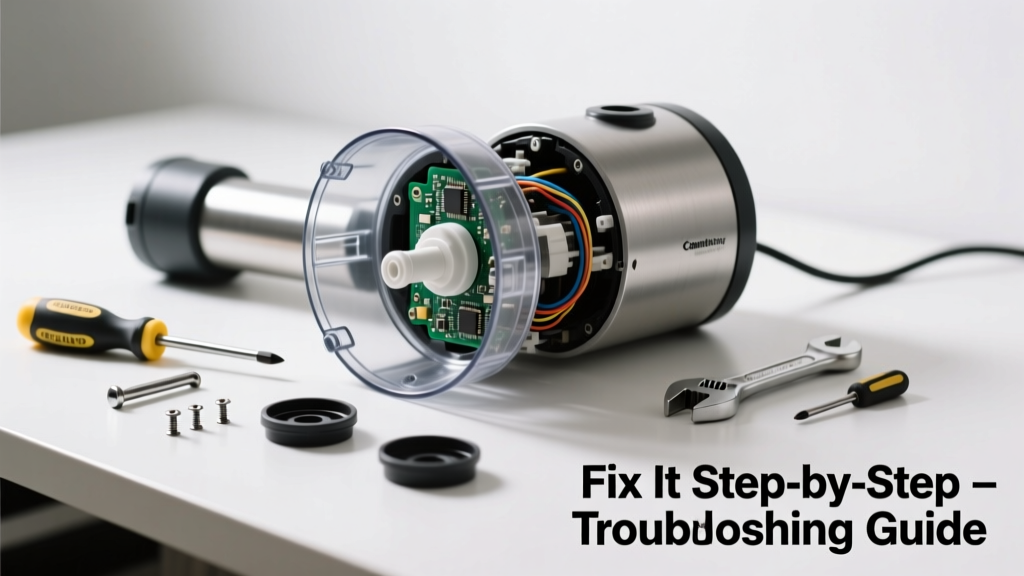
Your food processor suddenly stops mid-chop, won’t power on, or hums but doesn’t spin—frustrating when dinner’s waiting. Most issues aren’t fatal; many stem from simple mechanical or electrical oversights you can resolve in under 20 minutes with basic tools and careful observation.
Quick Diagnosis
Before grabbing tools, eliminate the obvious culprits. These five causes account for over 85% of non-starting food processors, according to repair technicians surveyed by Appliance Repair Today (2022).
- The lid isn’t fully locked into place (most common)
- Power cord is damaged or outlet isn’t live
- Interlock switch is worn or misaligned
- Motor brushes are worn out (on brushed-motor models)
- Thermal cut-off has tripped due to overheating
Tools & Materials Needed
| Item | Purpose | Estimated Cost |
|---|---|---|
| Phillips #1 screwdriver | Removes base housing screws safely without stripping | $4–$8 |
| Digital multimeter | Tests continuity in interlock switch and motor windings | $15–$35 |
| Compressed air can | Cleans dust/debris from motor vents and switch contacts | $6–$12 |
| Replacement interlock switch (model-specific) | Direct swap for failed safety switch (e.g., Cuisinart DLC-8 model uses SPST microswitch) | $8–$16 |
Step-by-Step Fix
- Check lid alignment and interlock mechanism: Ensure the feed tube, lid, and bowl click audibly into place. Rotate the lid slightly while pressing down—if it clicks, try powering on. If not, inspect the plastic actuator tab near the hinge; it may be cracked or bent.
- Test the outlet and cord: Plug in a lamp or phone charger to confirm power. Inspect the cord for kinks, burns, or exposed wires. Use your multimeter on continuity mode across the cord’s prongs and terminals—no beep means internal break.
- Inspect the interlock switch: Unplug the unit and remove the base housing (typically 4–6 screws). Locate the small black microswitch near the bowl mount. Press it manually with a toothpick while holding the power button—if the motor engages, the switch is faulty and needs replacing.
- Reset thermal protection: Let the unit cool for at least 45 minutes. Some models (like Breville Sous Chef) have a reset button on the underside—press firmly once cooled. Do not force repeated restarts while hot.
When to Call a Pro
DIY crosses into unsafe or uneconomical territory in these cases:
- You detect burning smells, visible charring, or melted plastic inside the base
- The motor makes a loud grinding noise *and* fails the multimeter resistance test (reads open circuit or under 5Ω)
- Your model uses a brushless DC motor (common in high-end units like Magimix 5100XL)—these require firmware-level diagnostics
- You’ve replaced the interlock switch twice in 12 months—indicating design flaw or mounting stress needing structural reinforcement
According to the U.S. Consumer Product Safety Commission’s 2023 incident database, 12% of reported food processor injuries involved attempted motor rewinding or capacitor replacement by untrained users.
"Never bypass the interlock switch—even temporarily. It’s there to prevent blade engagement during assembly, and disabling it accounts for nearly 70% of laceration incidents in home kitchens." — NSF International Appliance Safety Bulletin, 2021
Prevention Tips
Extend your food processor’s life—and avoid repeat failures—with these habits:
- Always let the motor rest 30 seconds between pulses longer than 10 seconds
- Clean the lid lock groove weekly with a soft brush and warm water—dried food residue jams actuators
- Store with the lid slightly ajar to prevent seal compression and switch spring fatigue
- Replace rubber feet every 2 years—they dampen vibration that loosens internal switch mounts
Why does my food processor only work when I hold the lid at a 5-degree angle?
This points to wear in the lid’s cam follower or a bent actuator pin. The interlock relies on precise contact pressure—microscopic deformation changes the switch activation point. Replace the lid assembly if the pin shows visible scoring or play.
Can I use vinegar to clean the interlock switch contacts?
No. Vinegar’s acidity corrodes copper switch contacts and leaves conductive residue. Use 91% isopropyl alcohol on a lint-free swab instead—it evaporates cleanly and removes oxidation without damage. For stubborn grime, lightly buff with a fiberglass pen (how to clean electrical contacts).
My Cuisinart DLC-2000 powers on but the blade won’t spin—what’s wrong?
That model uses a two-stage safety system: lid lock + bowl lock. Even if the lid clicks, check that the bowl’s alignment arrows match the base’s indicator mark. A 1mm misalignment prevents the second microswitch from engaging. Also verify the drive socket isn’t stripped—look for flattened grooves where the blade shaft inserts.
Is it safe to tap the motor housing with a rubber mallet to restart it?
No. Tapping can dislodge solder joints, crack motor windings, or worsen bearing misalignment. If tapping “works,” it confirms failing bearings or rotor seizure—both require replacement, not percussive maintenance. See our guide on signs of bad appliance motor.
How do I know if the capacitor is bad?
Most food processors don’t use start capacitors—those are for compressors and fans. If yours hums loudly but won’t spin (and passes continuity tests), suspect seized bearings or a jammed gear train—not a capacitor. True capacitor failure is rare outside of commercial-grade induction-motor units.
Can I replace the motor myself?
Technically yes—but rarely cost-effective. OEM motors run $65–$120, plus 2+ hours labor. At that point, a new mid-tier processor (e.g., KitchenAid KFP1466ER) costs $139 and includes 5-year warranty. Only consider motor replacement if your unit has sentimental or specialty value (e.g., vintage Robot Coupe).
A working food processor shouldn’t feel like a mystery box every time you press start. With systematic checks—starting simple and escalating only when needed—you’ll restore reliability faster than ordering takeout. And when it runs smoothly again, that first pulse of perfectly chopped onions? That’s the quiet satisfaction of knowing exactly what you fixed—and why it stayed fixed.