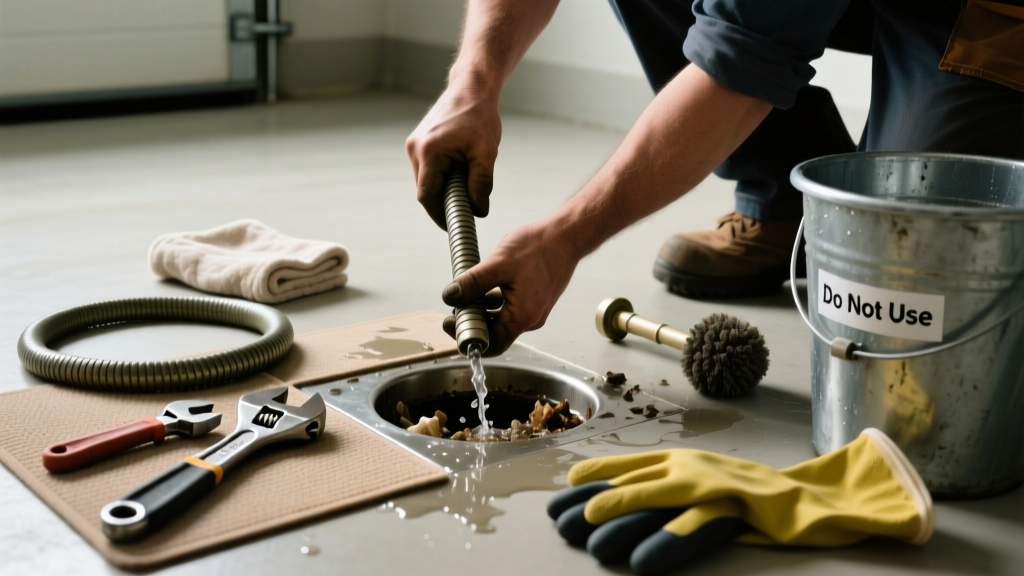
That gurgle followed by standing water around your basement floor drain isn’t just annoying — it’s a red flag that wastewater isn’t flowing where it should. Left unaddressed, it can lead to mold growth, structural damage, or even sewage backup. Most backups are fixable in under an hour if you know where to start.
Quick Diagnosis
Before grabbing tools, rule out the obvious:
- Debris clogging the drain grate or strainer
- Buildup of hair, soap scum, or grease in the P-trap
- Blockage deeper in the branch line (often 3–6 feet downstream)
- Collapsed or root-infiltrated main sewer line
- Failed floor drain trap seal due to evaporation (common in infrequently used drains)
Tools & Materials Needed
| Item | Purpose | Estimated Cost |
|---|---|---|
| Heavy-duty cup plunger | Creates strong suction on flat-floor drains without overflow rims | $12–$22 |
| Drain snake (25-ft manual auger) | Reaches past the trap into horizontal branch lines | $25–$45 |
| Wet/dry vacuum (with hose adapter) | Generates high-pressure suction for stubborn sludge | $60–$120 |
| Enzyme-based drain cleaner | Breaks down organic buildup safely — no pipe corrosion | $8–$15 |
| Rubber gloves & safety goggles | Protects against biohazards and splashes during cleaning | $5–$12 |
Step-by-Step Fix
Try these methods in order — most backups resolve at Step 1 or 2:
- Remove and clean the grate and strainer. Use a screwdriver or pliers to lift the metal cover. Soak parts in vinegar + baking soda, scrub with a stiff brush, and rinse thoroughly.
- Plunge with a flat-cup plunger. Seal the drain completely; add 1–2 inches of water if dry. Pump vigorously for 20–30 seconds. Repeat 2–3 times.
- Snake the drain. Feed the auger cable slowly past the P-trap (you’ll feel resistance at ~2 ft). Rotate clockwise while advancing. When you hit resistance, crank 5–10 more turns, then retract — pulling debris with it.
- Use a wet/dry vacuum on reverse mode. Seal the vacuum hose over the drain with a wet rag. Run for 60 seconds. This often clears partial obstructions that snakes miss.
- Flush with enzyme treatment. Pour 8 oz of enzyme cleaner down the drain before bed; repeat nightly for 3 days. Avoid using chemical drain openers — they damage PVC and cast iron over time.
When to Call a Pro
Stop DIY if you encounter any of these:
- Water backs up into multiple fixtures (toilet, sink, shower) simultaneously
- Strong sewage odor persists after cleaning — indicates broken seal or cracked pipe
- Snaking yields no resistance or pulls back empty cable (suggests break or offset in pipe)
- You suspect tree roots — confirmed via camera inspection (required for insurance claims)
- Your home has a sump pump tied into the floor drain system and it’s not activating
According to the Insurance Institute for Business & Home Safety's 2023 report, 68% of basement flooding incidents involve drain line failure that went undetected for over 6 months — early professional assessment prevents escalation.
Prevention Tips
Maintaining flow is easier than fixing backups. Make these habits routine:
- Pour 1 quart of hot water + ½ cup white vinegar down the drain weekly
- Install a fine-mesh strainer over the grate and clean it every 3 days
- Run water through infrequently used floor drains for 30 seconds weekly to keep traps full
- Trim nearby tree roots every 2 years if your sewer line runs under landscaping
- Have your main line scoped every 5 years — especially in homes built before 1990
Can I use bleach on this?
No. Bleach doesn’t dissolve organic clogs like hair or grease — it only disinfects surfaces. Worse, mixing bleach with other cleaners (like ammonia in urine or vinegar) creates toxic chlorine gas. Stick to mechanical removal or enzyme treatments.
Why does my floor drain smell like sewage?
A foul odor usually means the P-trap is dry or cracked, letting sewer gases rise. Pour 2 cups of water into the drain to refill the trap. If the smell returns in 3–4 days, inspect for hairline cracks or consider replacing the entire drain assembly — full replacement instructions here.
Will a power washer clear it?
Not safely. High-pressure water can blow out old cast iron joints or dislodge glued PVC connections. It may also force debris deeper into a collapsed section. Reserve hydro-jetting for licensed plumbers with camera verification first.
How deep do floor drains go before hitting the main line?
Most residential floor drains connect to a 3-inch or 4-inch branch line within 3–8 feet horizontally, then drop vertically into the main sewer or sump basin. Older homes may have clay tile lines that shift or crack at these junctions — a key reason for recurring backups.
Can a blocked floor drain cause mold in walls?
Yes — prolonged moisture under flooring creates ideal conditions for Stachybotrys and Aspergillus. The U.S. EPA estimates that 14% of household water usage is from leaks, many invisible until mold appears. If you see discoloration on drywall near the drain or detect mustiness, test air quality and consult a certified mold remediation specialist.
Is it normal for floor drains to gurgle when toilets flush?
No — gurgling signals venting issues or partial blockage downstream. Air escaping through the drain means wastewater can’t flow freely, creating negative pressure. This is often a precursor to full backup and warrants immediate snaking or camera inspection.
Floor drains don’t ask for much — just consistent attention and the right tools. A few minutes each month beats hours of emergency cleanup later. If you’ve cleared the clog but notice slow drainage returning within a week, don’t ignore it: that’s your pipe telling you something deeper needs professional eyes — and possibly a sewer line camera inspection.