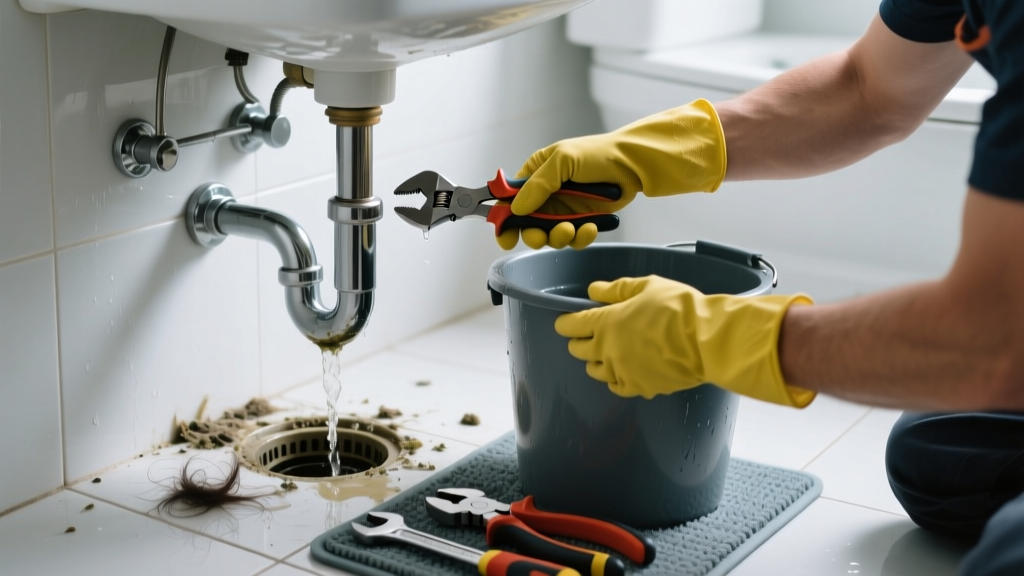
Water pooling around your bathroom floor drain isn’t just annoying—it’s a red flag for clogs, vent issues, or sewer line trouble. If it’s happening during showers or after flushing the toilet, you’re likely dealing with a blockage downstream or a venting failure. Ignoring it risks mold growth, subfloor rot, and even sewage backup.
Quick Diagnosis
Before grabbing tools, confirm the cause. A floor drain backing up only during heavy water use (like showering) usually points to a partial clog or vent issue. If it backs up when other fixtures drain—or when toilets flush—it’s likely a main line or sewer problem.
- Hair and soap scum buildup — Most common in bathroom floor drains; accumulates on the grate and trap
- Collapsed or corroded pipe — Especially in older homes with cast iron or orangeburg piping
- Blocked vent stack — Causes slow drainage and gurgling sounds from nearby fixtures
- Main sewer line clog or tree root intrusion — Confirmed if multiple drains back up simultaneously
- Improper slope or installation — Rare, but possible in remodels where drain pitch was compromised
Tools & Materials Needed
| Item | Purpose | Estimated Cost |
|---|---|---|
| Drain snake (1/4" x 25 ft) | Clears hair and debris past the trap and into horizontal branch lines | $18–$25 |
| Plumber's wrench | Removes strainer cover and cleanout plug without stripping threads | $12–$20 |
| Wet/dry vacuum (with hose adapter) | Creates strong suction to dislodge shallow clogs and test vent function | $60–$120 |
| Enzyme-based drain cleaner | Breaks down organic matter safely—no pipe corrosion risk | $8–$15 |
| Replacement floor drain strainer | Prevents future hair entry; stainless steel lasts longer than plastic | $12–$28 |
Step-by-Step Fix
Start simple and escalate only as needed. Never use chemical drain cleaners first—they can damage PVC traps and won’t fix vent or sewer issues.
- Remove and clean the strainer: Use a screwdriver or pliers to lift the grate. Soak it in vinegar and scrub with an old toothbrush. Inspect the drain body for visible hair wads—pull them out with needle-nose pliers.
- Snake the drain vertically: Feed a hand-crank auger down the drain until you feel resistance. Rotate while pushing gently—don’t force it. Pull out debris and repeat until the cable moves freely 3–4 feet deep.
- Test the vent stack: Climb onto the roof and inspect the vent pipe opening. Clear leaves, bird nests, or ice with a garden hose. If water backs up slowly indoors while running water, the vent is likely obstructed.
- Try a wet/dry vacuum seal: Cover the drain with a wet rag, attach vacuum hose, and run on suction for 60 seconds. Repeat 2–3 times. This often clears shallow clogs that snakes miss.
- Apply enzyme treatment: Pour 8 oz of enzyme cleaner down the drain before bed. Let sit overnight—enzymes digest organics without heat or fumes.
When to Call a Pro
Stop DIY if you notice any of these signs—delaying professional help risks structural damage or health hazards.
- Backups occur in multiple fixtures (toilet, sink, tub) at once
- You smell raw sewage—not just musty or mildew—especially near floor drains or walls
- Water rises rapidly during use, indicating a full main line blockage
- Your home was built before 1975 and has cast iron or clay pipes showing rust or cracking
- A camera inspection reveals tree roots, bellied pipe, or offset joints (a plumber can provide this service for $125–$250)
According to the Insurance Institute for Business & Home Safety's 2023 report, 68% of water damage claims linked to drain backups involved delayed professional intervention beyond 48 hours.
Prevention Tips
Consistent maintenance beats emergency fixes every time. Build these habits into your routine:
- Clean the floor drain strainer weekly—especially after shaving or haircuts
- Flush monthly with boiling water + ½ cup baking soda + ½ cup white vinegar (let fizz 15 minutes, then rinse)
- Install a stainless steel hair catcher under the strainer—reusable and more effective than mesh screens
- Run hot water for 30 seconds after each shower to melt residual soap film
- Have your main sewer line scoped every 3–5 years if you live near mature trees
Can I use bleach on this?
No. Bleach doesn’t dissolve hair or grease—it only disinfects surface bacteria and can corrode metal parts in older drains. It also reacts dangerously with ammonia or acids if other cleaners were recently used. Stick to mechanical removal or enzymatic treatments.
Why does my floor drain gurgle when the toilet flushes?
Gurgling signals negative air pressure caused by a blocked vent stack or shared drain line. When the toilet flushes, air gets pulled through the floor drain instead of the roof vent—creating that sound. Clear the vent first; if gurgling persists, suspect a collapsed branch line.
Is it safe to pour boiling water down a PVC floor drain?
Yes—but cautiously. Water above 140°F can soften or warp PVC over time. Use water just below boiling (around 190°F), and never pour more than 2 quarts at once. Better yet: alternate with baking soda and vinegar, which are safer and more effective on organic buildup.
How deep should I snake the floor drain?
Most bathroom floor drains connect to a 2-inch horizontal branch line within 3–6 feet. Snake no deeper than 6 feet unless you hit solid resistance—and stop immediately if you feel sharp bends or sudden drops. Forcing past a trap or elbow risks puncturing the pipe.
Will a plunger work on a floor drain?
Rarely. Standard plungers don’t seal well on wide, shallow floor drains. You’d need a flat-bottom “utility plunger” with a firm rubber cup and a tight seal—plus standing water covering the cup. Even then, success is low unless the clog is within 12 inches of the grate.
What’s the difference between a floor drain and a trap primer?
A floor drain is a fixture designed to remove water; a trap primer is a small valve (often connected to a toilet supply line) that adds water to the floor drain’s P-trap to prevent evaporation and sewer gas entry. If your floor drain smells like sewer, the trap may be dry—not clogged. Check if the primer line is kinked or disconnected.
Keeping your bathroom floor drain flowing smoothly takes less than five minutes a week—but skipping it invites bigger headaches. Regular cleaning, smart tools, and knowing your limits will keep water going down—not up. If you’ve tackled a similar backup, share what worked in the comments—or check our guide on shower drains smelling like sewer for related troubleshooting.