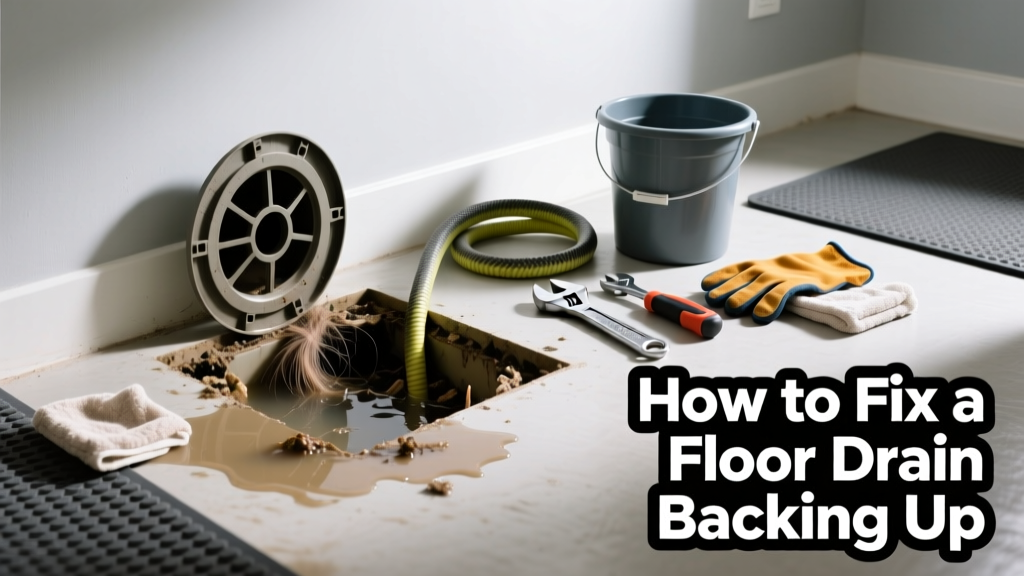
If your basement floor drain is gurgling, pooling water, or refusing to drain after heavy rain or laundry use, you’re likely facing a partial or full blockage — and ignoring it risks mold, structural damage, or sewage backup. Most clogs are shallow and fixable in under an hour, but some signal deeper system failures.
Quick Diagnosis
Before grabbing tools, confirm the cause. Floor drains back up for predictable reasons — here’s what’s most common:
- Debris buildup (hair, lint, gravel, or drywall dust) just below the grate
- A collapsed or cracked drain pipe beneath the slab (especially in homes over 30 years old)
- Shared line overload — your floor drain connects to the same branch as a washing machine or bathroom, and simultaneous use overwhelms capacity
- Blocked main sewer line — if multiple fixtures back up together, the issue isn’t isolated to the floor drain
- Frozen or obstructed outdoor cleanout access point (common in cold climates)
Tools & Materials Needed
| Item | Purpose | Estimated Cost |
|---|---|---|
| Drain snake (1/4" x 25 ft) | Clears clogs 3–15 ft down the pipe; fits narrow floor drain openings | $18–$25 |
| Plumber's wrench | Removes threaded drain cover without stripping threads | $12–$18 |
| Wet/dry vacuum (with hose adapter) | Creates strong suction for shallow clogs; safer than chemical cleaners | $60–$120 |
| Heavy-duty rubber gloves & eye protection | Protects against biohazards and splashing debris | $8–$15 |
| White vinegar + baking soda | Natural reaction helps break down organic sludge; non-corrosive alternative | $3–$6 |
Step-by-Step Fix
Start with the safest, most accessible method first — escalate only if needed:
- Remove the grate and inspect visually. Use a plumber’s wrench to unscrew the metal cover. Shine a flashlight down: if you see standing water with floating debris or a visible plug of hair/lint, proceed to step 2.
- Try the wet/dry vacuum method. Seal the vacuum hose over the drain opening using a rag or rubber adapter. Set to "wet" mode and run for 60–90 seconds. Repeat 2–3 times. According to the U.S. EPA estimates that 14% of household water usage is from leaks — many caused by preventable clogs like these.
- Snake the drain. Feed a 1/4" cable snake slowly into the pipe until resistance is met. Rotate clockwise while applying gentle pressure. When you feel the clog give way, retract and clean the cable. Flush with 2 gallons of hot (not boiling) water.
- Use vinegar and baking soda. Pour 1/2 cup baking soda followed by 1/2 cup white vinegar. Cover the drain for 15 minutes, then flush with 4 quarts of near-boiling water. Do not combine with commercial drain cleaners — toxic fumes can result.
When to Call a Pro
Stop DIY efforts if any of these apply:
- Water backs up into other fixtures (toilet, shower, sink) when you run the washing machine or flush — indicates main sewer line blockage or venting failure
- You hear hollow thuds or see cracks in the concrete around the drain — possible pipe collapse or soil settlement
- Snaking yields no improvement after three attempts at varying depths (15+ ft), especially if the drain is connected to a septic system
- Black, oily water or sewage odor persists — this signals a cross-connection or broken trap seal requiring licensed inspection
"Over 60% of emergency plumbing calls for basement flooding originate from neglected floor drain maintenance — not storm events." — Plumbing-Inspection.org, 2022 Field Survey
Prevention Tips
Prevent recurrence with consistent habits and smart upgrades:
- Install a removable mesh strainer (like those used in shower drains) under the grate — clean monthly
- Flush the drain with hot water and vinegar every 6 weeks, especially before winter
- Avoid pouring grease, paint thinner, or drywall mud down nearby sinks — these solids migrate and harden in cooler floor drain lines
- If your home has a sump pump, verify its float switch activates before water reaches the floor drain level — test your sump pump regularly
- Consider adding a backwater valve on the main sewer line if backups happen during heavy rains — learn more about basement flood prevention
Can I use bleach on this?
No. Bleach won’t dissolve hair, soap scum, or grease — and it corrodes metal pipes and degrades PVC seals over time. It also reacts dangerously with ammonia or acids already in the line. Stick to mechanical removal or enzymatic cleaners labeled for floor drains.
Why does my floor drain back up only during heavy rain?
Rainwater likely overwhelms your municipal sewer system or saturates your private leach field (if on septic). That pressure pushes wastewater backward through the lowest entry point — your floor drain. A properly installed backwater valve eliminates this risk.
Is it safe to use a power auger on a floor drain?
Only if the auger cable is 1/4" or smaller and rated for interior use. Larger cables (3/8"+) can crack cast iron or fracture PVC joints inside the wall or slab. Always feed manually at first — let resistance guide speed, not torque.
How deep do floor drains typically go before hitting the main line?
In most residential basements built since 1970, floor drains connect to a 3" or 4" branch line within 3–8 feet horizontally, then drop vertically 2–4 feet to tie into the main. Older homes may have clay tile or cast iron with shallow, flat slopes — making them prone to sediment buildup.
Do I need a permit to replace the floor drain assembly?
Yes, if you're cutting concrete, relocating the drain, or modifying the pipe size or material. Minor grate replacement or internal trap cleaning doesn’t require one — but always check with your local building department. Permits protect resale value and ensure compliance with the International Plumbing Code (IPC 2021 §708.3).
What’s the average cost to professionally clear a backed-up floor drain?
Most plumbers charge $125–$275 for snaking a single floor drain. If camera inspection reveals a collapsed pipe or root intrusion, expect $450–$1,800 depending on excavation depth and repair method. DIY saves $100–$220 per incident — but only when the cause is confirmed shallow.
A slow-to-drain floor drain isn’t just an annoyance — it’s an early warning sign your drainage system is stressed. Address it promptly with the right tools and timing, and you’ll avoid far costlier repairs later. Keep a small snake and strainer in your basement utility drawer — it’s the easiest insurance policy you’ll ever own.