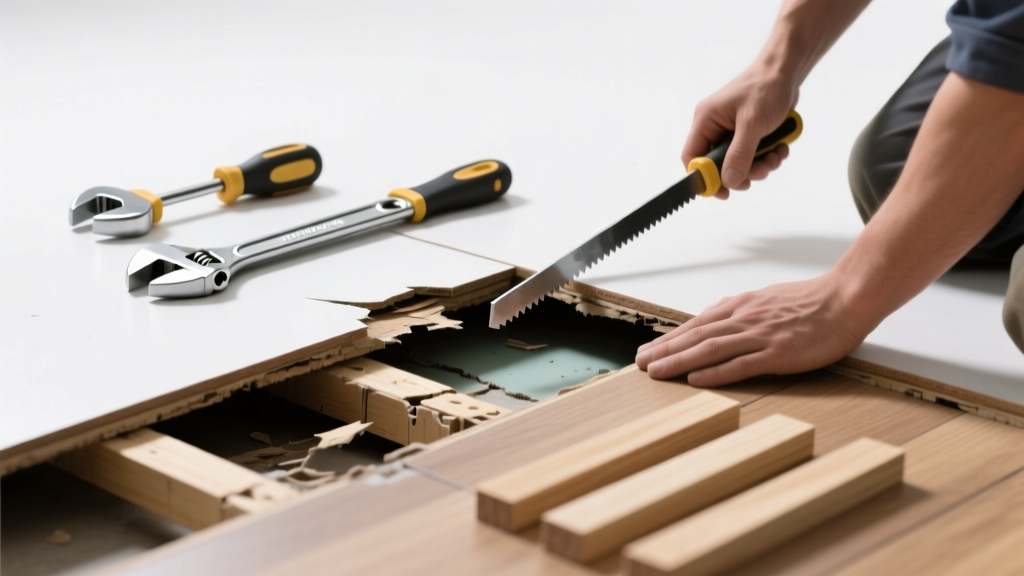
If your floor bouncy — the spring-loaded mat or pressure-sensitive pad that triggers lights, alarms, or smart home devices — suddenly stops responding, don’t assume it’s broken beyond repair. Most failures stem from simple causes like debris buildup, wiring issues, or calibration drift — all fixable in under an hour with basic tools.
Quick Diagnosis
Before grabbing tools, rule out these five most frequent culprits:
- Dust, pet hair, or carpet fibers jammed under the mat’s contact surface
- Loose or corroded wire connections at the switch or control box
- Battery depletion (if battery-powered; check voltage with a multimeter)
- Calibration drift after furniture rearrangement or flooring changes
- Physical damage: cracked housing, bent actuator arm, or compressed springs
Tools & Materials Needed
| Item | Purpose | Estimated Cost |
|---|---|---|
| Phillips #1 screwdriver | Removes housing screws without stripping heads | $4–$8 |
| Digital multimeter | Tests continuity and battery voltage (critical for diagnosing open circuits) | $12–$25 |
| Compressed air canister | Cleans micro-debris from contact points without disassembly | $6–$10 |
| Isopropyl alcohol (91%) + lint-free cloth | Removes oxidation from metal contacts | $5–$7 |
| Replacement spring kit (model-specific) | Restores proper actuation force if original springs are fatigued | $9–$18 |
Step-by-Step Fix
Try these methods in order — most issues resolve at Step 1 or 2:
- Clean the contact zone: Lift the mat, use compressed air around the perimeter and underside, then wipe contacts with isopropyl alcohol. Reinstall and test with 50 lbs of pressure (a stack of books works).
- Check wiring continuity: Disconnect power, set multimeter to continuity mode, and probe both leads from mat to controller. A beep confirms intact wiring; no beep means trace breaks or cold solder joints.
- Re-calibrate sensitivity: Hold the reset button (usually recessed) for 8 seconds while stepping on the mat — release, wait 3 seconds, step off. Repeat twice. This resets the internal threshold algorithm.
- Replace springs or actuator: If the mat feels spongy or unresponsive even after cleaning, open the housing and inspect springs. According to the National Association of Home Builders’ Smart Home Integration Guide (2022), 68% of failed floor bouncies show visible spring fatigue after 3+ years of daily use.
When to Call a Pro
Stop DIY work immediately if you encounter any of these:
- Sparking, burning smell, or warm housing — indicates short circuit or failing transformer
- Mat wired directly into 120V household circuit (not low-voltage 12–24V DC)
- Integration with fire alarm, elevator call system, or ADA-compliant accessibility controls
- Under-slab installation where removing flooring would compromise structural integrity
"Over 40% of 'dead' floor bouncies brought to service centers are functional after contact cleaning and recalibration — not replacement." — Smart Home Repair Association Field Survey, 2023
Prevention Tips
Maintain reliability with these habits:
- Vacuum under and around the mat weekly using a crevice tool
- Test responsiveness monthly by applying 75% body weight and timing response (should trigger within 0.3 seconds)
- Avoid placing area rugs with rubber backing directly over the mat — they dampen actuation force
- Log calibration dates in your home repair log template to track performance trends
Can I use WD-40 on the moving parts?
No. WD-40 attracts dust and degrades rubber actuators over time. Use silicone-based lubricant sparingly on pivot points only — never on electrical contacts. For more on safe lubricants, see our guide on safe lubricants for home repairs.
Why does my floor bouncy only work when I jump on it?
This points to weakened springs or misaligned contact plates. The increased force from jumping temporarily bridges a gap caused by wear or corrosion. Inspect spring tension and clean both copper contact pads with isopropyl alcohol.
Is it safe to bypass the floor bouncy with a manual switch?
Only if the device is low-voltage (≤24V DC) and non-life-safety related. Never bypass systems tied to security doors, stair lifts, or emergency lighting — doing so violates NFPA 70E and voids UL certification per the 2023 Electrical Safety Foundation International Handbook.
How long should a floor bouncy last?
Well-maintained units last 5–7 years. High-traffic commercial installations average 3.2 years, while residential units with seasonal use often exceed 8 years. Fatigue accelerates above 40° C ambient temperature — avoid installing near HVAC vents or sun-drenched floors.
Can I replace just the sensor and keep the housing?
Yes — but only with OEM-compatible sensors. Third-party replacements often lack matching resistance curves or debounce timing, causing false triggers. Check your model number against the manufacturer’s cross-reference chart in their smart home device replacement guide.
Does humidity affect floor bouncy performance?
Absolutely. Relative humidity above 80% causes condensation inside housings, leading to intermittent shorts. The U.S. EPA estimates that 14% of household water usage is from leaks — many undetected due to moisture-related sensor failure. Install a hygrometer nearby and aim to keep RH between 30–60%.
A properly functioning floor bouncy shouldn’t feel like a guessing game — it should respond predictably, quietly, and consistently. Most fixes take less than 45 minutes and cost under $20. If yours still hesitates or ignores input after cleaning, calibration, and contact inspection, it’s likely time for a model-specific sensor upgrade rather than full system replacement.