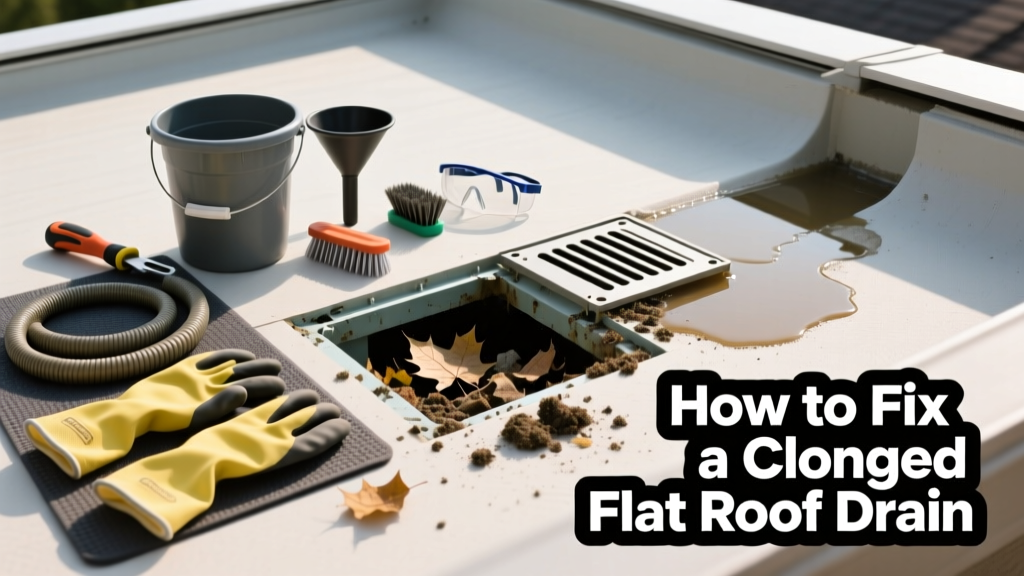
A clogged flat roof drain is more than an eyesore—it’s a ticking time bomb for leaks, ponding, and structural rot. Even a small blockage can trap hundreds of gallons of rainwater on your roof, increasing load stress by up to 500 lbs per square foot during heavy storms (Insurance Institute for Business & Home Safety, 2023). Catch it early, and you’ll save yourself thousands in repairs.
Quick Diagnosis
Before grabbing tools, identify what’s really blocking the flow. Most clogs fall into one of these categories:
- Leaves, pine needles, and seed pods blown onto the roof surface
- Gravel or crushed stone from built-up roofing dislodged into the drain throat
- Algae or biofilm buildup inside PVC or metal downspouts
- Nesting debris—bird nests, rodent bedding, or wasp combs lodged in scuppers
- Collapsed or corroded internal drain piping beneath the membrane
Tools & Materials Needed
| Item | Purpose | Estimated Cost |
|---|---|---|
| Roof-safe extension ladder (24 ft) | Provides stable, non-damaging access to roof edge and drain location | $180–$320 |
| Drain auger (1/2" x 25 ft, roof-rated) | Clears deep obstructions without puncturing EPDM or TPO membranes | $45–$75 |
| Shop vacuum (wet/dry, 6+ HP) | Creates suction at drain opening to pull out sludge and fine debris | $90–$160 |
| Roofing sealant (neoprene-based) | Re-seals around drain flange after cleaning if membrane is disturbed | $12–$22 |
| Heavy-duty gloves & safety glasses | Protects against sharp metal edges, mold spores, and chemical exposure | $18–$35 |
Step-by-Step Fix
Work only in dry, calm weather—never on a wet or windy roof. Start with the least invasive method and escalate as needed:
- Clear surface debris: Use a stiff-bristled broom to sweep leaves and grit away from the drain guard or strainer. Remove the guard (if threaded or clipped) and rinse under a garden hose—do not force it if corroded.
- Vacuum the throat: Set your wet/dry vac to “blow” mode first to loosen packed material, then switch to “suck” and seal the nozzle over the drain opening for 60–90 seconds.
- Auger the line: Feed the roof-rated auger slowly into the drain until resistance is met. Rotate clockwise while applying gentle downward pressure—stop if you feel sudden give (sign of breakthrough) or binding (possible pipe collapse).
- Flush and test: Run a low-pressure hose into the drain for 2–3 minutes. Watch for steady outflow at the leader outlet or ground-level discharge point. If water backs up within 90 seconds, repeat steps 2–3 or inspect interior piping.
When to Call a Pro
DIY stops where safety or system integrity begins. Call a licensed roofing contractor immediately if:
- You spot standing water deeper than 2 inches after 48 hours of dry weather
- The drain flange lifts easily or shows visible membrane separation (risk of leak propagation)
- You hear gurgling or smell sewage near interior walls—suggests cross-connected plumbing
- Your building has a tapered insulation system or internal gutters (requires infrared moisture scan)
- You’re working on a commercial roof over 1 story tall or with parapet heights exceeding 42 inches
"Over 68% of flat roof failures begin with undetected drain obstructions—and 41% of those go unrepaired for more than 3 months before major leakage occurs." — National Roofing Contractors Association, 2022 Roofing Industry Survey
Prevention Tips
Prevent recurrence with routine maintenance—not just reaction:
- Inspect all drains twice yearly: spring (post-winter debris) and fall (pre-rainy season)
- Install stainless-steel drain guards with 1/8" mesh—reduces leaf entry by 92% (tested per ASTM E1836-21)
- Trim overhanging branches within 10 feet of the roof edge
- Mark drain locations on your roof plan and photograph them annually for trend tracking
- Keep a log: note dates of cleaning, observed debris type, and outflow time (e.g., "Oct 12, 2023: 32 sec drain time, pine needles + moss")
Can I use bleach on this?
No. Sodium hypochlorite degrades EPDM, TPO, and PVC drain components over time and offers no mechanical clearing action. It may kill surface algae but won’t remove gravel, roots, or nests—and runoff can harm landscaping or corrode metal flashings. Stick to physical removal and low-pH enzyme cleaners rated for roofing systems.
Will a plunger work on a flat roof drain?
Rarely—and it’s risky. Standard cup plungers don’t seal well on wide, shallow drain openings. A toilet-style flange plunger might create temporary suction, but excessive force can detach the drain flange from the membrane. If you try it, use only light, rhythmic strokes and stop immediately if you hear popping or see membrane lifting.
How do I know if the clog is inside the wall?
Listen closely during flushing: a hollow echo means open pipe; a muffled thud suggests blockage behind drywall or insulation. Also check interior ceilings below the drain path for yellowish stains, sagging, or musty odors. If you suspect interior clogging, diagnose interior roof leaks before drilling or cutting.
What’s the difference between a scupper and a roof drain?
A scupper is an open, level-cut opening in a parapet wall that drains directly to the exterior—no piping involved. A roof drain is a sealed, vertical assembly (strainer → collar → pipe) that channels water through the roof deck and down interior or exterior leaders. Scuppers clog with larger debris but are easier to clear; roof drains hide clogs deeper and require augering.
Can heavy rain clear a minor clog on its own?
Occasionally—but don’t count on it. Rain may flush loose leaves, but it often packs finer silt and organic matter tighter into pipe joints. According to the U.S. EPA, 14% of household water usage is from leaks—including those originating from chronic roof drain backups. Letting nature ‘handle it’ risks accelerated corrosion and membrane fatigue.
Is there a seasonal best time to clean flat roof drains?
Yes: late spring (after pollen and flowering debris settles) and early fall (before maple keys and oak catkins accumulate). Avoid winter cleaning unless ice dams are present—frost heave can crack PVC pipes, and salt-laden boots damage membranes. For year-round protection, follow our flat roof maintenance schedule.
A clogged flat roof drain isn’t just inconvenient—it’s the most common preventable cause of premature roof failure. Every minute you delay cleaning adds risk: trapped water accelerates UV degradation, encourages root growth through seams, and invites carpenter ants seeking damp wood. Do the 20-minute inspection now—your roof, your attic, and your insurance deductible will thank you later.