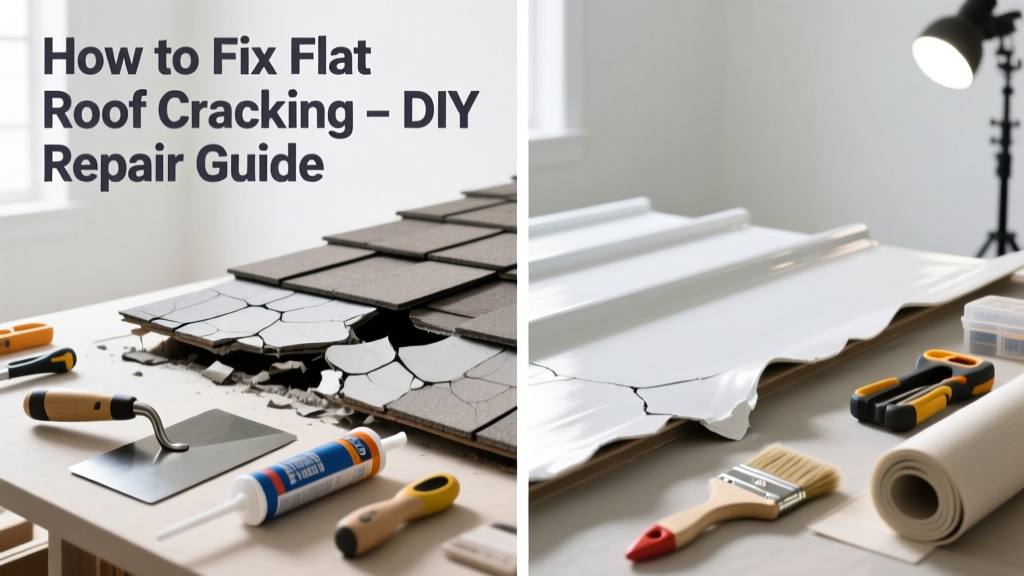
That hairline crack on your flat roof? It’s not just cosmetic—it’s your first warning sign of water intrusion, insulation damage, or premature membrane failure. Left unaddressed, a ¼-inch crack can let in hundreds of gallons of water during a moderate rainstorm. Most flat roof cracks are fixable in under four hours—if you catch them early and use the right materials.
Quick Diagnosis
Before grabbing tools, identify the root cause. Flat roof cracking rarely happens without reason:
- UV degradation of EPDM, TPO, or built-up roofing (BUR) membranes over 5–10 years
- Thermal expansion/contraction stress from repeated freeze-thaw cycles or daily temperature swings
- Poor drainage causing ponding water that softens seams and accelerates cracking
- Foot traffic or equipment weight concentrating pressure on weak spots
- Aging asphalt-based coatings losing flexibility and developing alligatoring
Tools & Materials Needed
| Item | Purpose | Estimated Cost |
|---|---|---|
| Roofing primer (solvent-based) | Ensures adhesion of patch material to aged or contaminated surfaces | $12–$18 |
| Self-adhesive rubberized patch (6" x 12") | Flexible, waterproof seal over clean, dry cracks up to ⅛" wide | $9–$15 |
| Roofing cement (fiber-reinforced) | Fills wider cracks and anchors fabric patches; remains pliable for years | $14–$22 |
| Roofing fabric (polyester or fiberglass) | Reinforcement layer for cracks >1/8" or in high-stress zones | $24–$36 per 10 sq ft roll |
| Stiff-bristle brush & mineral spirits | Cleans debris, algae, and chalky oxidation from crack surfaces | $8–$12 |
Step-by-Step Fix
Choose the method based on crack width, location, and membrane type. Always work on a dry, 50°F+ day with no rain expected for 48 hours.
- Clean & prep: Scrub crack and 6 inches around it with stiff brush and mineral spirits. Let dry completely—moisture under patch causes delamination.
- Small cracks (<1/16”): Apply solvent-based primer, then press self-adhesive rubber patch firmly into place, rolling with a J-roller to eliminate air pockets.
- Moderate cracks (1/16”–1/8”): Fill with fiber-reinforced roofing cement using a putty knife, embed a 4"-wide strip of roofing fabric into wet cement, then top-coat with another thin layer.
- Cracks near drains or seams: Cut out damaged section (minimum 2" beyond crack ends), prime substrate, apply overlapping layers of fabric + cement (minimum 3 layers), feather edges smooth.
When to Call a Pro
DIY is unsafe or ineffective in these situations:
- Cracks longer than 18 inches that snake across multiple seams or flashings
- Multiple cracks within a 4' x 4' area—sign of systemic membrane fatigue
- Visible blistering, bubbling, or exposed insulation beneath the crack
- Roof is under warranty (most void coverage if patched with non-approved materials)
- You’re uncomfortable working at heights or lack fall protection on low-slope roofs
According to the National Roofing Contractors Association's 2022 Roofing Industry Survey, 68% of flat roof failures begin with untreated cracks smaller than 3/16", yet only 22% of homeowners address them within six months of discovery.
Prevention Tips
Extend your roof’s life by reducing stress and catching issues early:
- Clear drains and scuppers twice yearly—clogged outlets cause ponding that degrades membranes 3x faster (IBHS 2023)
- Install a reflective roof coating every 5–7 years to cut UV exposure and surface temps by up to 40°F
- Limit foot traffic; mark permanent walkway paths with pavers or rubber mats
- Schedule professional inspections every 2 years—even if no visible damage exists
Can I use regular caulk instead of roofing cement?
No. Standard silicone or acrylic caulk lacks UV resistance, becomes brittle in under two years, and won’t bond reliably to aged bitumen or EPDM. Roofing cement contains asphalt, solvents, and fibers designed to flex with thermal movement and resist ponding water.
How long does a DIY patch last?
A properly installed fabric-and-cement patch lasts 5–7 years on a well-maintained roof. Self-adhesive patches typically last 3–4 years—shorter if exposed to direct sun without a topcoat. For context, flat roof lifespan averages 15–25 years, so a quality patch buys meaningful time before full replacement.
Do I need to replace the whole roof if there are multiple cracks?
Not necessarily—but get an assessment. If cracks are isolated and shallow, targeted repairs may suffice. But if they’re widespread, accompanied by membrane curling or gravel loss (on BUR), or the roof is over 12 years old, replacement is often more cost-effective than repeated patching. See our guide on when to replace a flat roof.
Is roof cleaning necessary before patching?
Yes—absolutely. Dirt, algae, and oxidized membrane residue prevent proper adhesion. A study in the Journal of Building Engineering (2021) found patches applied to uncleaned surfaces failed 4.7x faster than those on properly prepped substrates.
Can I patch a crack in winter?
Avoid it unless absolutely urgent. Most roofing cements require minimum application temps of 40–50°F and cure best between 60–85°F. Cold slows solvent evaporation, traps moisture, and reduces tack. If you must proceed, warm the area with a heat gun (not open flame) and use cold-weather-rated products like Henry 208CR.
What’s the difference between a crack and a split?
A crack is a narrow, linear separation—often from aging or stress. A split is a wider, often jagged opening where membrane layers have pulled apart, usually indicating severe substrate movement or poor installation. Splits almost always require professional reinforcement or replacement.
Fixing flat roof cracks isn’t about perfection—it’s about stopping water before it finds its way into your ceiling, insulation, or structural deck. A thoughtful, well-executed patch today keeps your building dry, your energy bills lower, and your next roof replacement further down the road. And if you spot new cracks forming within 12 months of a repair, revisit your drainage system—it’s likely the real culprit hiding in plain sight.