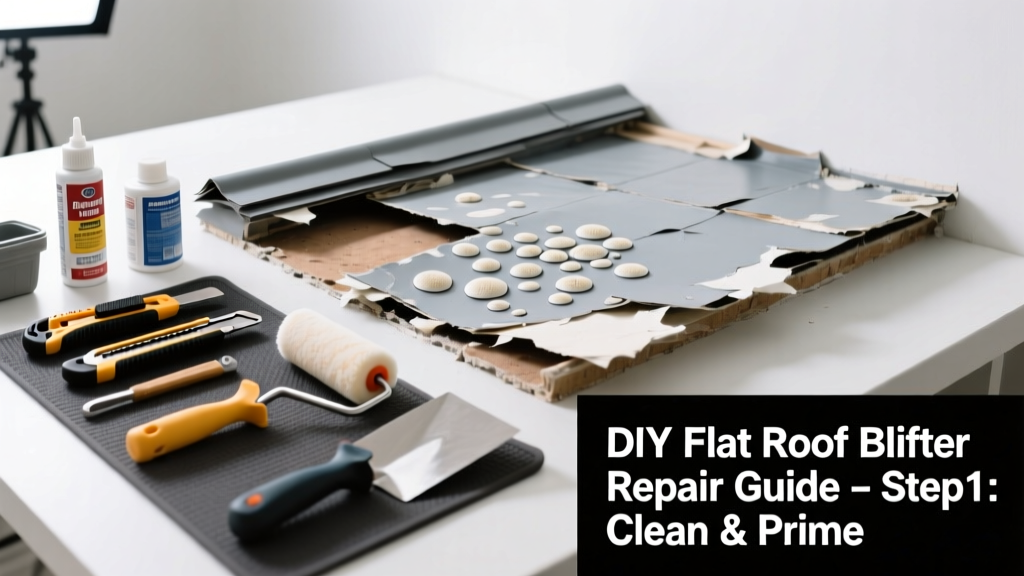
Flat roof blistering isn’t just unsightly—it’s a red flag that moisture is trapped beneath the membrane, threatening structural integrity and insulation performance. Left unaddressed, blisters can rupture, admit water, and lead to rot or mold in as little as one heavy rainstorm. Most small blisters (under 6 inches) are safe to repair yourself—but only if you understand the root cause and material type.
Quick Diagnosis
Blisters form when air or moisture gets trapped between roof layers during installation or due to thermal expansion. Common culprits include:
- Poor adhesion during initial installation (especially in cold or humid weather)
- Moisture trapped in insulation before membrane application
- UV degradation of older EPDM or modified bitumen membranes
- Thermal cycling causing vapor pressure buildup under the surface
- Roof drains clogged for >48 hours, allowing ponding and heat retention
Tools & Materials Needed
| Item | Purpose | Estimated Cost |
|---|---|---|
| Utility knife with snap-off blades | Cutting precise slits without damaging substrate | $8–$15 |
| Roofing cement (solvent-based) | Re-adhering membrane and sealing repairs | $12–$22 per gallon |
| 3-inch roofing roller | Pressing membrane flat and removing air pockets | $18–$28 |
| Butyl rubber tape (4-inch wide) | Reinforcing patched areas on EPDM or TPO roofs | $24–$36 per roll |
| Non-woven polyester fabric (12 oz) | Providing reinforcement layer under patch | $16–$25 per yard |
Step-by-Step Fix
Always work on dry, warm days (50–90°F) with no rain forecast for 48 hours. Never attempt repairs on wet or icy surfaces.
- Assess blister size and location: Mark blisters under 6" diameter for repair; skip those near seams, penetrations, or over insulation voids.
- Cut a relief slit: Using a utility knife, make a single straight cut along the longest axis—no deeper than the membrane thickness. Avoid cutting into insulation or deck.
- Dry and clean: Gently press out trapped air/moisture, then wipe interior with isopropyl alcohol. Let dry 15 minutes.
- Apply adhesive: Brush solvent-based roofing cement inside slit and 2" beyond edges. Press membrane down firmly with roller.
- Seal and reinforce: Cover slit with butyl tape or a 6"×6" patch of reinforced fabric + top coat of cement. Roll again for full adhesion.
When to Call a Pro
DIY repairs become unsafe or ineffective in these scenarios:
- Blisters larger than 12 inches in diameter—or clusters covering >5% of the roof area
- Visible cracking, alligatoring, or exposed fiberglass matting beneath the membrane
- Blistering occurring within 2 years of a new roof installation (likely warranty claim)
- Any sign of wet insulation (spongy feel, dark staining, or musty odor when lifted)
- Roofs with spray polyurethane foam (SPF) systems—blistering often indicates delamination requiring specialized equipment
"Over 68% of premature flat roof failures begin with undiagnosed blistering—and 41% of those escalate to interior water damage within 18 months." — National Roofing Contractors Association (NRCA) Roofing Manual, 2022 Edition
Prevention Tips
Extend your roof’s service life by addressing conditions that promote blistering:
- Install tapered insulation to eliminate ponding water (NRCA recommends minimum ¼" per foot slope)
- Use breathable cover boards (e.g., gypsum or high-density wood fiber) beneath single-ply membranes
- Schedule biannual inspections—spring and fall—to spot early-stage blisters before they grow
- Ensure proper ventilation in roof assemblies with vapor retarders (especially in cold climates)
- Avoid walking on roofs during midday heat—thermal expansion peaks between 11 a.m. and 3 p.m.
Can I use bleach to clean the blister area before repair?
No. Bleach degrades EPDM, TPO, and PVC membranes, accelerating UV breakdown and reducing elasticity. Use isopropyl alcohol or manufacturer-recommended cleaners only—see our approved roof cleaning solutions.
Will patching stop future blistering in that spot?
Only if the underlying cause is resolved. A patch fixes the symptom—not trapped moisture, poor adhesion, or thermal stress. If blistering recurs within 6 months, inspect insulation moisture content and check for inadequate vapor control layers.
Is it safe to walk on a blistered flat roof?
Not recommended. Stepping directly on a blister risks rupturing it, forcing moisture deeper into the system. Use plywood planks or roof walkway pads to distribute weight—even on seemingly firm areas.
Do roof coatings prevent blistering?
Acrylic or silicone coatings don’t prevent blistering—they may even trap existing moisture. Only reflective coatings applied over fully adhered, dry, and blister-free membranes provide long-term protection. See our coating compatibility chart.
How long does a DIY blister repair last?
Properly executed repairs last 3–7 years depending on membrane type and exposure. EPDM patches average 5 years; TPO repairs using compatible tape last ~4 years. Always re-inspect repaired zones every 6 months.
Can I repair blistering on a green roof?
Only after removing growing medium and drainage layers—and only if the waterproofing membrane itself is accessible and intact. Green roof blisters almost always indicate compromised root barriers or failed drainage design. Contact a specialist familiar with green roof maintenance protocols.
Fixing flat roof blistering gives you immediate control over moisture intrusion—but it’s not a substitute for understanding your roof’s assembly and climate-specific vulnerabilities. Monitor repaired areas closely, keep drains clear year-round, and treat blistering like a diagnostic clue rather than just a cosmetic flaw. With consistent attention, most flat roofs outlive their original 15-year warranty by 5–10 years.