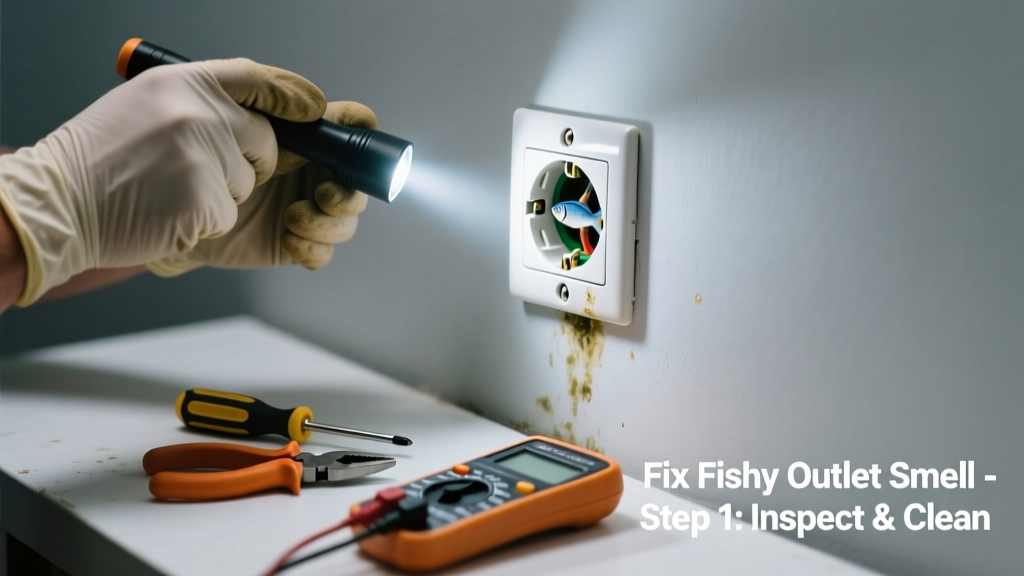
A sharp, fishy odor coming from an electrical outlet isn’t normal—it’s your home’s early warning system screaming that something’s overheating or burning inside the wiring or device. Ignoring it risks fire, shock, or costly damage. This guide walks you through safe, actionable steps—not guesswork—to identify and resolve the issue.
Quick Diagnosis
The fishy smell is almost always caused by overheated plastic components—especially the nylon or polycarbonate housing inside outlets, switches, or breakers. Heat breaks down these materials, releasing trimethylamine, a compound that smells like rotting fish. Common triggers include:
- Loose or corroded wire connections at the outlet terminals
- Overloaded circuit (e.g., space heater + microwave on same 15-amp circuit)
- Old or damaged outlet (especially pre-2008 models without CO/ALR-rated terminals)
- Backstabbed wires (push-in connections known to loosen and arc over time)
- Faulty GFCI or AFCI device failing internally
Tools & Materials Needed
| Item | Purpose | Estimated Cost |
|---|---|---|
| Voltage tester (non-contact) | Verifies power is off before touching wires | $12–$25 |
| Insulated screwdrivers (flat & Phillips) | Safe tightening of terminals without shorting | $8–$18 |
| Wire strippers | Cleanly strip insulation without nicking copper | $10–$22 |
| New tamper-resistant outlet (TR) | Replaces aging unit; required by NEC since 2008 | $2–$6 |
| Outlet tester (3-light) | Confirms correct wiring after reinstallation | $6–$15 |
Step-by-Step Fix
- Shut off power at the breaker—not just the wall switch—and verify with a non-contact voltage tester at the outlet screws and slot openings.
- Remove the outlet cover and outlet: Unscrew the faceplate, then the mounting screws. Gently pull the outlet out, keeping fingers clear of terminals.
- Inspect for visible damage: Look for browned plastic, melted wire insulation, scorch marks, or loose wires—especially backstabbed connections. If found, stop and call an electrician.
- Retighten all terminal screws (side-screw only—never reuse backstabs). Ensure bare copper is fully under the screw head and no strands are exposed beyond 1/4".
- Replace the outlet with a new tamper-resistant (TR) model rated for your circuit (15A or 20A), and use the outlet tester to confirm proper grounding and polarity post-install.
When to Call a Pro
Don’t risk DIY if you encounter any of these:
- Smell persists after replacing the outlet and verifying tight connections
- Breaker trips repeatedly—or won’t reset—after power restoration
- You see charring, bubbling, or melted sheathing on NM cable behind the box
- The smell originates from multiple outlets on the same circuit
- Your home has aluminum wiring (common in homes built 1965–1973); improper handling can cause fires
According to the Electrical Safety Foundation International’s 2023 report, faulty outlets and receptacles contribute to nearly 12% of home structure fires involving electrical distribution systems—making prompt, correct intervention critical.
Prevention Tips
- Replace outlets every 15–20 years—even if they ‘still work’
- Avoid daisy-chaining power strips or using high-wattage devices (heaters, air compressors) on the same circuit
- Use only side-screw terminals—not backstabs—for permanent connections
- Install AFCI breakers in living areas and bedrooms (required by NEC since 2014) to detect dangerous arcing
- Test GFCIs monthly and replace them every 10 years—they degrade silently
Can I use bleach or air freshener to mask the smell?
No—masking the odor is extremely dangerous. Bleach can react with electrical components or residual ozone, and air fresheners don’t address the underlying thermal failure. The smell means something is actively degrading. Follow our full electrical safety checklist before assuming it’s cosmetic.
Is this smell always from the outlet itself?
Not always. The odor may originate upstream—in the junction box, circuit breaker panel, or even a damaged appliance plug. Unplug everything on that circuit first, then test outlets one by one. A multimeter continuity check on suspect cords can reveal internal shorts.
Why does it smell like fish instead of smoke?
It’s not smoke—it’s chemical off-gassing. When heat exceeds ~250°F, the flame-retardant additives in outlet plastic (like melamine or phosphates) decompose into volatile amines, including trimethylamine—the same compound found in decaying seafood. That’s why it hits your nose before visible smoke appears.
Can a surge protector cause this smell?
Yes—if it’s overloaded, outdated, or failed internally. Surge protectors with MOVs (metal oxide varistors) can overheat and emit that exact fishy odor when clamping repeated surges. Replace any unit older than 3–5 years or showing discoloration on the casing.
Do LED bulbs ever cause this?
Rarely—but cheap, non-dimmable LEDs on dimmer circuits can overheat drivers and emit similar odors. More often, though, the culprit is the outlet or switch controlling them. Swap in a quality dimmer-rated LED and verify the switch isn’t buzzing or warm to the touch.
What if the smell comes and goes?
Intermittent odor signals an intermittent fault—often a loose connection that heats up under load (e.g., when the AC kicks on) and cools when idle. This is especially hazardous: it won’t trip a breaker but builds carbon buildup that worsens over time. Our outlet replacement guide includes torque specs for terminal screws to prevent this.
A fishy smell from an outlet isn’t background noise—it’s a red flag with measurable consequences. Acting quickly with the right tools and knowledge protects your home and family. If you’re unsure at any point, pause and call a licensed electrician. Better safe than sorry—and far cheaper than fire restoration.