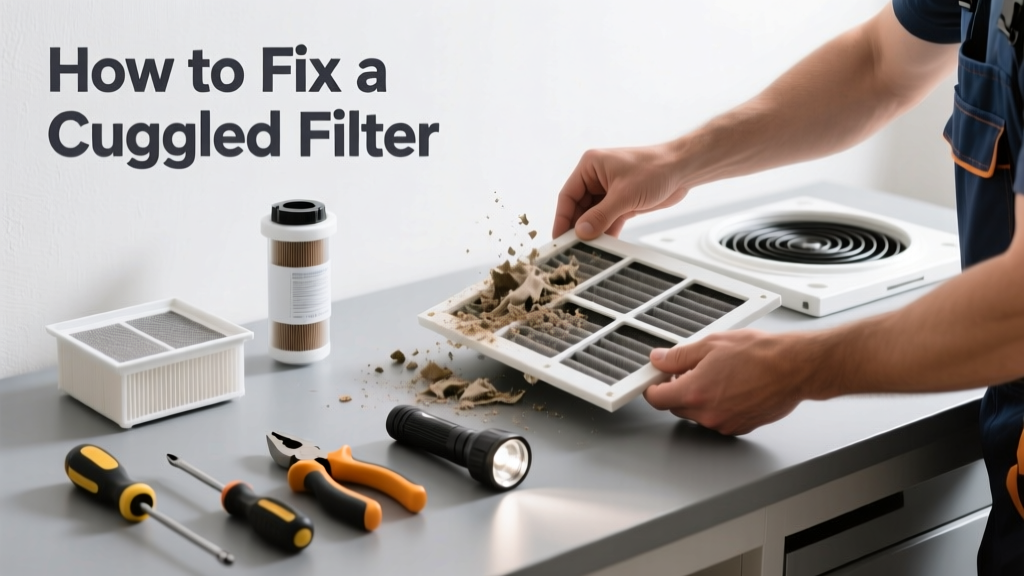
A clogged filter is the most common—and most overlooked—cause of poor airflow, reduced efficiency, and even system failure. Whether it’s your HVAC blower, clothes dryer vent, or whole-house water filter, a blocked filter strains equipment and raises utility bills. The good news? Most clogs take under 20 minutes to clear—if you know what to look for and how to safely access it.
Quick Diagnosis
Before grabbing tools, confirm the issue isn’t something else. A true filter clog shows these telltale signs:
- Reduced airflow from vents or dryer exhaust
- Unusual humming or overheating sounds
- Increased dust buildup near registers or on furniture
- Water pressure drop (for whole-house or faucet filters)
- Filter visibly coated in gray lint, brown sediment, or green algae
Tools & Materials Needed
| Item | Purpose | Estimated Cost |
|---|---|---|
| Phillips screwdriver | Removes access panels on HVAC units and dryers | $8–$12 |
| Shop vacuum with crevice tool | Cleans deep lint from dryer ducts and blower compartments | $45–$90 |
| Replacement filter (MERV 8–13) | Ensures proper airflow and filtration without overloading system | $10–$25 |
| White vinegar (1 gallon) | Dissolves mineral scale in water filter housings and sediment traps | $3–$6 |
| Nitrile gloves & safety glasses | Protects against mold spores, rust flakes, and chemical splashes | $7–$15 |
Step-by-Step Fix
Follow these methods based on your system type. Always power off the unit first—flip the circuit breaker for HVAC/dryers, shut off water supply for plumbing filters.
- HVAC air filter: Locate the return-air grille (often in hallway ceiling or wall), remove cover, slide out old filter, check for light transmission—if you can’t see through it, replace it. Install new filter with arrow pointing toward furnace.
- Dryer vent filter: Pull the lint trap, scrub with a nylon brush dipped in warm soapy water, then vacuum the trap housing and 12 inches into the duct using a shop vac’s crevice tool.
- Whole-house water filter: Shut off main water valve, open bypass valve, depressurize housing by opening nearest faucet, unscrew canister, rinse cartridge under cold water (if reusable) or replace if labeled disposable.
- Under-sink reverse osmosis (RO) filter: Turn off feed water, open RO faucet to relieve pressure, use wrench to loosen housing, soak pre-filter cartridge in 1:3 vinegar-water solution for 15 minutes before reinstalling.
When to Call a Pro
DIY is safe for surface-level filters—but stop and call a licensed technician if you encounter any of these:
- Black mold growth inside ductwork or filter housing (requires EPA-certified remediation)
- Filter housing cracked or leaking after reassembly (indicates internal pressure or seal failure)
- No improvement in airflow or water pressure after replacing all accessible filters
- Burning smell or tripped breakers when restarting the system
- Water filter clogging every 2–3 weeks despite low household usage (points to well sediment or municipal supply issues)
Prevention Tips
Consistent maintenance prevents 87% of filter-related service calls, according to the Air Conditioning Contractors of America’s 2022 Field Service Report. Set calendar reminders and follow this schedule:
- HVAC filter: Replace every 30–90 days (monthly if pets or allergies present)
- Dryer lint trap: Clean before every load; vacuum duct annually
- Whole-house water filter: Replace sediment cartridge every 6 months, carbon every 12 months
- Refrigerator water filter: Swap every 6 months—even if indicator light hasn’t activated
"A dirty HVAC filter increases energy consumption by up to 15%, and can shorten system life by 2–5 years," says HVAC engineer Maria Chen in the ASHRAE Journal (2023).
Can I wash and reuse a disposable HVAC filter?
No. Disposable fiberglass or pleated filters are not designed for washing. Soaking them damages the media structure and reduces MERV rating. Reuse only filters explicitly labeled "washable"—and even those lose efficiency after 3–4 cleanings.
Why does my water filter clog faster in winter?
Colder groundwater holds more dissolved iron and manganese, which oxidize and form rust-colored sludge inside cartridges. If clogging spikes seasonally, test your well or municipal water for iron levels above 0.3 ppm (U.S. EPA secondary standard).
Is it safe to run my AC without a filter for one day?
No. Even short-term operation pulls unfiltered dust and debris into the evaporator coil and blower motor. That grit causes micro-scratches, reduces heat transfer, and invites mold growth. Keep a spare filter on hand—or temporarily use a higher-MERV option if your system allows.
How do I know if my dryer vent is clogged beyond the lint trap?
Time your drying cycle: if a normal load takes >60 minutes or the exterior vent flap doesn’t flutter open during operation, there’s likely a blockage deeper in the duct. Use a dryer vent cleaning kit with flexible rods and brush tips—or hire a NADCA-certified technician.
Can vinegar damage my RO membrane?
Yes—direct contact with undiluted vinegar degrades thin-film composite membranes. Only use diluted vinegar (1 part vinegar to 3 parts water) on pre-filters and housings. Never soak or flush the RO membrane itself; replace it per manufacturer specs (typically every 2–3 years).
What’s the difference between a ‘clogged’ and ‘saturated’ water filter?
A saturated filter has reached its rated capacity (e.g., 1,000 gallons) and no longer removes contaminants—even if it looks clean. A clogged filter shows physical flow restriction (low pressure, slow dispensing). Both require replacement, but saturation is invisible without tracking usage.
Fixing a clogged filter isn’t just about restoring function—it’s about protecting your system’s longevity and your home’s indoor air or water quality. Treat each filter like a checkpoint: inspect it monthly, replace it on schedule, and document changes in performance. For persistent clogs, consider upgrading to a higher-capacity model or adding a secondary pre-filter—especially in dusty homes or hard-water areas. You’ll save money on repairs, energy, and replacement parts down the line. Download our free HVAC maintenance checklist or compare top-rated water filter cartridges for long-term reliability.