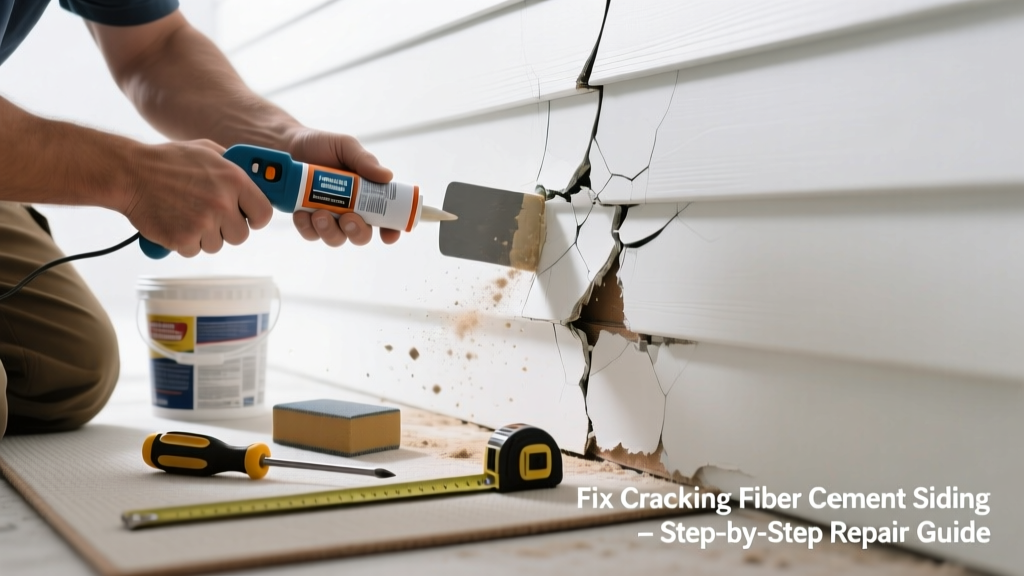
You hear a sharp pop when the sun hits your south-facing wall—or a low groan as temperatures drop at dusk. That’s not normal. Cracking fiber cement siding making unusual noise signals movement, moisture intrusion, or improper installation—and ignoring it invites rot, mold, and energy loss.
Quick Diagnosis
Fiber cement siding shouldn’t crack or sing. These are the five most common culprits behind the noise and fissures:
- Improper fastener spacing (too far apart or too close to edges)
- Missing or degraded backer rod or sealant at joints
- Thermal expansion trapped by rigid trim or caulked seams
- Moisture trapped behind panels due to missing housewrap or drainage gap
- Substrate warping or framing movement from foundation settlement
Tools & Materials Needed
| Item | Purpose | Estimated Cost |
|---|---|---|
| 10-inch carbide-tipped circular saw blade | Cuts fiber cement cleanly without dust buildup or chipping | $24–$38 |
| Backer rod (6mm round, closed-cell foam) | Creates controlled joint depth for flexible sealant movement | $8–$12 per 25-ft roll |
| ASTM C920 Class 25 silicone-modified acrylic sealant | Stretches up to 25%—critical for thermal movement in fiber cement | $12–$18 per tube |
| Impact driver with #2 Phillips bit | Drives screws without stripping heads or overdriving into brittle material | $45–$95 (rental: $15/day) |
| Moisture meter (pin-type, 0–40% range) | Detects hidden wetness behind panels before resealing | $65–$110 |
Step-by-Step Fix
Start with the noisiest panel—usually one exposed to full afternoon sun or near corners where expansion is constrained.
- Inspect and isolate movement: On a warm day, press gently along seams while listening. Mark locations where you feel or hear shifting.
- Remove compromised fasteners: Replace rusted or bent screws within 2" of cracks. Use corrosion-resistant #8 x 2-1/2" stainless steel screws—never nails.
- Recreate expansion gaps: Cut a 3/16" gap at horizontal joints using a multi-tool with diamond grit blade; insert backer rod, then seal with ASTM C920 sealant.
- Check substrate integrity: If underlying sheathing feels spongy or reads >18% moisture, remove affected panels and replace OSB or plywood behind them.
- Reinstall with proper clearance: Maintain 1/8" gap at all vertical edges and 3/16" at horizontal joints—even if factory-cut panels suggest butt-joint installation.
When to Call a Pro
DIY stops where safety or code compliance begins. Call a licensed exterior contractor if:
- You find more than three cracked panels across two adjacent walls
- Moisture readings exceed 22% behind three or more panels (per ASTM D7235-22 testing protocol)
- The noise coincides with visible sagging, bowing, or bulging of the wall surface
- Your home was built between 2005–2012 and uses early-generation James Hardie HardiePlank® without rainscreen gap
According to the Insurance Institute for Business & Home Safety's 2023 report on cladding failures, 68% of fiber cement-related water intrusion cases involved unvented rainscreens or improperly sealed butt joints—issues best corrected by certified installers trained in current HardieZone® guidelines.
Prevention Tips
Long-term quiet starts with smart habits—not just quick patches:
- Reseal all horizontal joints every 7 years (not just when they crack), using only paintable, high-movement sealants rated for fiber cement
- Install Z-channel rainscreen strapping (minimum 3/8" deep) behind new installations—required by IRC R703.1.1 for all fiber cement in Climate Zones 4–8
- Avoid painting over existing caulk lines—old sealant loses elasticity and traps expansion stress
- Trim trees and shrubs within 3 feet of walls to reduce moisture retention and freeze-thaw cycling
Can I use regular acrylic caulk instead of specialty sealant?
No. Standard acrylic latex caulk elongates only 5–8%, while fiber cement expands up to 1/8" per 10-foot span with seasonal temperature swings. ASTM C920 Class 25 sealants stretch 25% and retain adhesion after 10,000 movement cycles—critical for durability. Using standard caulk guarantees re-cracking within 12–18 months.
Why does my siding only creak at sunrise and sunset?
This timing points directly to thermal cycling. Fiber cement expands when heated and contracts when cooled. If joints are sealed rigidly or panels were installed without expansion gaps, the material binds—then releases suddenly with an audible pop or groan. It’s the siding “catching up” to ambient temperature shifts.
Is this a sign of foundation problems?
Not always—but it can be. Foundation settlement often manifests first in corner cracks and diagonal fissures in siding, especially near garage doors or large windows. If you also notice stair-step cracks in brick veneer, sticking doors, or uneven floors, get a structural engineer evaluation before repairing siding.
How long should repaired joints last?
With proper backer rod, correct sealant, and annual visual inspection, expect 7–10 years of quiet performance. A 2021 study by the National Association of Home Builders found that fiber cement joints sealed with ASTM C920 products and installed per manufacturer specs had 92% fewer callbacks after year seven versus non-compliant applications.
Do I need to repaint the whole wall after fixing cracks?
Only if you’ve sanded or scraped through the finish coat. Most repairs require touch-up only. Use the original paint lot number—if unavailable, bring a chip to a local Sherwin-Williams or Benjamin Moore store for spectral match. Avoid glossy finishes: flat or satin sheens hide minor texture mismatches better.
Can I fix this in winter?
Technically yes—but not recommended. Sealants require substrate temps above 40°F during application and for 24 hours after. Below that, adhesion fails and cure time doubles. Also, frozen moisture behind panels expands, masking true damage. Wait until consistent 45°F+ daytime temps with low humidity.
Cracking and noise aren’t just cosmetic—they’re your siding’s distress signal. Addressing the root cause—whether it’s trapped expansion, moisture, or aging fasteners—keeps your home weathertight, efficient, and quiet for years. For deeper issues like substrate rot or framing shift, don’t hesitate to consult a specialist—our fiber cement installation checklist helps you vet contractors, and this guide shows how to test housewrap integrity before any major repair begins.