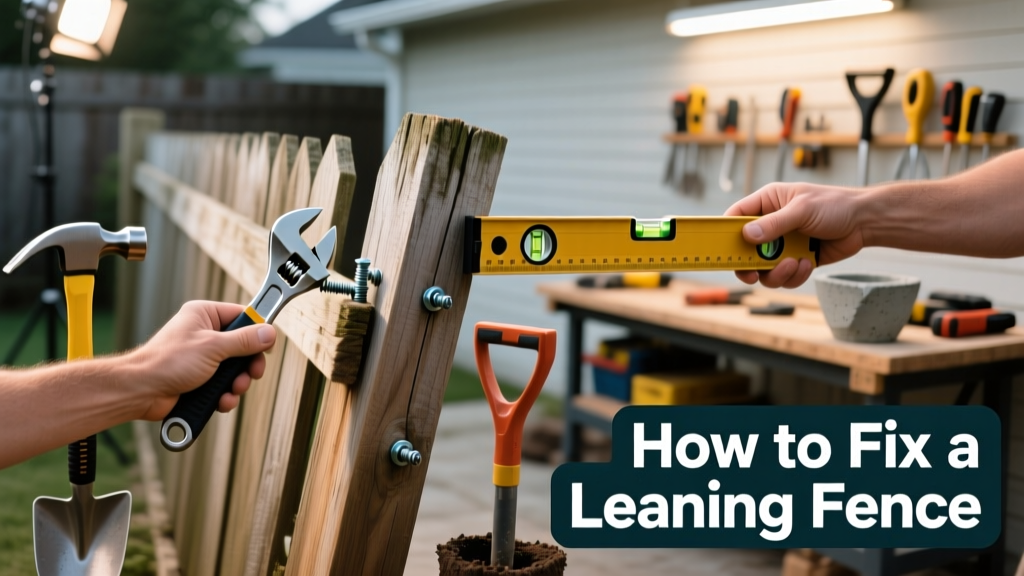
A leaning fence isn’t just an eyesore—it’s a sign of structural stress that can worsen fast. If your wood or vinyl fence sags more than 2 inches from vertical, or pulls away from posts at the top, it’s time to act before wind or rain makes it worse.
Quick Diagnosis
Before grabbing tools, identify the root cause. Most leaning stems from one (or more) of these issues:
- Rotting or heaved fence posts—especially common in clay soil or poorly drained yards
- Loose or corroded post-to-rail hardware (e.g., lag screws pulled out of softwood)
- Soil erosion or settling around the base of posts
- Impact damage (e.g., lawnmower hits, vehicle contact, or fallen branches)
- Overgrown vines adding lateral weight to panels
Tools & Materials Needed
| Item | Purpose | Estimated Cost |
|---|---|---|
| 4-ft level | Verifies plumb alignment during realignment | $12–$25 |
| Post-hole digger or auger | Removes old concrete or loosens compacted soil | $20–$60 |
| 3/8" lag screws & washers (3"–4") | Secures rails back to posts with reinforced hold | $8–$15 |
| Concrete mix (50-lb bag) | Re-sets posts with proper anchoring in unstable soil | $5–$9 |
| Brace board (2×4 × 6 ft) | Temporary support while resetting posts | $4–$7 |
Step-by-Step Fix
Choose the method based on severity and cause:
- Minor lean (<1.5 inches): Tighten & brace — Remove loose nails/screws, pre-drill new 4" lag screws with galvanized washers, then install diagonal 2×4 braces from post to ground (angled at 30°) for 72 hours while adhesive cures.
- Moderate lean (1.5–3 inches) with intact post base: Dig 6" deep around the post, use a car jack or block-and-lever system to gently lift and re-plumb, then backfill with gravel and tamp firmly.
- Severe lean (>3 inches) or rot at ground line: Cut rail connections, excavate post fully, replace rotted section or entire post, set in fresh concrete with 12" diameter × 24" deep footing, and allow 48 hours to cure before reattaching rails.
When to Call a Pro
Don’t risk injury or further damage if any of these apply:
- The fence is over 6 ft tall and leaning toward a structure, power line, or pool
- You spot active termite damage or >4" of rot below grade on two or more posts
- Your fence shares a property line and disputes exist with neighbors about responsibility or placement
According to the Insurance Institute for Business & Home Safety's 2023 report, improperly reset fence posts contribute to 22% of wind-related fence failures in high-wind zones.
Prevention Tips
Extend your fence’s life with these low-effort habits:
- Inspect posts every spring for cracks, soft spots, or gaps between concrete and wood
- Keep soil sloped away from posts to prevent water pooling (aim for 1/4" per foot)
- Trim climbing vines monthly—ivy alone adds up to 15 lbs per linear foot when wet
- Use pressure-treated #2 grade or cedar posts rated for ground contact (UC4B or better)
How long does concrete need to cure before loading a reset fence post?
Standard quick-set concrete reaches 80% strength in 24 hours but needs 48–72 hours before bearing full load from rails and wind pressure. For best results in cool or humid conditions, wait 96 hours before final attachment.
Can I reuse the same post hole if the original concrete is cracked?
Only if the crack is hairline and confined to the top 4 inches. If you see spalling, separation from soil, or exposed rebar, excavate the entire footing down to undisturbed subsoil and pour fresh concrete with a 12" minimum diameter.
Will adding a diagonal brace fix a lean permanently?
A temporary brace stabilizes while you address root causes—but it’s not permanent. Braces reduce sway by 60%, per the American Wood Council’s 2022 Residential Fence Design Guide, yet they don’t correct underlying post movement. Always pair bracing with soil correction or post replacement.
Do vinyl fences lean for the same reasons as wood?
Yes—but with different failure modes. Vinyl posts rarely rot, yet they’re prone to frost heave in shallow footings and thermal expansion buckling in hot sun. Check for cracked or popped-out post sleeves and ensure footings are at least 36" deep in frost zones.
How much does it cost to hire someone to fix a leaning fence?
Most contractors charge $85–$140/hour. A typical 3-post repair runs $320–$650 depending on access, debris removal, and whether new materials are included. Compare quotes using our fence repair costs guide.
Can I straighten a leaning fence without digging?
Only for very slight leans (<1 inch) on solid posts. Use a come-along winch anchored to a truck or immovable object—but never wrap chain around vinyl or cedar posts. This risks splitting or snapping. As one veteran fencing contractor told us:
"If you hear cracking while pulling, stop immediately. That’s the post failing—not bending." — Mike R., 28-year fence installer, Midwest Fence Co. (2023)
A properly fixed fence should stand true for 8–12 years with routine care. If you’ve tackled the lean but notice new gaps opening at rail joints within 6 months, revisit your soil drainage—most recurring leans trace back to water, not hardware. For deeper help, check our fence post rot repair and wood fence maintenance guides.