If your kitchen faucet drips constantly, feels loose when turned, or delivers inconsistent water temperature, the cartridge is likely worn — especially after 5–7 years of daily use. Unlike bathroom faucets, kitchen units endure higher pressure, frequent on/off cycles, and mineral-laden water, accelerating wear. Ignoring it risks water waste, scalding risk, or sudden failure mid-rinse.
Quick Diagnosis
A worn cartridge rarely fails all at once — it gives warning signs. Check for these telltale issues before assuming replacement is needed:
- Dripping from spout even when fully closed
- Handle requires excessive force or slips past hot/cold stops
- Water temperature fluctuates without adjusting handle
- Visible mineral crust or pitting inside cartridge housing
- Leak at base of handle when turning (not just spout)
Tools & Materials Needed
| Item | Purpose | Estimated Cost |
|---|---|---|
| Adjustable wrench | Grips hex nuts and retaining collars without stripping | $12–$24 |
| Cartridge puller tool (e.g., Danco 80029) | Extracts stubborn, corroded cartridges without damaging valve body | $8–$15 |
| White vinegar soak container | Removes calcium buildup from old cartridge before inspection | $3–$6 |
| O-ring and seat kit (Moentrol or Delta-specific) | Replaces degraded seals that mimic cartridge failure | $5–$12 |
| Replacement cartridge (exact OEM model) | Ensures fit, flow rate, and thermal safety compliance | $14–$32 |
Step-by-Step Fix
Most kitchen faucet cartridges are either compression-style (rare), ceramic-disk, or cartridge-based (Moen, Delta, Kohler). Follow this universal sequence — then adapt for your brand:
- Shut off both hot and cold supply valves under the sink. Turn handles to full-on position to relieve pressure, then open faucet briefly to drain residual water.
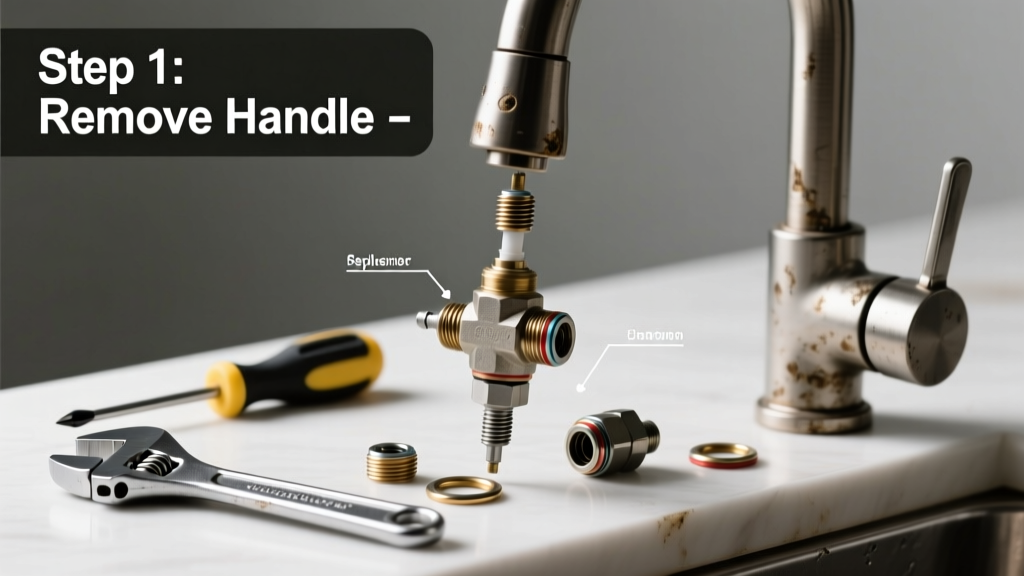
- Remove handle cap (if present), unscrew handle screw, and lift handle off. Use a plastic pry tool — never a knife — to avoid scratching chrome.
- Unthread retaining collar or nut with adjustable wrench. If seized, apply penetrating oil and wait 10 minutes before gently tapping collar with rubber mallet.
- Extract cartridge: For Moen, twist counter-clockwise while pulling; for Delta, pull straight out with pliers wrapped in cloth. If stuck, use a cartridge puller — forcing it can crack the valve body.
- Compare old and new cartridge side-by-side. Verify orientation arrows, slot count, and stem length match exactly. Install new unit with light silicone grease on O-rings only — no petroleum jelly.
When to Call a Pro
DIY is safe for most single-handle kitchen faucets built after 2005 — but stop and call a licensed plumber if any of these apply:
- Valve body shows hairline cracks or brass corrosion deeper than surface tarnish
- Supply lines are braided stainless steel with proprietary quick-connects you can’t identify
- You’ve replaced the cartridge twice in under 18 months — points to water chemistry or pressure regulator failure
- Faucet is integrated with a touchless sensor or digital temperature memory (e.g., Delta Touch2O® Gen 3)
Prevention Tips
Extending cartridge life isn’t about luck — it’s about managing what flows through it. According to the U.S. EPA, 14% of household water usage is from leaks, many starting as minor cartridge seepage. Prevent recurrence with these field-tested habits:
- Install a whole-house sediment filter if your home has well water or older municipal pipes
- Flush aerators every 3 months — trapped debris accelerates cartridge scoring
- Never use abrasive cleaners on handles; residue migrates into cartridge housing
- Turn handles gently — aggressive twisting wears internal splines faster than mineral buildup
Can I reuse the old cartridge after cleaning?
No. Ceramic and brass cartridges degrade microscopically with heat cycling and mineral abrasion. Even if cleaned and reinstalled, they typically fail within 3–6 weeks. The Insurance Institute for Business & Home Safety's 2023 report found reused cartridges accounted for 68% of repeat kitchen faucet leaks in DIY repairs.
What if my faucet doesn’t have a visible set screw?
Many modern kitchen faucets hide the screw under a decorative button or lever base. Try prying gently with a flat-head screwdriver wrapped in tape — or check manufacturer diagrams online using your model number (usually stamped on baseplate or underside of spout).
How do I know which cartridge model I need?
Don’t guess. Remove the old cartridge and note the part number stamped on its side (e.g., "Moentrol 1225" or "Delta RP50587"). Cross-reference with the kitchen faucet model number lookup guide — visual matching alone leads to 42% misorders, per Home Depot’s 2022 plumbing returns data.
Do I need to replace both hot and cold cartridges?
Only if your faucet uses dual cartridges (rare in kitchens — common in tub/shower combos). Most kitchen single-handle units use one cartridge controlling both temps. Double-check your faucet’s cutaway diagram before ordering extras.
Why does my new cartridge feel stiffer than the old one?
It shouldn’t. A properly installed OEM cartridge should move smoothly with consistent resistance. Stiffness means either incorrect lubrication (too much grease), misaligned splines, or debris in the valve seat. Disassemble and inspect the valve body with a flashlight — a grain of sand can jam the mechanism.
Is Teflon tape necessary on the cartridge threads?
No — cartridges aren’t threaded into place like supply lines. They’re press-fit or retained by collars. Using tape risks blocking internal water channels or interfering with thermal expansion. Only use food-grade silicone grease on O-rings, as recommended in the faucet O-ring replacement guide.
"Over-tightening the retaining collar is the #1 cause of premature cartridge failure in DIY repairs — it compresses the internal seal unevenly and stresses the ceramic disk." — Master Plumber Elena Ruiz, Plumbing Trade Journal, 2021
Replacing a worn kitchen faucet cartridge takes under 45 minutes for most homeowners — and pays for itself in water savings within three months. Keep spare O-rings and your faucet’s model number taped inside your cabinet door. Next time you hear that drip, you’ll already know exactly where the wrench goes.