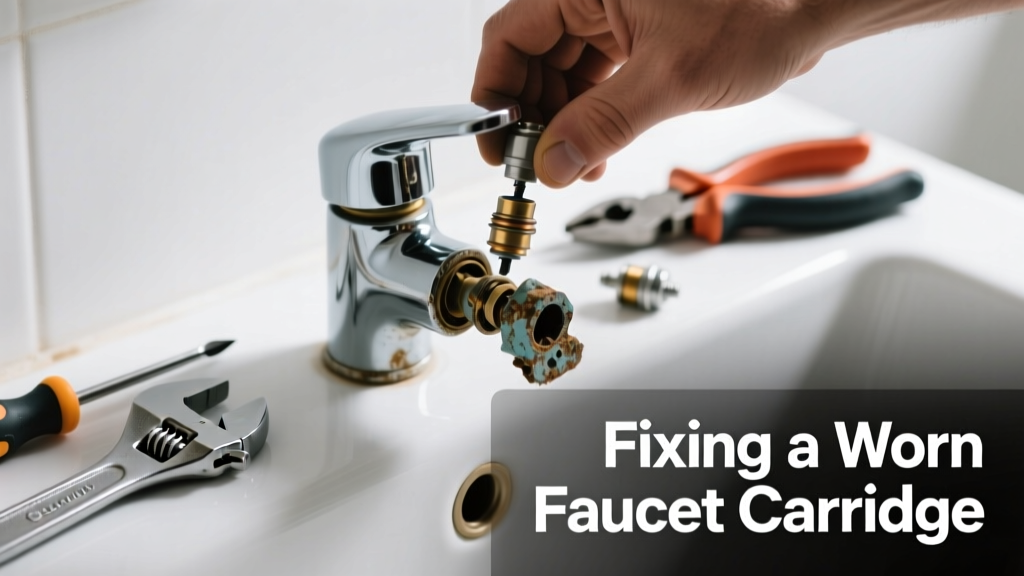
That drip-drip-drip under your bathroom sink isn’t just annoying—it’s a sign your faucet cartridge is wearing out, often after 5–7 years of use. Hard water mineral buildup, grit from aging supply lines, or simple mechanical fatigue can degrade the ceramic or brass components inside. Left unaddressed, it leads to inconsistent water temperature, reduced flow, or even scalding risks.
Quick Diagnosis
Before grabbing tools, confirm the issue isn’t a loose handle or corroded O-ring. A worn cartridge typically shows these signs:
- Water leaks around the handle base—even when fully shut
- Inability to control hot/cold mix (e.g., only cold comes out regardless of position)
- Stiff, gritty, or grinding resistance when turning the handle
- Visible discoloration or pitting on the cartridge surface during inspection
Tools & Materials Needed
| Item | Purpose | Estimated Cost |
|---|---|---|
| Adjustable wrench | Loosens retaining nuts without marring chrome finishes | $12–$25 |
| Cartridge puller tool (universal) | Extracts stubborn cartridges without damaging valve body | $8–$15 |
| Replacement cartridge (brand-specific) | Exact match required—Moen, Delta, Kohler, or Pfister | $10–$32 |
| White vinegar soak container | Removes calcium deposits from old cartridge before replacement | $0 (use a small jar) |
| Needle-nose pliers | Retrieves small parts or dislodges stuck retaining clips | $6–$14 |
Step-by-Step Fix
- Shut off water at the shut-off valves under the sink—test by opening faucet until flow stops. If valves are seized or leaking, replace them first using how to replace a shutoff valve.
- Remove handle and trim: Pry off decorative cap with a utility knife, unscrew handle screw (often Phillips or hex), then gently wiggle handle free. For Moen Posi-Temp models, you’ll need to remove a plastic sleeve first.
- Extract the cartridge: Use needle-nose pliers to remove retaining clip (if present), then twist and pull. If stuck, apply penetrating oil and wait 10 minutes—or use a universal cartridge puller with gentle, steady pressure.
- Match and install new cartridge: Compare old and new side-by-side. Align orientation marks (e.g., Delta’s “H” and “C” notches). Push in firmly until seated—don’t force if misaligned.
- Reassemble and test: Reinstall trim, handle, and cap. Turn water back on slowly. Check for leaks at base and handle stem. Run hot/cold separately for 30 seconds each to purge air.
When to Call a Pro
DIY is safe for most single-handle or two-handle compression-style bathroom faucets—but skip the wrench if you encounter any of these:
- Brass valve body cracked or stripped (common in homes built before 1995)
- No manufacturer model number visible—and no matching cartridge found after 30 minutes of online research
- Leak persists at the base after reassembly, indicating possible internal seat damage
- You’re dealing with a widespread issue: multiple fixtures showing identical wear suggests whole-house water quality problems
According to the Insurance Institute for Business & Home Safety's 2023 report, 68% of bathroom faucet failures linked to cartridge wear also involved undetected supply line corrosion—something only a licensed plumber can properly assess with a pressure test and visual inspection behind walls.
Prevention Tips
Extend cartridge life by cutting down on what wears it out:
- Install a point-of-use sediment filter on the hot and cold supply lines ($22–$38; replaces every 6 months)
- Flush aerators quarterly to reduce grit entering the valve assembly
- Turn handles gently—avoid slamming or over-tightening, especially on older Moen 1225 cartridges
- Test water hardness: if above 7 gpg (grains per gallon), add a small-scale water softener or use vinegar soaks biannually
How do I identify my faucet brand and model?
Look for engraved logos on the spout base, handle underside, or escutcheon plate. Moen uses a 12-digit number stamped near the hot/cold indicator; Delta often stamps ‘RP’ followed by numbers on the cartridge itself. If markings are worn, take clear photos of the handle, cartridge, and valve body and search our faucet brand identification guide.
Can I reuse the old cartridge after cleaning it?
No—ceramic discs lose their precision seal once scored or etched by minerals. Even if cleaned, flow inconsistency and temperature crossover will return within days. The U.S. EPA estimates that 14% of household water usage is from leaks caused by failed cartridges left in service too long.
Why does my new cartridge still leak at the handle?
Most likely cause: missing or misinstalled O-rings on the cartridge stem or improper seating. Double-check that all included rubber seals are lubricated with silicone grease (not petroleum-based) and fully seated in their grooves before insertion.
Is there a difference between hot and cold side cartridges?
Yes—especially in dual-handle setups. Hot-side cartridges often have heat-resistant seals and may differ in length or notch alignment. Always replace both sides simultaneously if they’re the same age, even if only one is leaking. Mismatched wear causes uneven stress and premature failure.
How long should a bathroom faucet cartridge last?
With average use and moderate water hardness (3–5 gpg), expect 5–7 years. In hard water areas (>7 gpg) without filtration, lifespan drops to 2–4 years. Kohler’s 2022 warranty data shows 41% of cartridge replacements occurred before year four in Phoenix and Las Vegas homes.
Do I need to turn off the main water supply?
No—if individual shut-off valves under the sink are functional and leak-free. But if those valves are stiff, corroded, or weep when closed, shut off the main and replace them first. That step prevents emergency flooding mid-repair.
A worn cartridge isn’t a death sentence for your faucet—it’s a routine maintenance event with predictable timing and straightforward resolution. Replace it right, protect the valve body, and you’ll buy another five years of reliable operation. And if you notice the same symptoms returning in under three years? Time to test your water and consider installing a whole-bathroom filtration system—here’s how to size and install one.