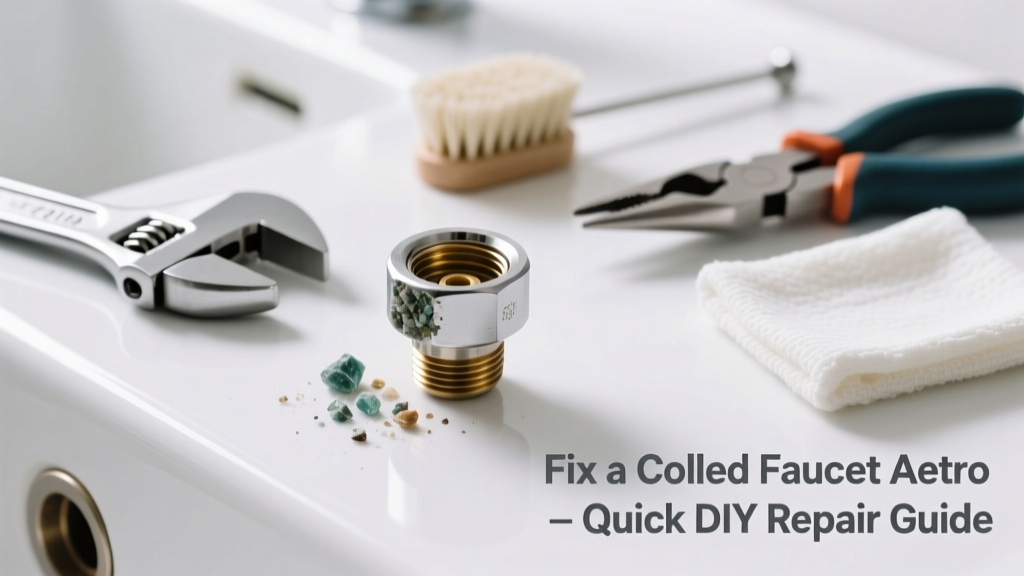
That sudden drop in water pressure, the erratic spray, or the annoying sputter when you turn on your kitchen or bathroom faucet? It’s almost always the aerator — and the fix is faster than ordering takeout. Most clogs happen from mineral deposits or debris trapped in the fine mesh screen, not a failing valve or pipe issue.
Quick Diagnosis
Before grabbing tools, rule out other causes:
- Low flow only at one faucet (not whole house) → likely aerator
- Sputtering or uneven spray pattern → sediment or calcium blocking screen
- Water pressure normal elsewhere → confirms localized issue
- Visible white crust or gritty residue on aerator parts → hard water buildup
Tools & Materials Needed
| Item | Purpose | Estimated Cost |
|---|---|---|
| Needle-nose pliers or aerator wrench | Grips tight threads without scratching chrome finish | $4–$12 |
| White vinegar (distilled) | Dissolves calcium, lime, and rust safely | $2–$5 |
| Soft toothbrush or pipe cleaner | Cleans tiny mesh holes without damaging stainless steel | $1–$3 |
| Replacement aerator (1.0–1.5 GPM) | Modern low-flow option if original is damaged or outdated | $3–$10 |
Step-by-Step Fix
Try these methods in order — most issues resolve with Method 1:
- Remove and soak: Unscrew the aerator (clockwise loosens on most standard faucets — check rotation first). Soak in undiluted white vinegar for 30 minutes. Rinse under running water while gently brushing screen with a soft toothbrush.
- Backflush with water: Hold aerator under faucet stream with screen facing upstream — let high-pressure water push debris backward through the mesh.
- Replace internal washer or screen: If soaking doesn’t restore flow, disassemble the aerator. Replace worn rubber washers or the entire screen cartridge (sold separately for Moen, Delta, Kohler).
- Upgrade to a new aerator: Install a new 1.2 GPM aerator with built-in anti-clog design — especially helpful in homes with well water or >12 gpg hardness.
When to Call a Pro
Stop and call a licensed plumber if:
- You strip the aerator threads trying to remove it — cross-threading can damage the spout
- Water pressure drops across multiple fixtures — points to supply line or shutoff valve failure
- You detect a leak behind the faucet base after reassembly — indicates O-ring or cartridge damage
- Your faucet is a commercial-grade or touchless model with proprietary threading (e.g., some Brizo or Grohe units)
Prevention Tips
Hard water builds up fast — but it’s preventable:
- Soak aerators in vinegar every 3–4 months (more often in areas with >15 gpg hardness)
- Install a point-of-use water softener for kitchen/bath lines — reduces scale by 90% (according to Water Quality Association’s 2022 Home Softening Report)
- Use aerators rated for high-mineral water — look for ‘anti-scale’ or ‘self-cleaning’ labels
- Turn off water at the shutoff valve before removing aerators on older homes — prevents unexpected drips from corroded lines
Can I use bleach on this?
No — bleach corrodes brass and dissolves rubber seals inside the aerator assembly. Stick to distilled white vinegar or citric acid solutions. According to the U.S. EPA’s 2021 Household Chemical Safety Guide, chlorine-based cleaners accelerate metal degradation in plumbing components.
Why does my new aerator clog so fast?
If a brand-new aerator clogs within weeks, your home’s water has unusually high sediment or iron content — especially common in rural well systems. Consider installing a 5-micron sediment filter before the main water line to protect all fixtures.
Do all faucets have removable aerators?
Most modern kitchen and bathroom faucets do — but some ultra-thin or designer models (like certain Dornbracht or Hansgrohe wall-mounts) integrate the aerator permanently. Check your manufacturer’s manual or look for visible threading at the spout tip.
Can a clogged aerator cause low hot water pressure only?
Rarely — aerators affect both hot and cold equally. If only hot water is weak, the issue is likely a clogged hot-water shutoff valve, failed cartridge, or sediment in the water heater dip tube. See our guide on low hot water pressure troubleshooting.
What GPM rating should my replacement aerator have?
For kitchens: 1.0–1.5 GPM balances efficiency and functionality. For bathrooms: 0.5–1.0 GPM saves water without sacrificing usability. The U.S. EPA estimates that 14% of household water usage is from leaks and inefficient fixtures — upgrading to WaterSense-labeled aerators cuts that significantly.
Is it safe to use pliers directly on chrome aerators?
Not without protection — bare metal jaws scratch finishes instantly. Wrap pliers jaws with masking tape or use a rubber-coated wrench. As master plumber Carlos Mendez told Today’s Homeowner Magazine (2023): “One slip with unlined pliers ruins $80 of polished brass — always pad before gripping.”
“One slip with unlined pliers ruins $80 of polished brass — always pad before gripping.” — Carlos Mendez, Today’s Homeowner Magazine, 2023
A clogged aerator is rarely a sign of deeper trouble — just an easy win hiding in plain sight. With vinegar, a toothbrush, and five minutes, you’ll restore smooth, steady flow and save water every time you wash your hands or rinse dishes. And once you’ve done it once, you’ll spot the early signs — weaker spray, faint hissing — before it becomes a nuisance.