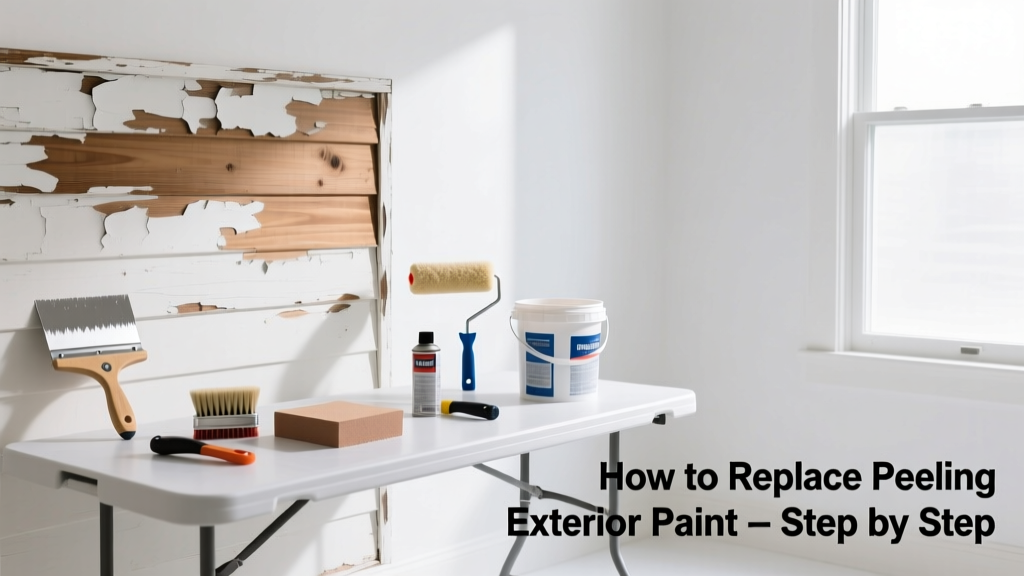
Peeling paint on your home’s exterior isn’t just unsightly—it’s a red flag for moisture intrusion or substrate failure. If you spot curling, blistering, or chalky patches on wood, stucco, or fiber cement, don’t sand and repaint the whole wall. Target the failing section precisely and replace only what’s compromised.
Quick Diagnosis
Before replacing paint, confirm why it’s peeling. Most failures stem from one (or more) of these root causes:
- Moisture trapped behind paint due to poor ventilation or clogged weep holes
- Previous paint applied over dirty, chalky, or glossy surfaces without proper prep
- Using interior-grade paint outdoors or low-VOC acrylics on high-sun exposure walls
- Wood rot or substrate degradation beneath the paint film
- Freeze-thaw cycling in climates with >30 annual freeze days (per NOAA 2023 climate data)
Tools & Materials Needed
| Item | Purpose | Estimated Cost |
|---|---|---|
| 5-in-1 painter’s tool | Scrapes loose paint without gouging wood or stucco | $8–$12 |
| 120-grit sanding block (closed-coat) | Smooths feathered edges without over-sanding | $4–$7 |
| Acrylic latex primer (exterior, stain-blocking) | Seals tannin bleed and provides adhesion on bare wood or chalky surfaces | $22–$34/gal |
| 100% acrylic exterior topcoat (e.g., Sherwin-Williams Duration) | UV-resistant, flexible film that bridges minor substrate movement | $45–$65/gal |
| Butyl rubber caulk (e.g., Big Stretch) | Seals joints and gaps where peeling often starts near windows or trim | $5–$9/tube |
Step-by-Step Fix
Replace only the failing paint—not the entire surface. Follow this sequence for lasting results:
- Isolate and cut back: Use a utility knife to score clean edges around peeling areas—extend 1–2 inches into sound paint to create a stable transition zone.
- Remove failed layers: Scrape with a 5-in-1 tool, then sand feathered edges with 120-grit until smooth. Wipe with damp rag and let dry 24 hours.
- Prime bare spots: Apply stain-blocking acrylic primer to all exposed wood or chalky areas. Let cure per manufacturer instructions (usually 1–2 hours).
- Caulk joints: Fill hairline cracks and gaps at trim, window jambs, and corners with butyl rubber caulk—tool smooth before skinning.
- Repaint with matching finish: Use same sheen and color; apply two thin coats of 100% acrylic topcoat, overlapping 2 inches onto existing paint.
When to Call a Pro
DIY replacement fails when the problem goes deeper than the paint film. Call a licensed contractor if you observe any of these:
- More than 12 inches of continuous peeling on structural wood siding (indicates possible rot or insect damage)
- Peeling coincides with soft, spongy, or discolored substrate—especially on OSB or particleboard sheathing
- Paint failure across >25% of a wall face, suggesting systemic issues like improper drainage or missing rain screen
- You’re working above 10 feet without OSHA-compliant fall protection or scaffolding
Prevention Tips
Extending the life of your new paint starts before the first brushstroke. Focus on moisture control and compatibility:
- Install drip caps above all windows and doors—required by IRC R703.7.1 since 2021
- Keep shrubs and vines trimmed at least 12 inches from walls to allow airflow (per U.S. EPA moisture guidelines)
- Test pH of masonry surfaces with litmus paper—ideal range is 7–9 before priming
- Use only paints rated for your climate zone: elastomeric for stucco in desert heat, breathable silicate for historic brick in humid zones
Can I use bleach to clean mold before repainting?
Yes—but only as a last resort. Mix 1 part household bleach (6% sodium hypochlorite) with 3 parts water, apply with a stiff brush, and rinse thoroughly within 10 minutes. Never use bleach on porous wood: it drives moisture deeper and degrades lignin. Instead, use a 50/50 mix of water and oxygen bleach (sodium percarbonate), which breaks down organics without harming substrate integrity.
"Oxygen bleach reduces mold regrowth by 78% compared to chlorine bleach on wood substrates, according to the Forest Products Laboratory's 2022 field trials."
Do I need to prime over old paint if it’s still adhering?
No—if the existing paint is intact, clean, and compatible (e.g., acrylic over acrylic), light sanding and a bonding primer are optional. But always prime bare wood, chalky surfaces, or patched areas. Skipping primer on raw cedar or redwood invites tannin bleed within 6–8 weeks.
How long should I wait between scraping and repainting?
Minimum 24 hours for wood, 48 hours for masonry or stucco. Substrate moisture content must be below 15% (use a pinless moisture meter). Painting too soon traps vapor and guarantees new peeling—especially critical in coastal or high-humidity regions.
Can I patch peeling paint with spackle or joint compound?
No. Spackle and drywall compound lack UV resistance, flexibility, and water repellency. They’ll crack, chalk, and delaminate within months. For small voids in wood, use an exterior-grade wood filler like Minwax High-Performance Wood Filler; for stucco, use a polymer-modified patching mortar.
What’s the best time of year to repair peeling exterior paint?
Early fall (September–October) in most U.S. zones offers ideal conditions: daytime temps 50–85°F, low humidity (<60%), and minimal rain. Avoid painting when dew forms overnight—the ASTM D3023 standard requires surface temps to remain above dew point for 48 hours post-application.
Will power washing fix peeling paint?
Power washing removes loose debris but worsens peeling if misused. Pressure over 1,500 PSI can drive water behind siding or erode wood grain. Use a wide-angle tip (25° or 40°), keep nozzle 12+ inches from surface, and follow with a full drying period—never paint over damp substrate.
A well-executed partial paint replacement lasts 7–10 years when matched to your home’s material, exposure, and climate. The key isn’t covering more area—it’s removing every compromised layer, sealing moisture pathways, and using products engineered for your specific siding type. For deeper issues like recurring peeling at soffits or gable ends, check our guide on exterior siding moisture damage and review your home’s gutter maintenance schedule—clogged gutters cause 63% of premature paint failures near rooflines (Insurance Institute for Business & Home Safety, 2023).